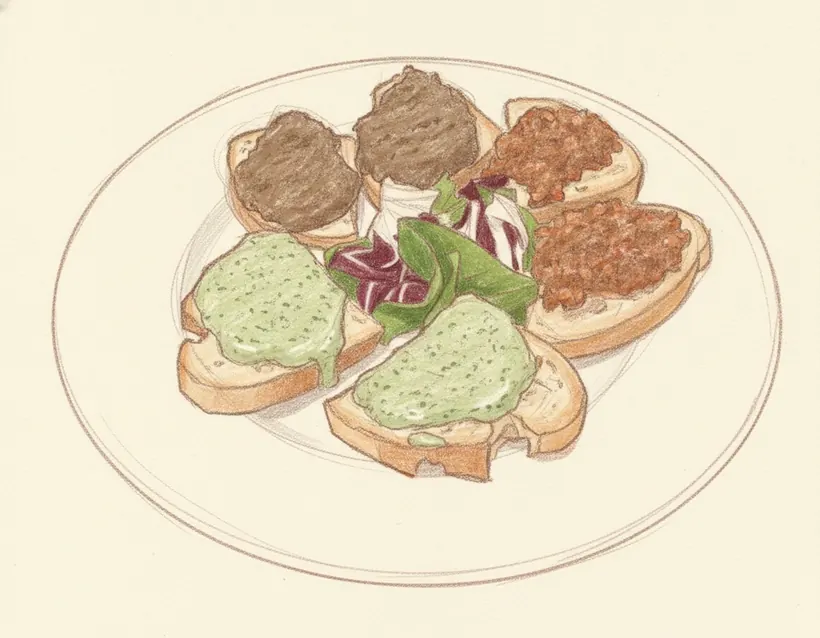
Crostini Toscani (di fegatini)Tuscan chicken-liver crostini
Toasted unsalted bread spread with a warm paste of chicken livers cooked with onion, capers, anchovy and vin santo or wine. The standard opener to a Tuscan meal.
Pairs with
Tuscan cooking is the archetype of cucina povera: bread, beans, olive oil, chestnuts and Chianina beef turned into deeply savoury dishes. Its saltless bread, born to partner the region's tannic Sangiovese, is the thread running from ribollita to panzanella. Almost every classic here finds its natural match in a Sangiovese-based red.
Toasted unsalted bread spread with a warm paste of chicken livers cooked with onion, capers, anchovy and vin santo or wine. The standard opener to a Tuscan meal.
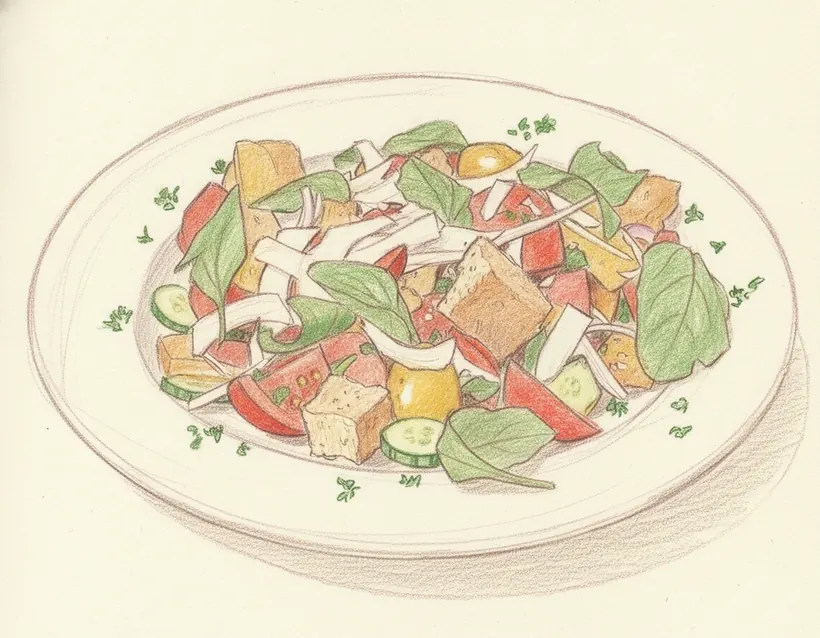
A summer salad of soaked stale bread tossed with tomatoes, cucumber, red onion, basil, olive oil and vinegar.
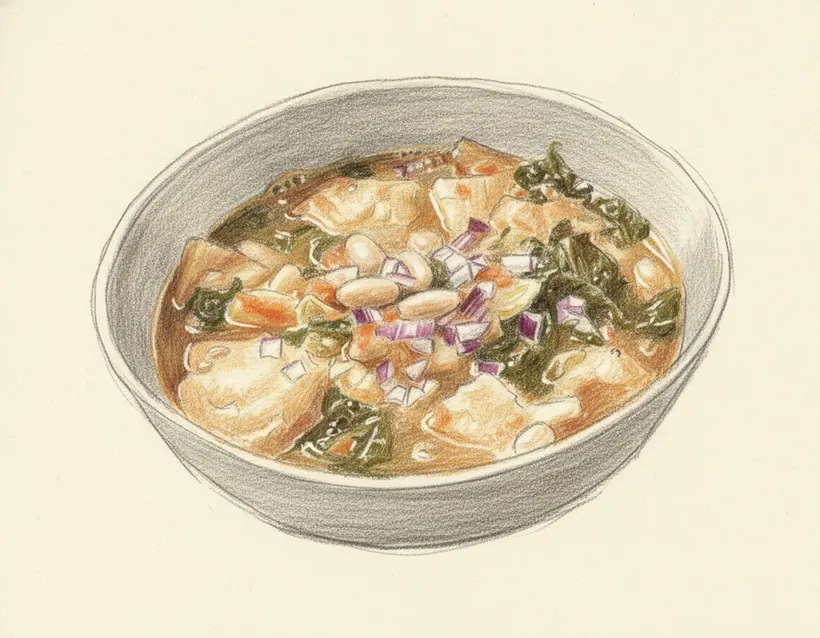
A thick winter soup of cannellini beans, cavolo nero and stale bread, cooked then 'reboiled' the next day so the bread thickens it to a spoon-standing stew.
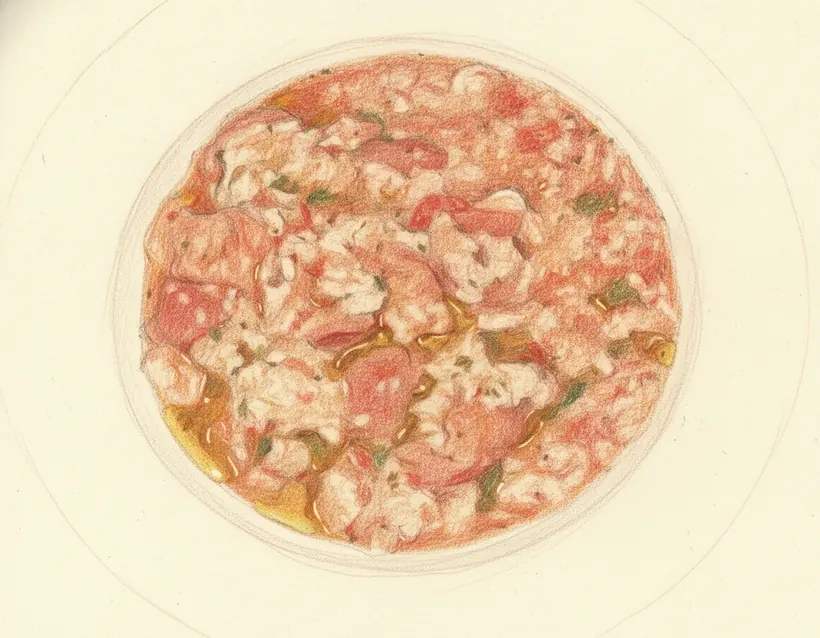
A soft, porridge-like soup of ripe tomatoes, unsalted bread, garlic, basil and olive oil, served warm or at room temperature.
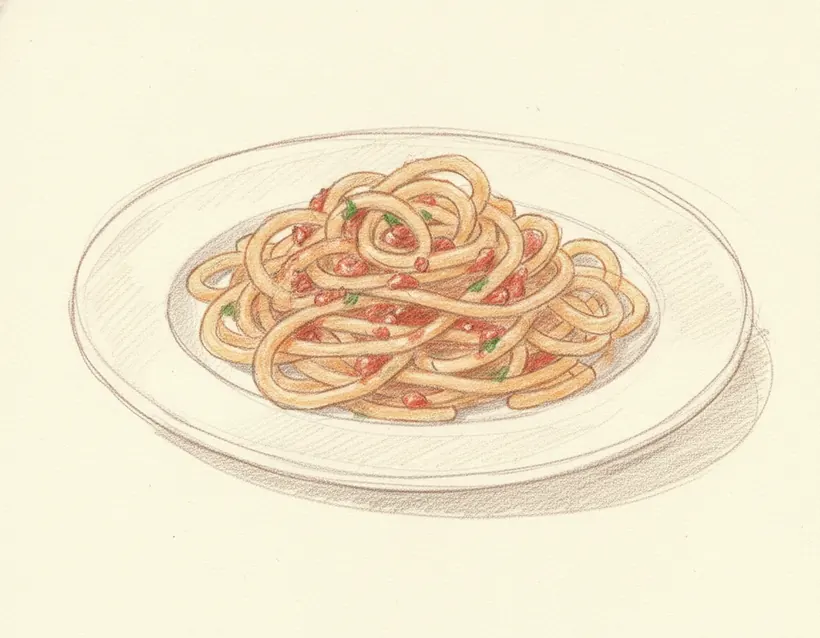
Thick, hand-rolled fresh pasta dressed with a punchy sauce of tomato and 'aglione', the giant sweet garlic of the Val di Chiana.
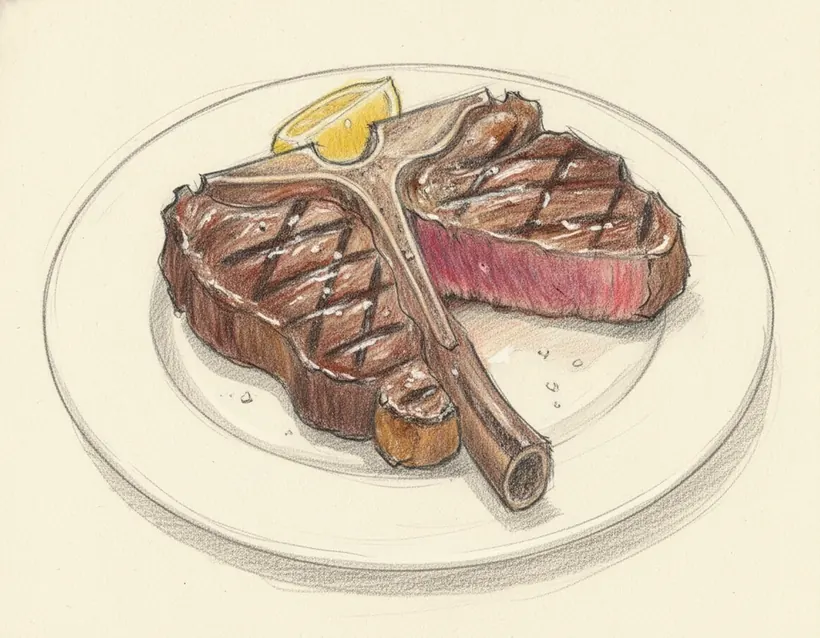
A thick T-bone from Chianina cattle, grilled rare over embers and seasoned only with salt, pepper and olive oil. Served very rare, sliced off the bone.
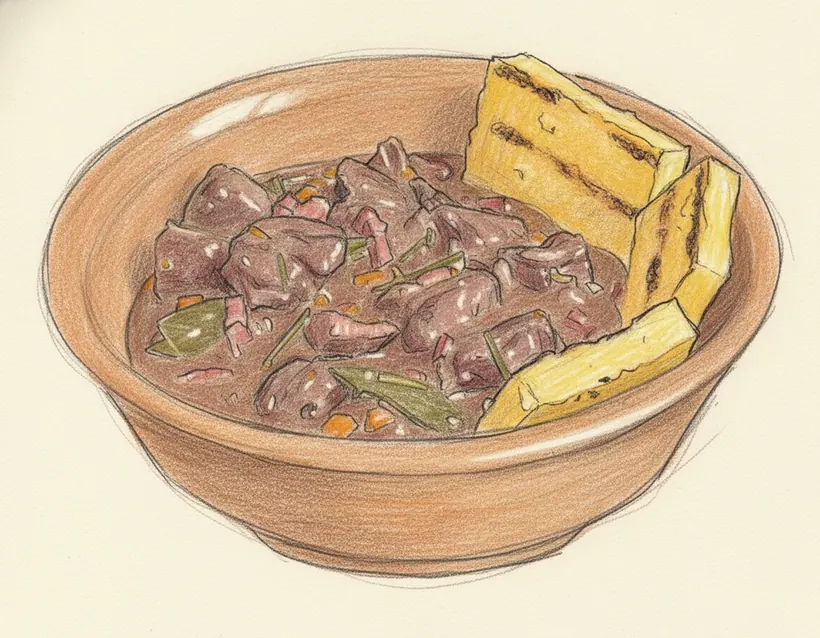
Wild boar marinated in red wine and aromatics, then slow-braised into a dark, gamey stew, often served with pappardelle or polenta.
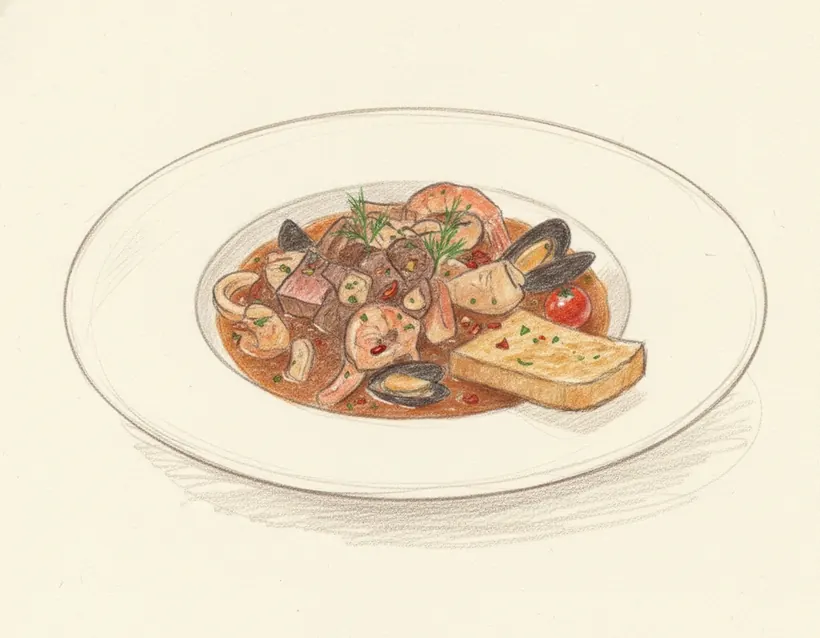
A rustic Livorno stew of at least five kinds of fish and shellfish in a garlicky, chilli-spiked tomato broth, ladled over toasted bread.
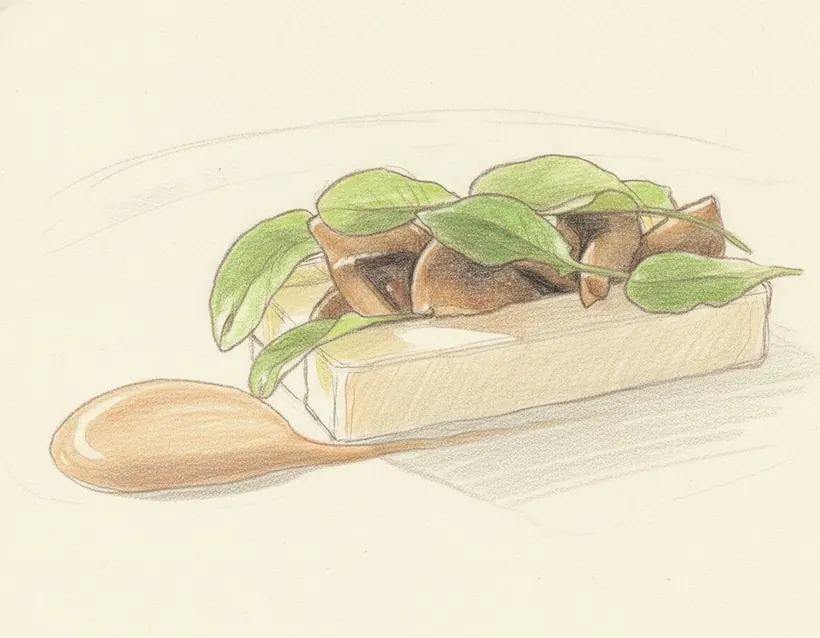
A DOP sheep's-milk cheese eaten fresh and soft or aged (stagionato) and firm, often with honey or pears.
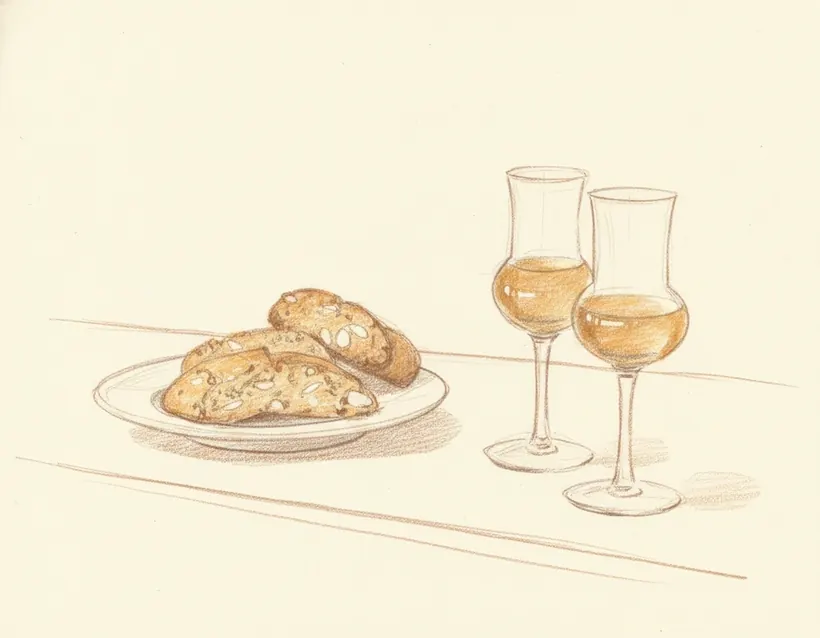
Twice-baked almond biscuits (biscotti di Prato) served for dipping into a small glass of sweet, oxidative Vin Santo, the traditional Tuscan end to a meal.
DOP, IGP, STG, Slow Food Presidia and traditional specialities of Tuscany.
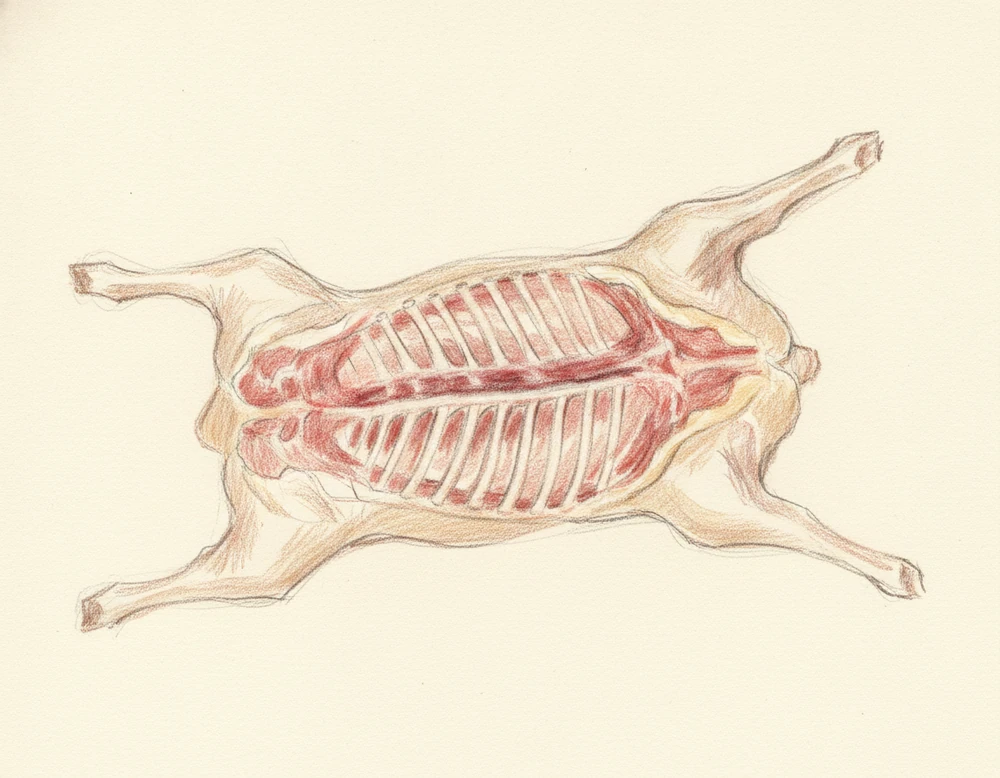
Lamb slaughtered under twelve months of age, graded into three carcass types by weight, conformation and fat cover: light lamb at 8.01 to 13.0 kg, heavy lamb at 13.01 kg and above, and castrato at 20.0 kg and above.
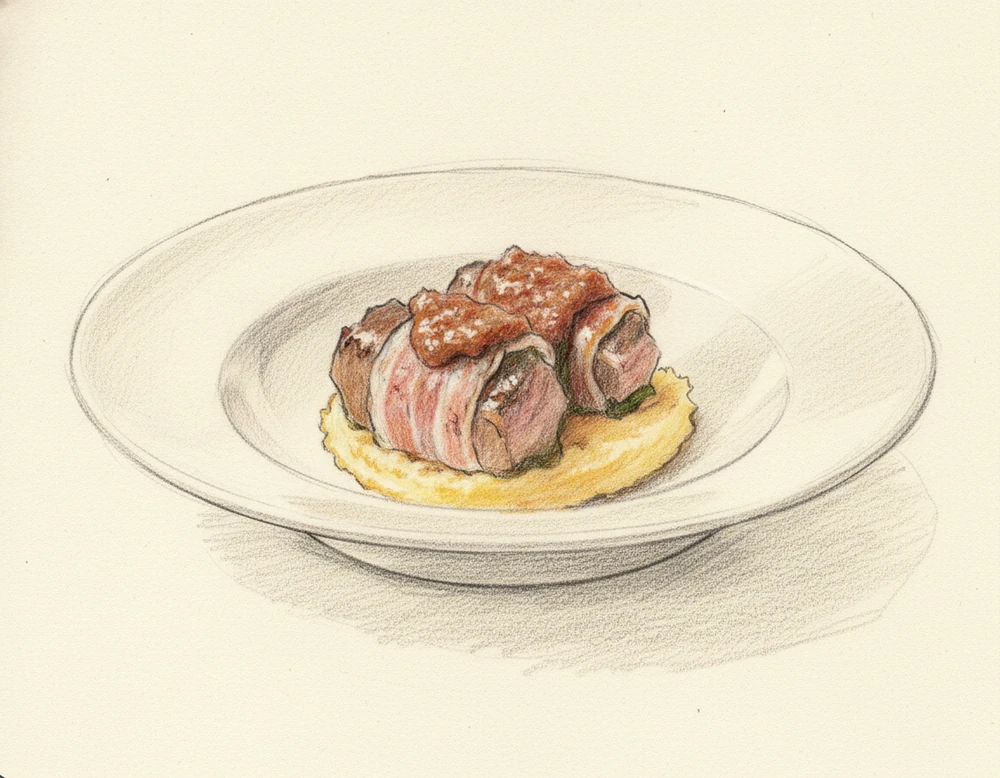
The Zerasca sheep kept its type intact because the Lunigiana kept it isolated. Medium to large, white-fleeced, well-proportioned head and long horns, housed only in the coldest weeks and otherwise out at pasture on ground that is still wild and unpolluted, industry never having come here. The lamb is traditionally cooked al testo, in a cast-iron pot set over embers.
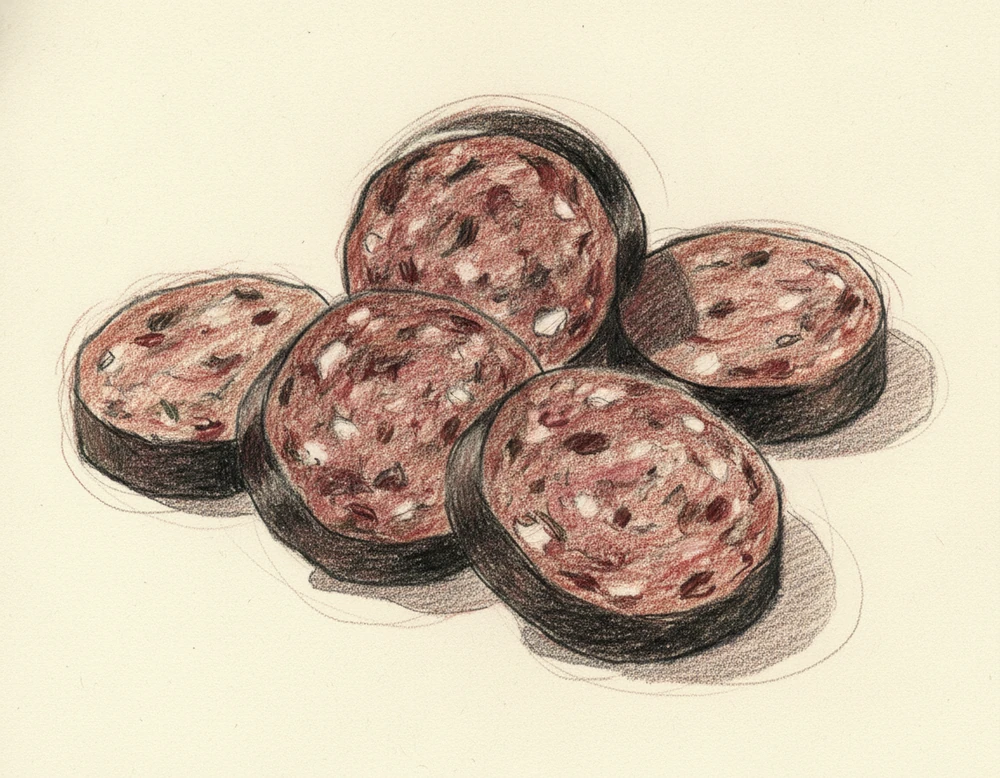
A blood sausage built mostly from the lean meat of the pig's head, which gives it a soft texture, and spiced above all with wild fennel alongside nutmeg, clove, cinnamon and star anise. It is eaten sliced, usually with the local chestnut or potato bread.
A pretzel-shaped savoury biscuit of medieval origin, made at home in Roccalbegna and handed down mother to daughter, each kitchen keeping its own mixing spoon for the job. The ingredients are all local, flour, olive oil, aniseed, white wine and salt, and because the oil was precious the biscuits belonged to special occasions. They keep for weeks and were eaten at breakfast or after a meal.
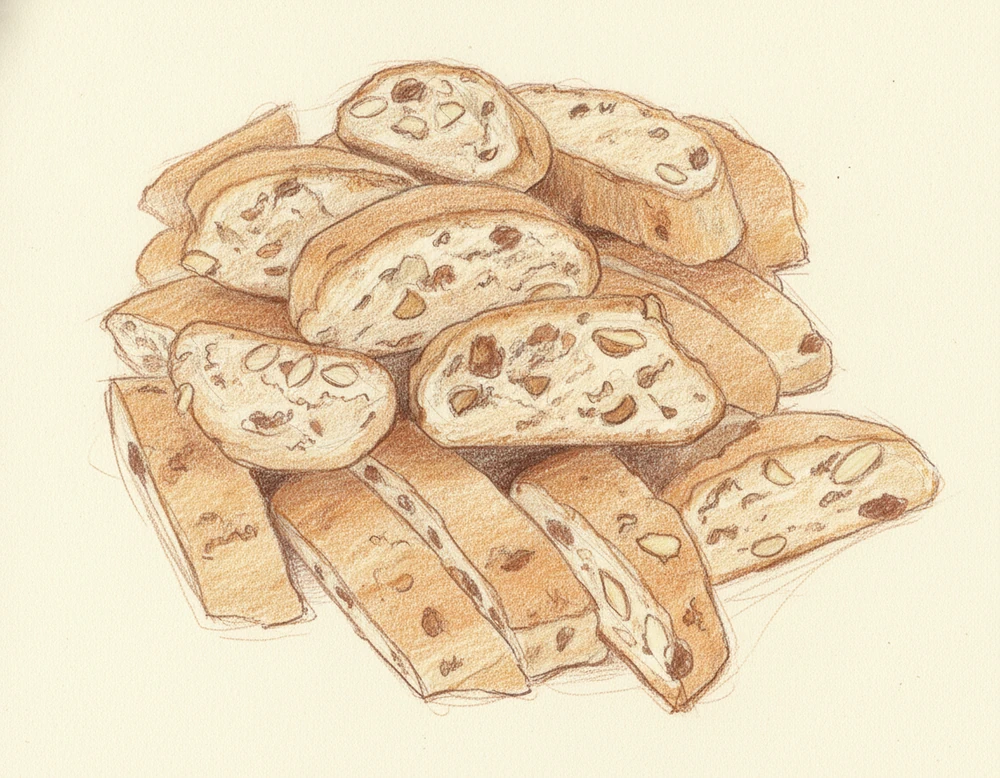
The twice-baked almond biscuits eaten with Vin Santo, made from flour, whole natural unpeeled sweet almonds, sugar, eggs, butter and honey. The half-oval shape comes from cutting the baked log on the diagonal.
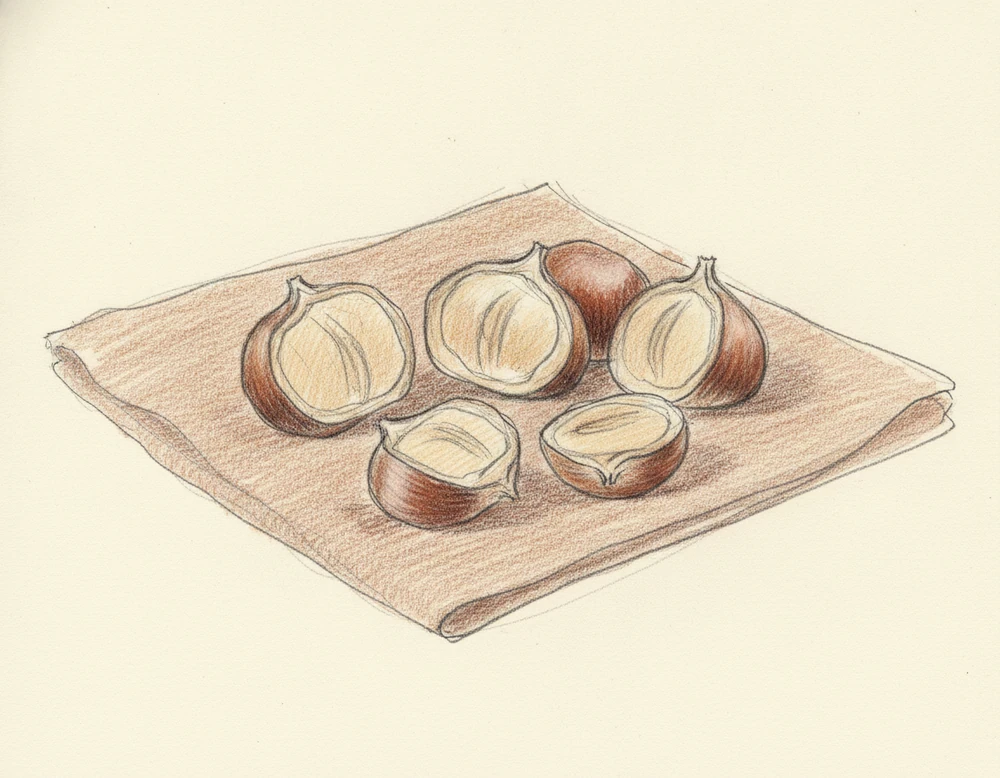
Chestnuts from the volcanic slopes of Monte Amiata, whose chestnut woods have supplied flour and fruit to southern Tuscany for centuries.
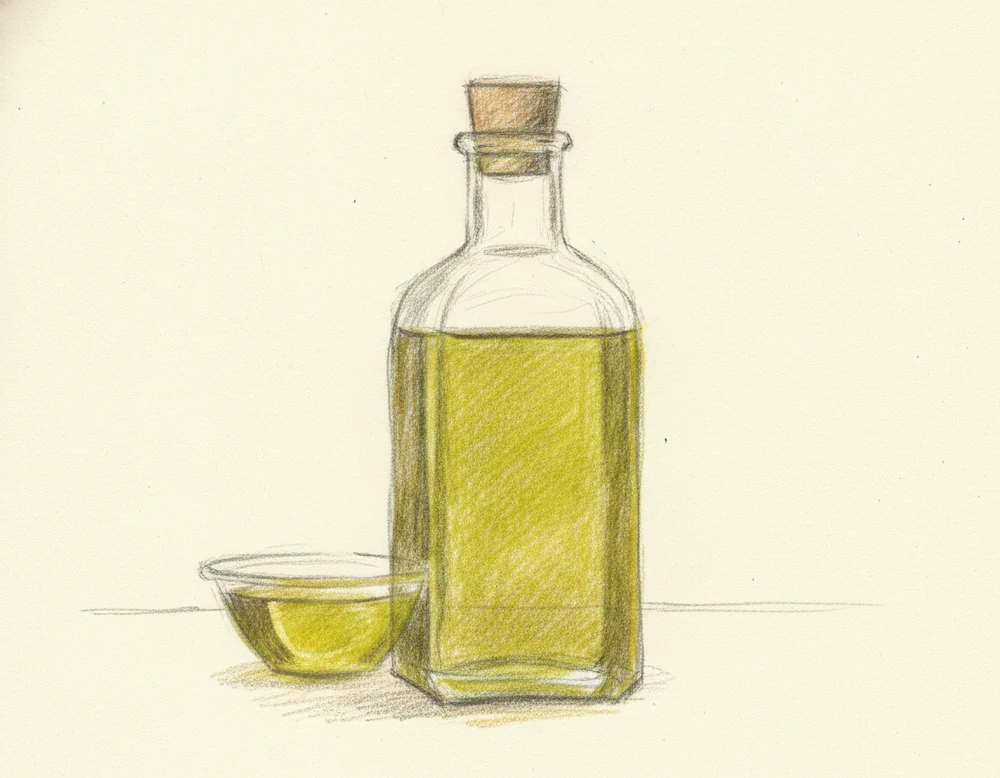
The olive oil of the Chianti Classico hills, sharing its zone with the wine denomination of the same name. It is the oil made from olives grown inside that delimited area and meeting the disciplinare's requirements.
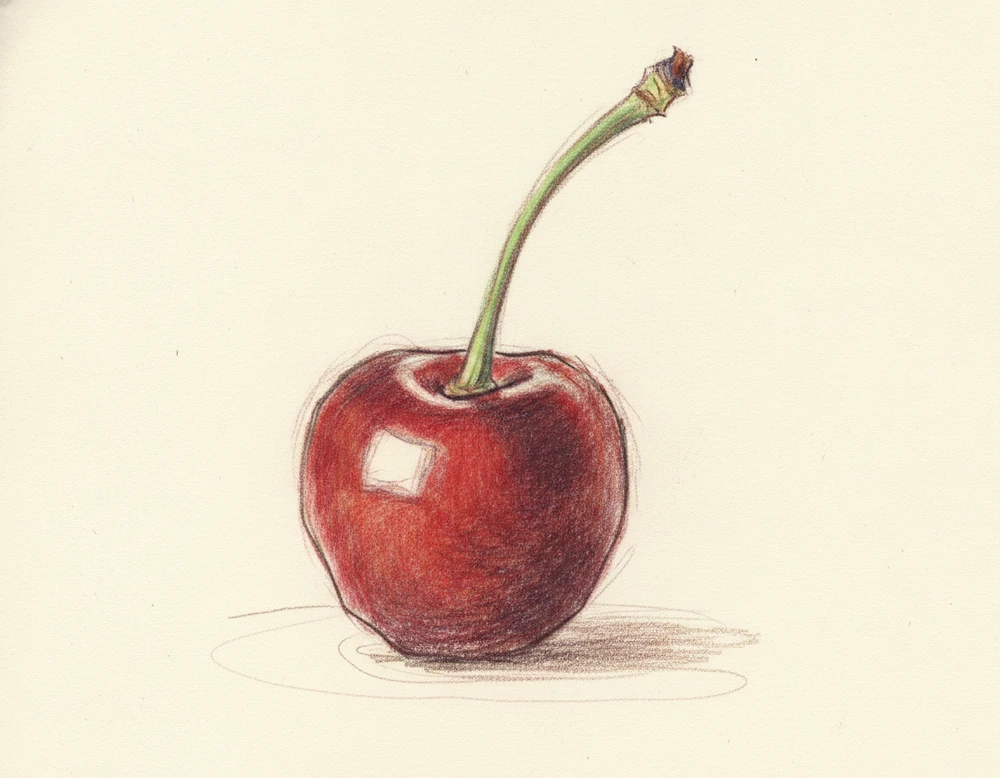
Sweet cherries (Prunus avium) from the Colline Pisane around Lari, covering a wide varietal range: flesh from barely firm to firm and crisp, skin glossy and running from yellow through dark red to black, with several local varieties preserved in the zone.
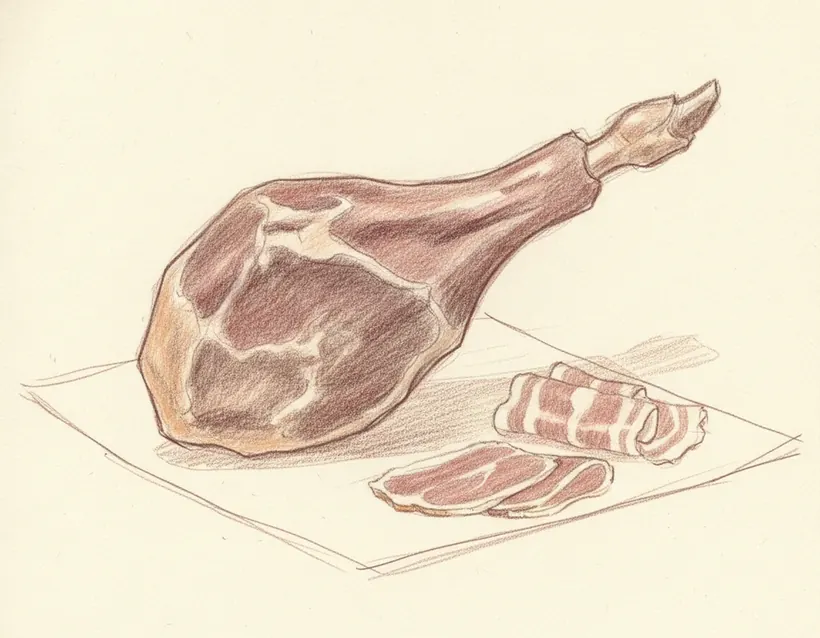
The belted 'Cinta Senese' heritage pig of the Sienese woods, its dark marbled meat cured into fine prosciutto and salumi.
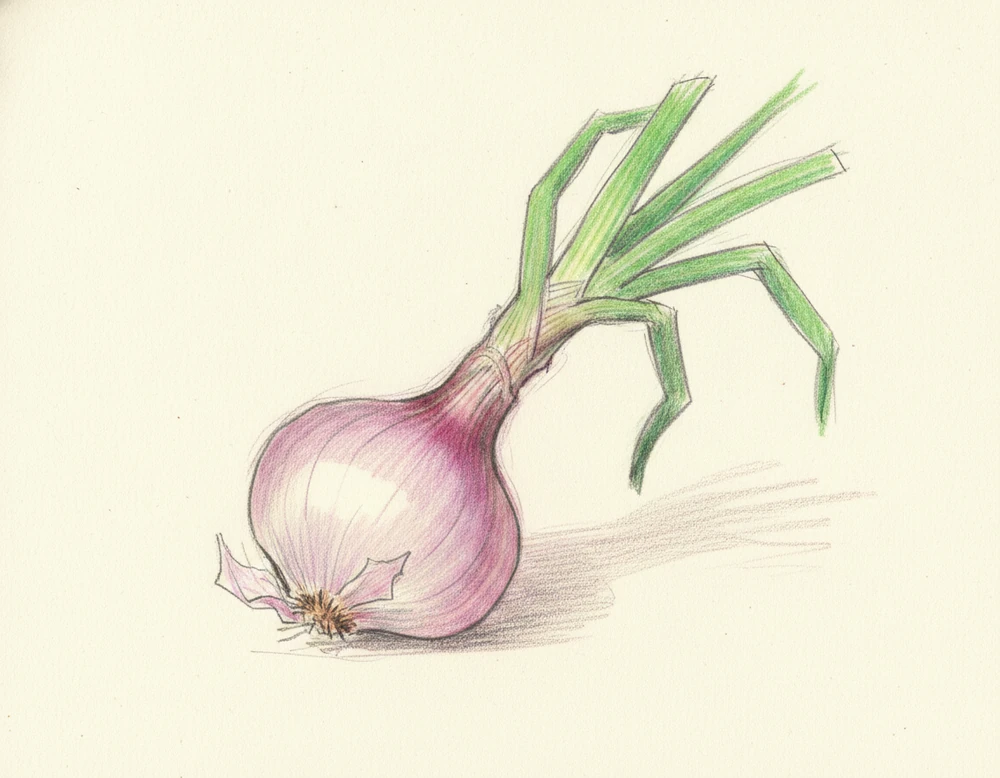
Boccaccio called this the most famous onion in Tuscany, and Certaldo has kept it as a piece of local identity: it sits on the town's coat of arms, on a red and white shield. Two types are grown from different sowings, the round pale-purple Statina, sweet and juicy, and the flatter bright-red Vernina, which is pungent.
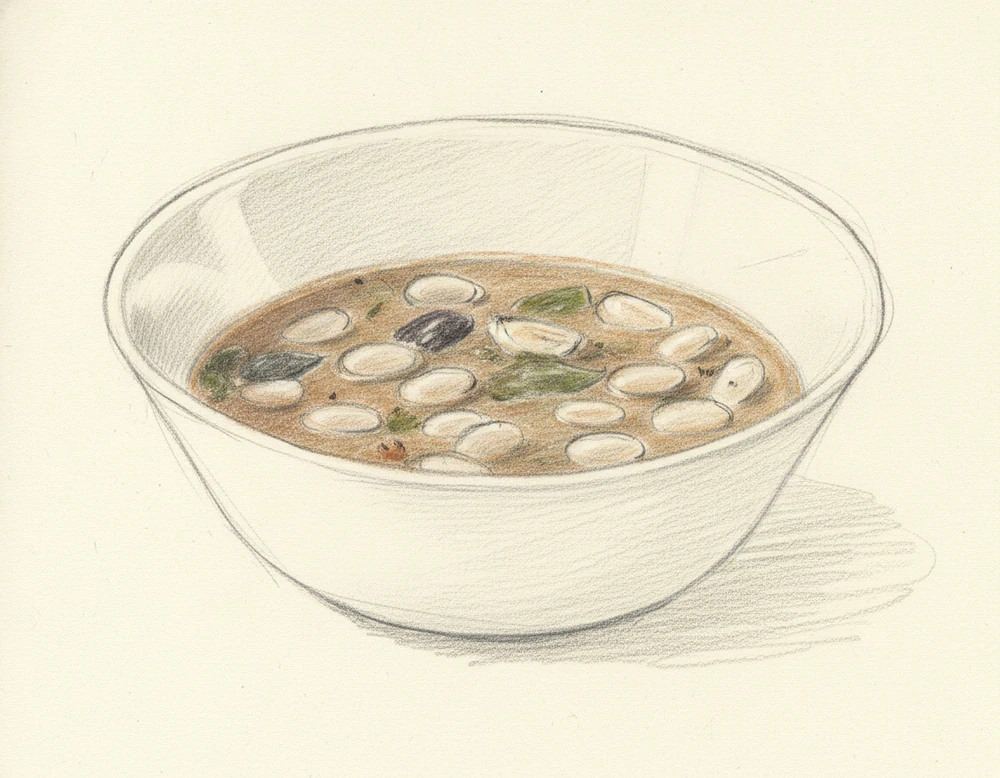
A pearly white bean, small and very thin-skinned, grown on a few hectares of small plots along the Pescia river on land the Medici drained in the 16th and 17th centuries. The growers, who have kept the seed in the family for generations, hold that the same bean is not the same thing grown in other soil. It is called Piattellino for its flat shape, and it is best cooked plainly, in water with a clove of garlic and a few sage leaves.
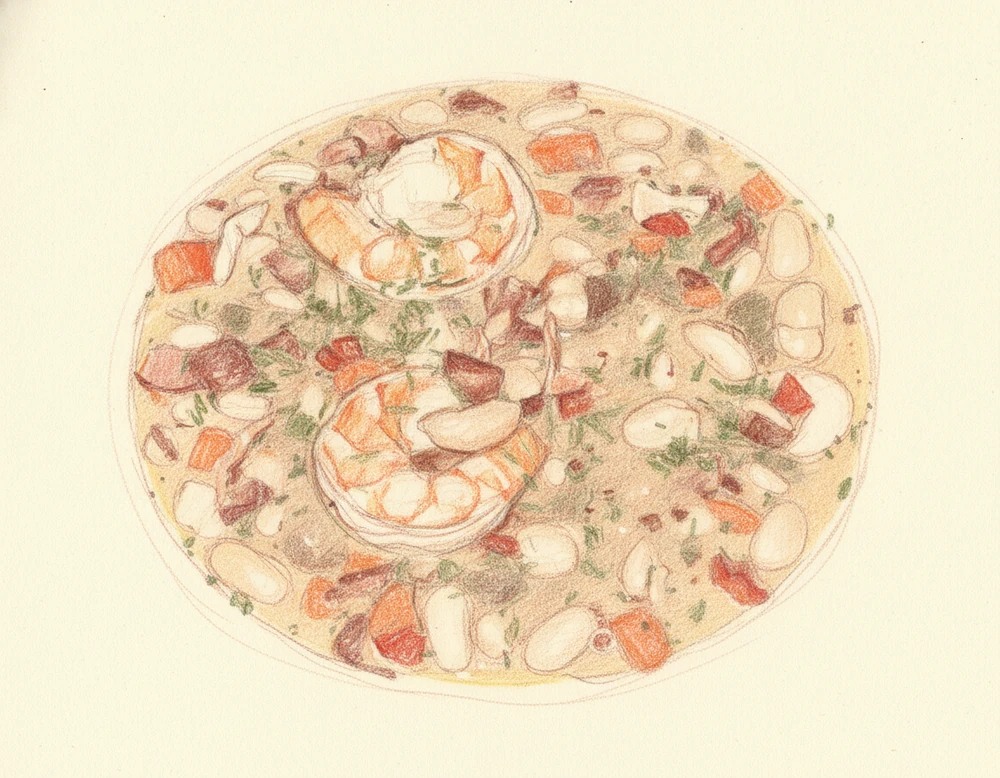
One of a whole family of Lucchesia beans, alongside aquila, lupinaro, cannellino di San Ginese, malato and mascherino. Beans run through the local table and the local record alike: the Marchese Antonio Mazzarosa wrote about their cultivation in 1846, and the 1781 Statute of Compito already names beans grown on the rises of the Lucca plain.
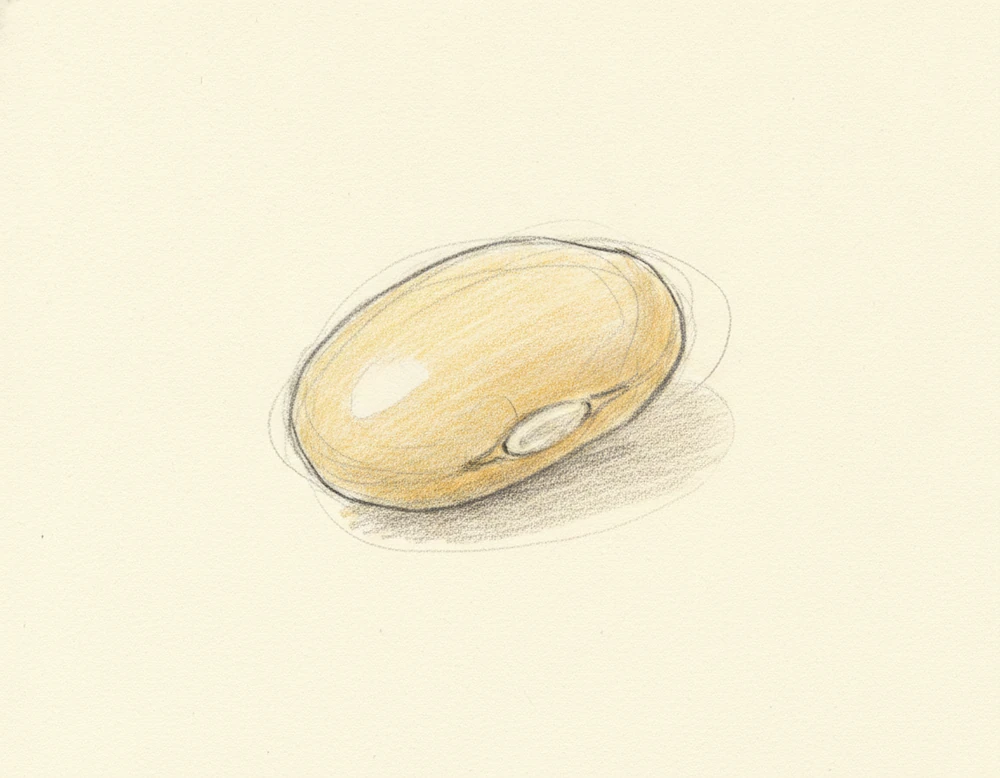
Small, round, sulphur-yellow with a pale eye. It is also called Fagiolo del Cento, for the hundredth day of the year on which it was sown, or Burrino for the way it eats. Beans reached Tuscany, so the story goes, by way of Charles V, who gave them to Clement VII; alongside the common Cannellini and Toscanelli the hills still grow rarer sorts, of which the Zolfino is the best.
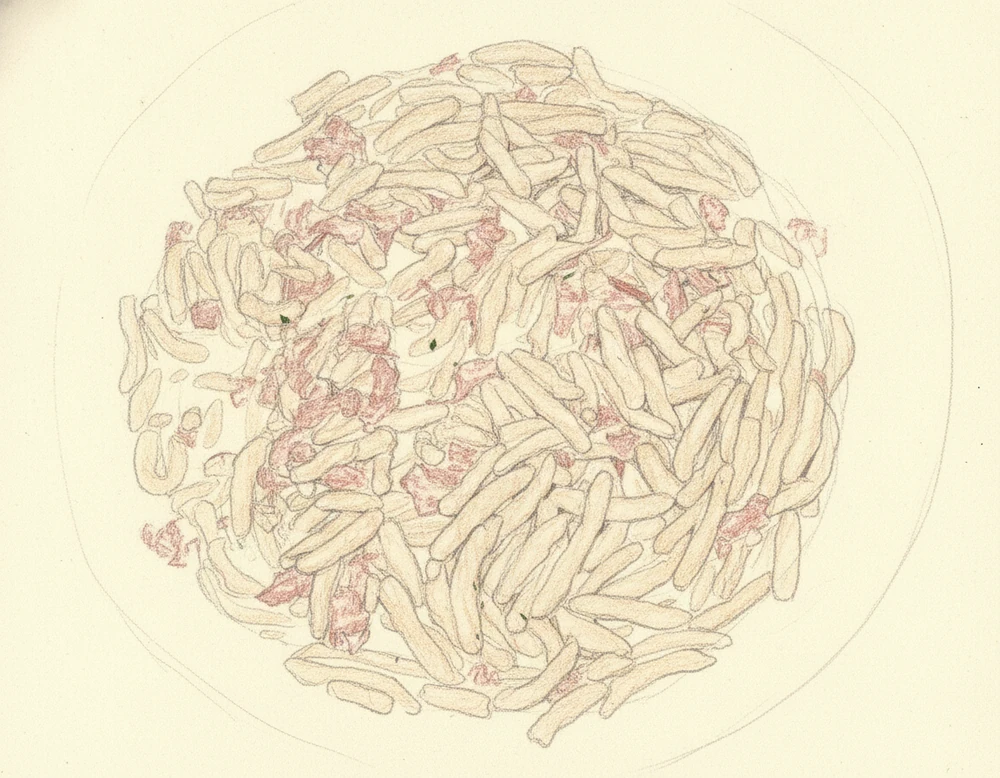
Sweet flour milled from chestnuts of Castanea sativa in varieties of documented historical presence in the Lunigiana: Bresciana, Carpanese, Fosetta, Marzolina, Moretta, Primaticcia, Rigola, Rossella and Rossola.
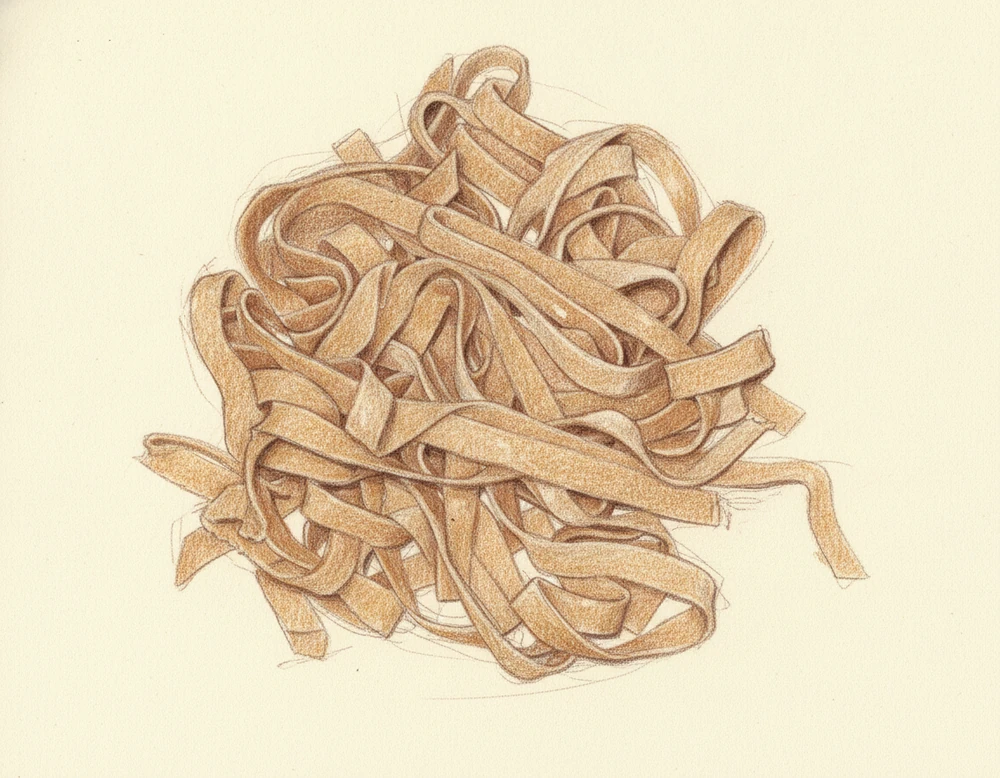
Chestnut flour made by traditional local method from Carpinese, Pontecosi, Mazzangaia, Pelosora and Rossola chestnuts, dried in the metati, the traditional smoke-drying huts, and ground in traditional mills inside the zone.
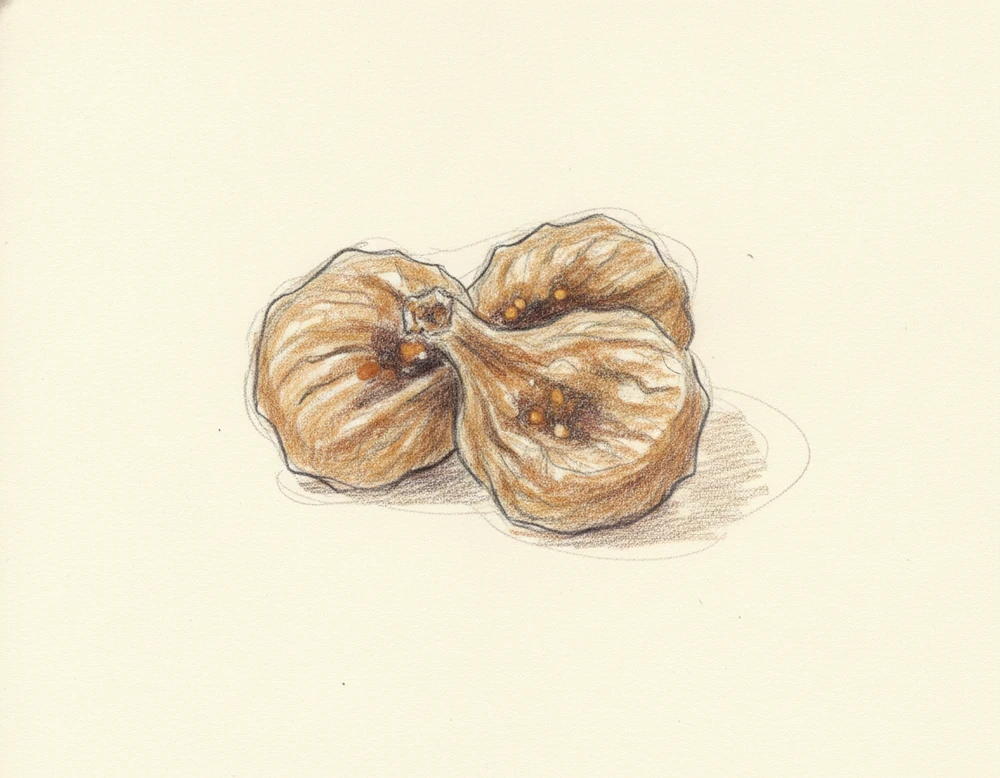
Carmignano was once nicknamed for its figs, and the drying method that earned it the name is still in use. The finished fruit is sweet and cut through by aniseed, and it is layered into figure-of-eight bundles called picce.
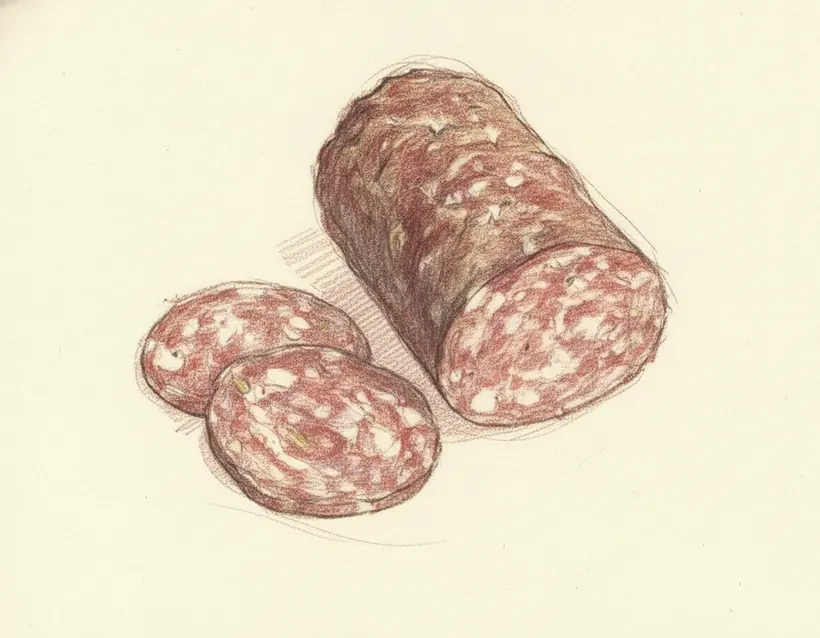
A soft, crumbly Tuscan salami of coarse pork seasoned generously with wild fennel flowers and seeds, fragrant and slightly sweet.
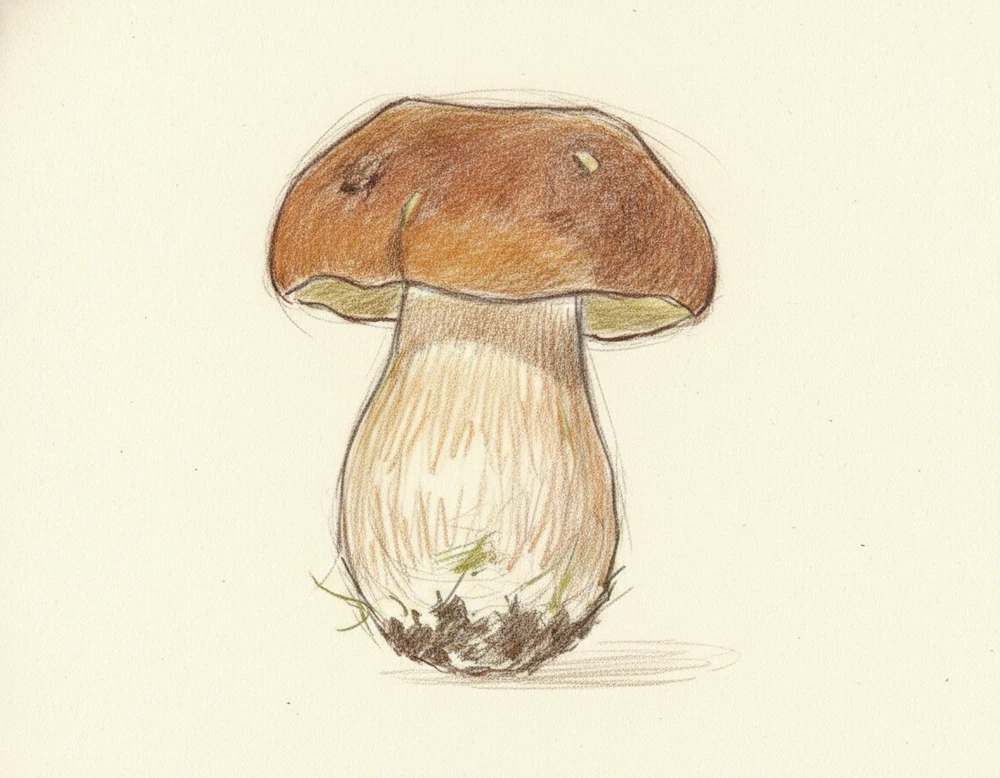
Wild porcini gathered in the chestnut and beech woods of the upper Taro valley, and the first mushroom anywhere in Europe to be given a protected designation. It covers the fruiting bodies of four Boletus species, each with its own local name, picked from spontaneous growth only.
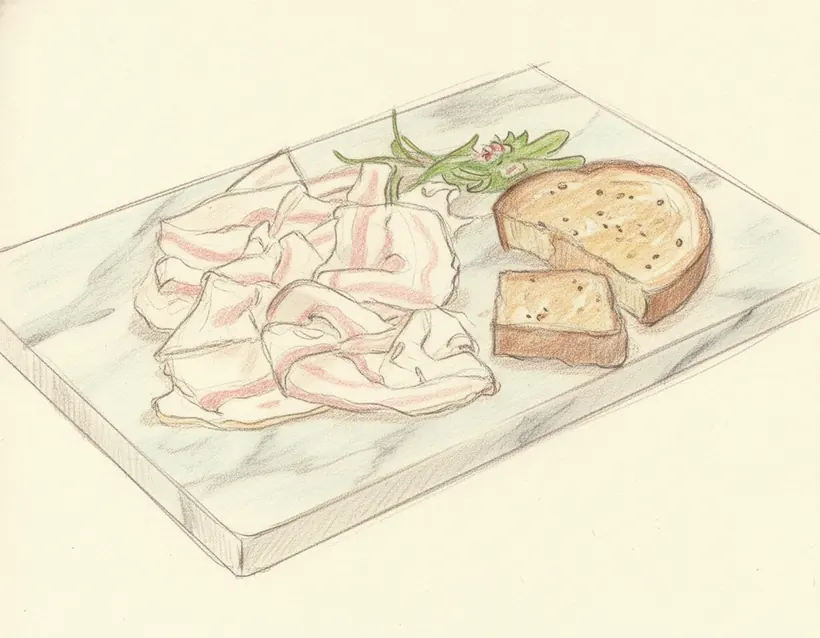
Pork back fat cured with salt, rosemary and spices in basins carved from local Carrara marble, then sliced almost translucent.
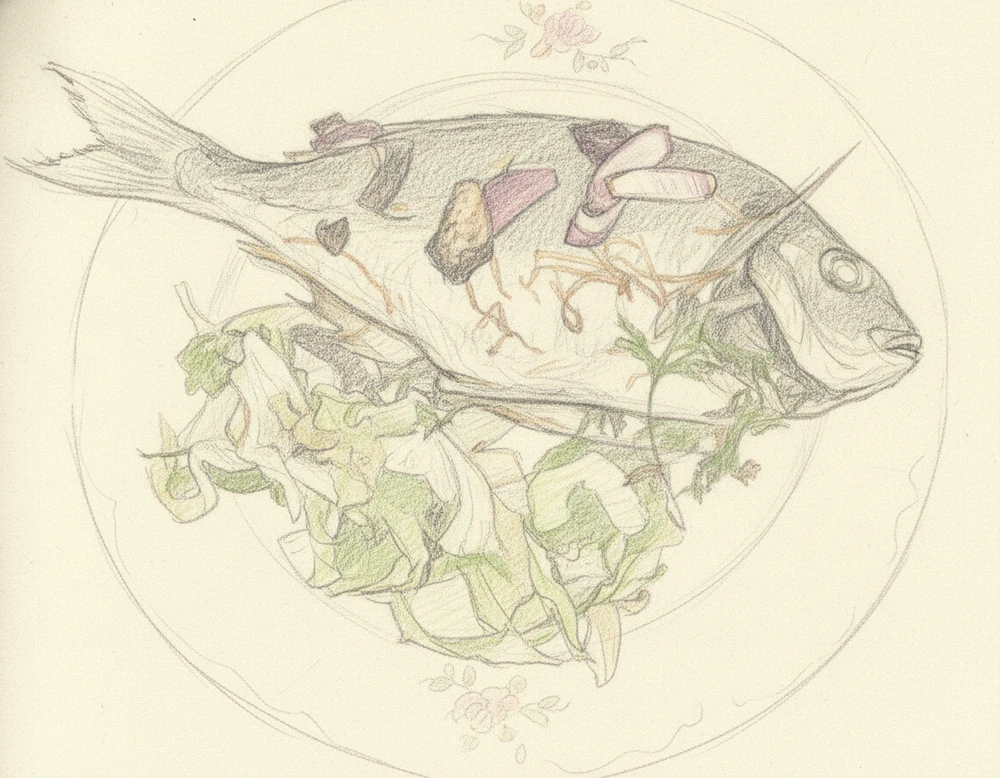
Extra-virgin olive oil from the plain and hills around Lucca, its zone written comune by comune.
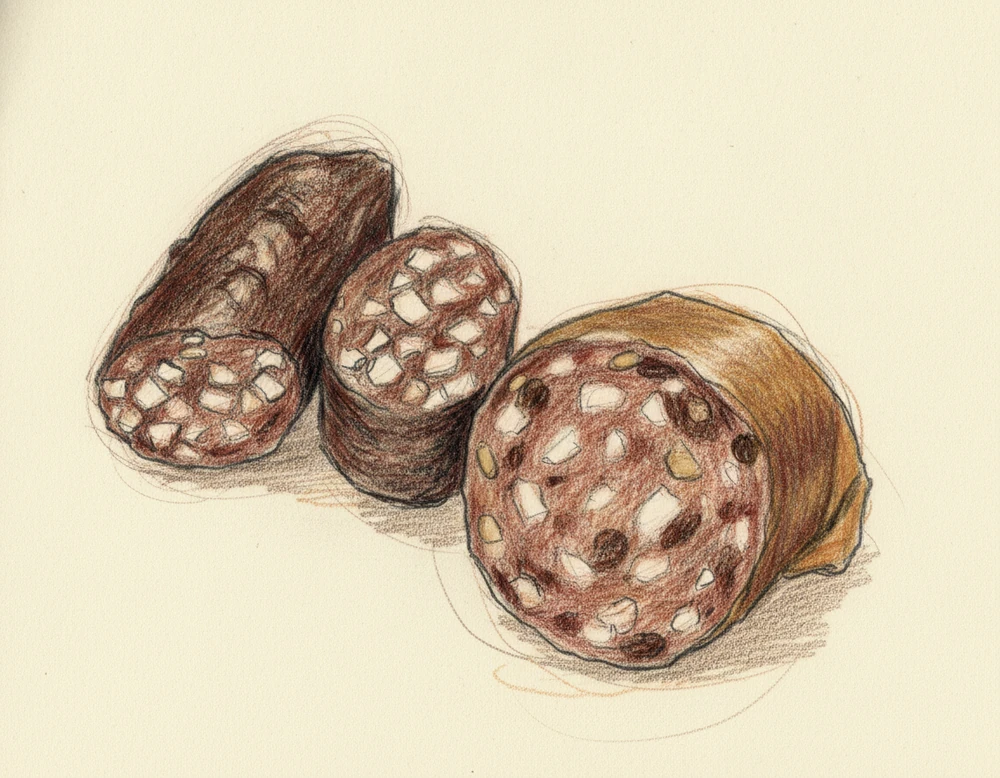
The blood sausage of the Pisan hills around San Miniato, and an unusually sweet one: raw pig's blood, diced back fat, salt, nutmeg, cinnamon, pine nuts and raisins. It was once simply the cheapest way to get iron and protein, and it is made in the cold months, from October to April.
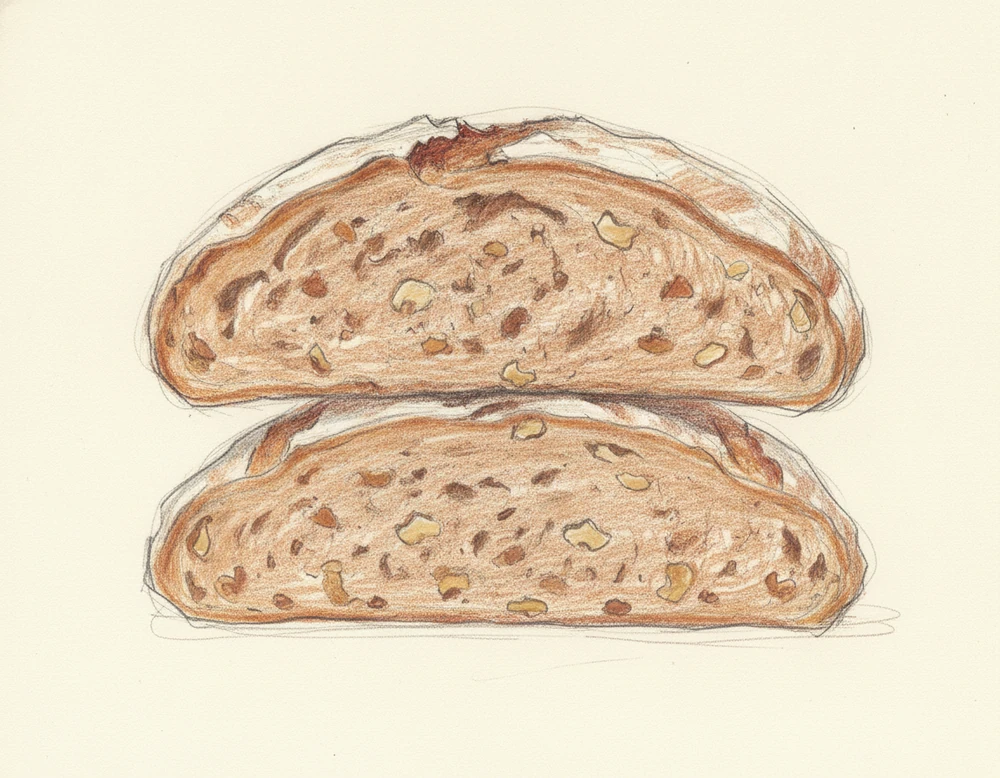
In Lunigiana wheat stayed on the valley floor, so the mountain villages ground chestnuts instead. Marocca is the loaf that came of it, a round 20 cm bread of chestnut flour from the local Carpanese, Punticosa and Rastellina varieties.
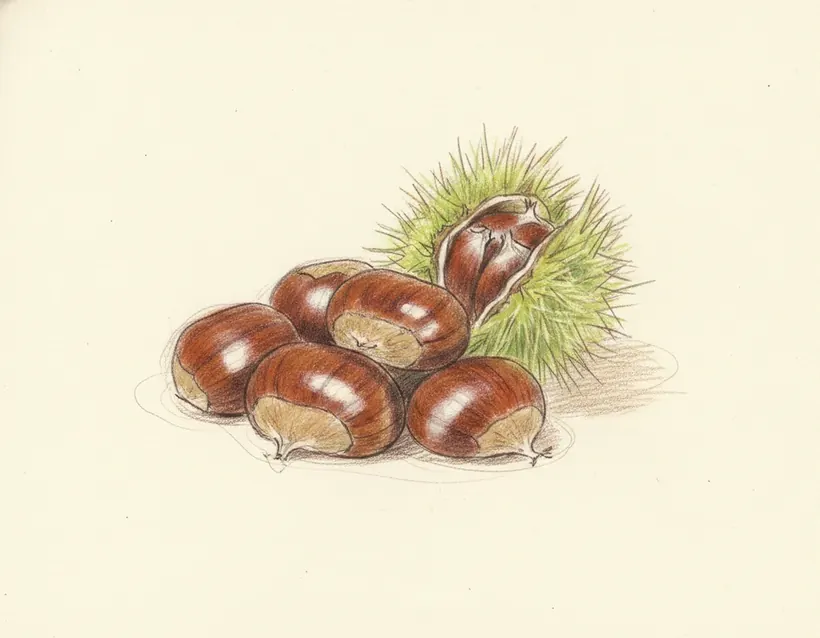
Large, sweet, glossy chestnuts from the Mugello Apennines, roasted or milled into sweet flour.
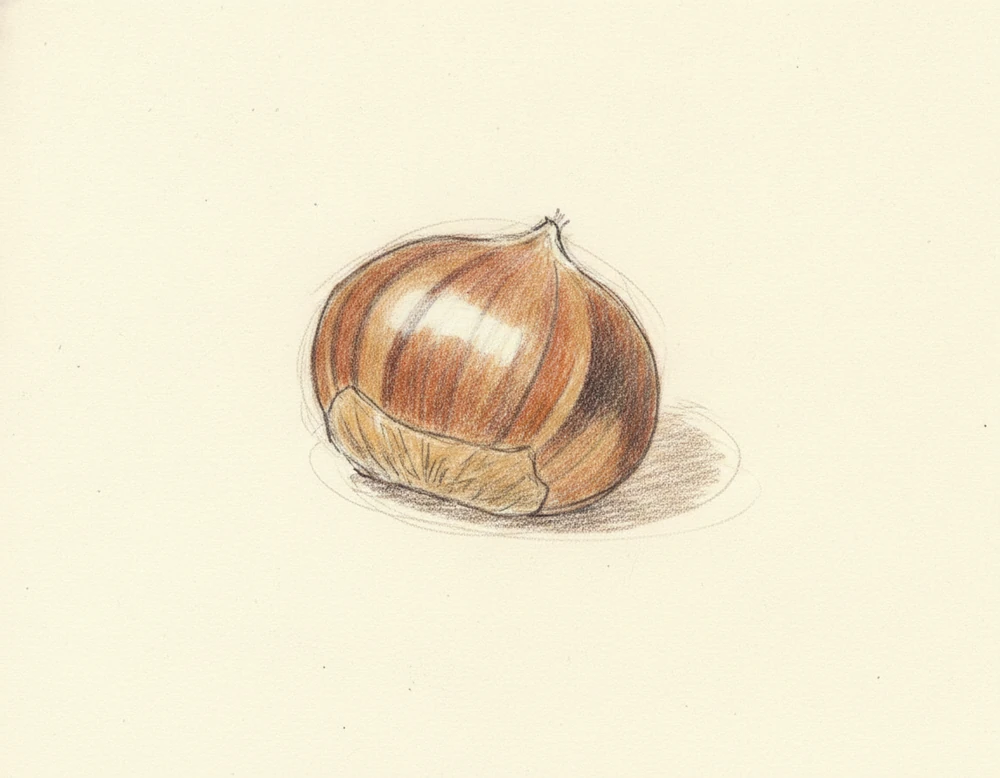
Chestnuts of the local Marrone di Caprese Michelangelo ecotype, from Michelangelo's birthplace in the Casentino, used both fresh and dried. The skin is tan with brown striping of varying intensity.
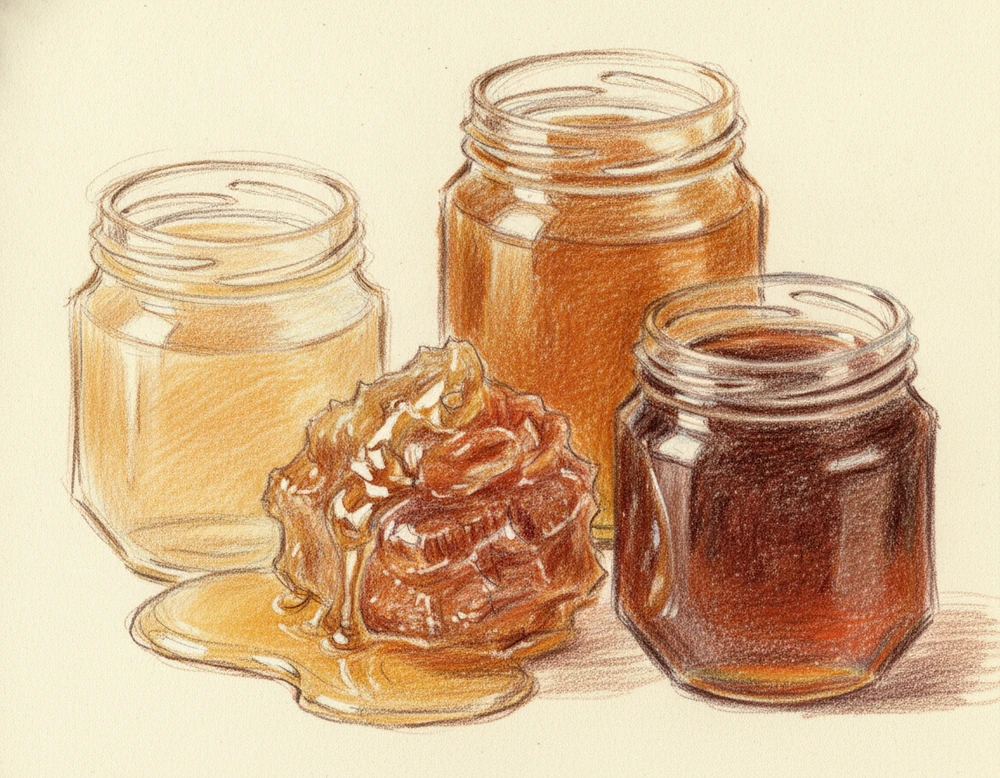
Honey from the Lunigiana in four defined types by floral source: Acacia from Robinia pseudoacacia, Castagno from Castanea sativa, Erica from Erica arborea, and Melata, the honeydew honey gathered in spring and summer.
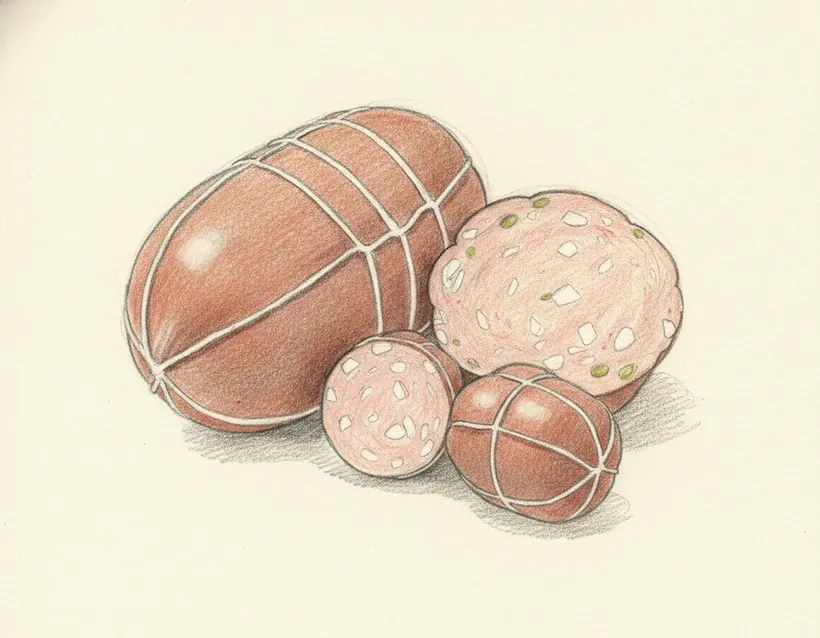
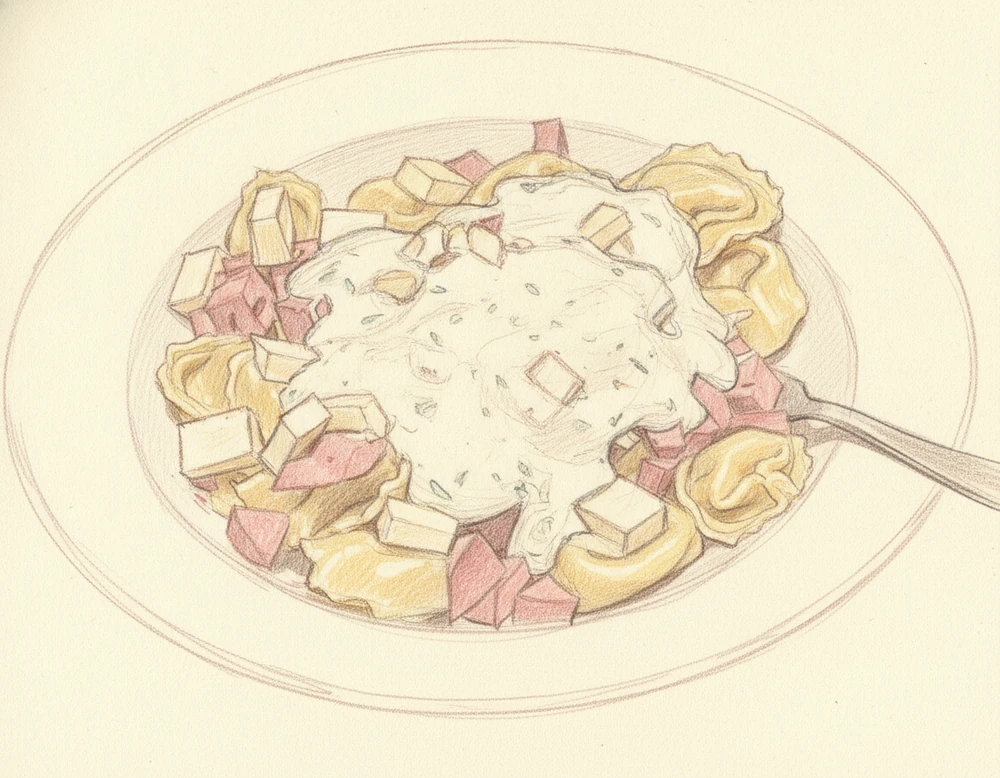
A large, silky pink cooked pork sausage studded with white fat cubes and pistachios, gently spiced, the pride of Bologna.
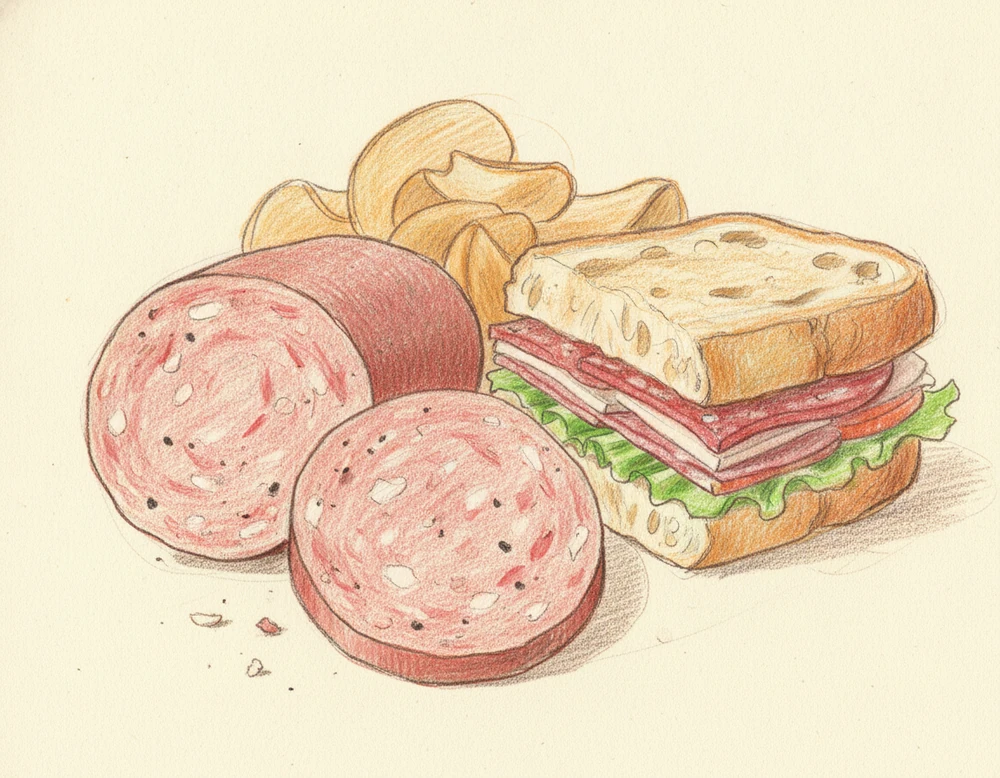
Not the Bologna kind: a pink-red cooked pork sausage flavoured with sea salt, garlic, spices and, distinctively, alchermes liqueur at 0.3 to 0.6 per cent, which gives it its colour and its faintly sweet, spiced edge.
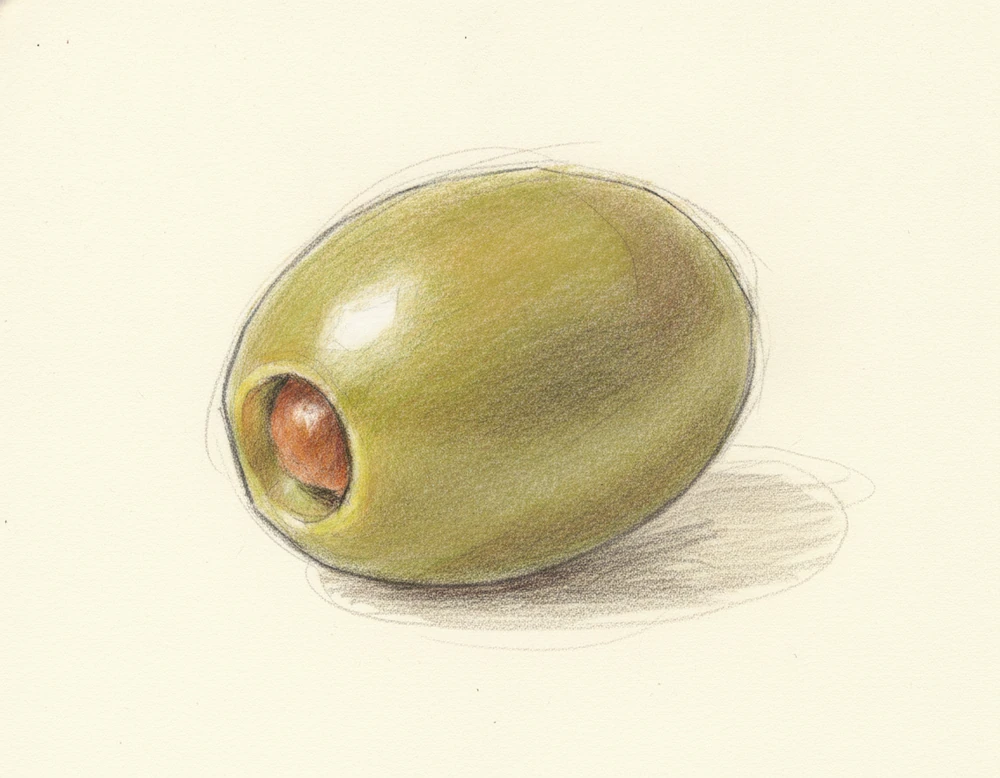
A native olive of Seravezza, and specifically of the Querceta plain, from which it spread along Versilia. That plain sits high enough that it escaped the waterlogging which took much of the Versilian coast, so its old groves survived; Pisa and Lucca fought over them, and Versilian oil mattered enough to Pisan trade with the Arab world to pass almost as currency. The tree is vigorous and upright with drooping young wood and long, narrow, glossy leaves; the olives are small, oval and slightly pointed.
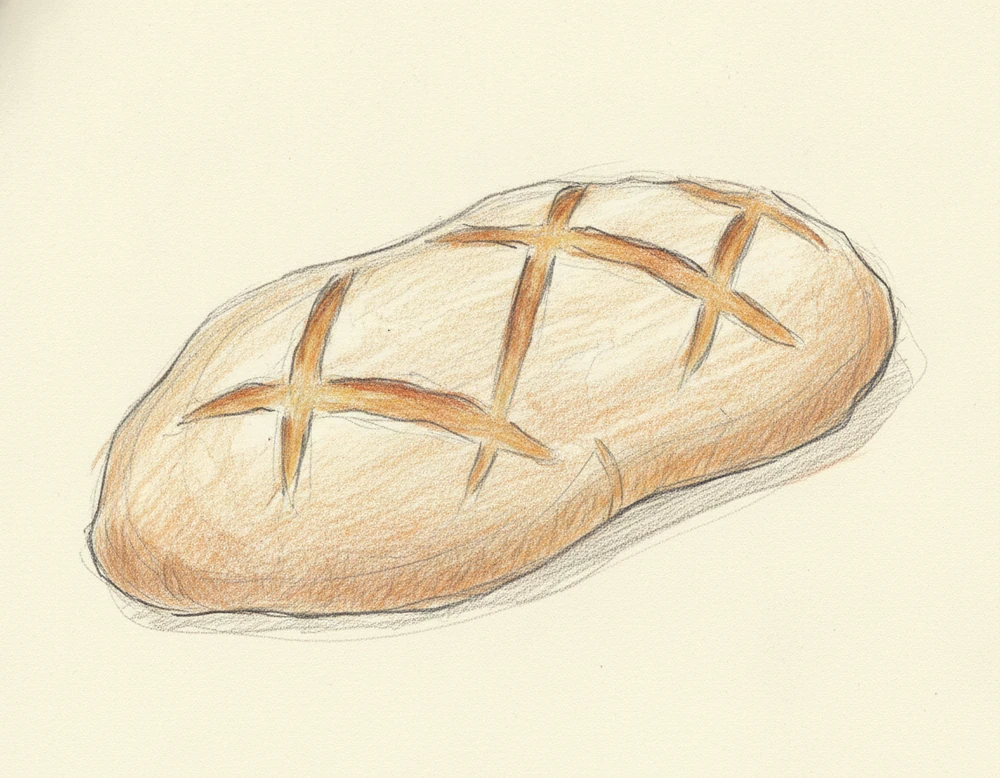
A Garfagnana loaf that tastes less of potato than the name suggests. The potato makes it more savoury than plain Tuscan bread, and softer, and it keeps far longer.
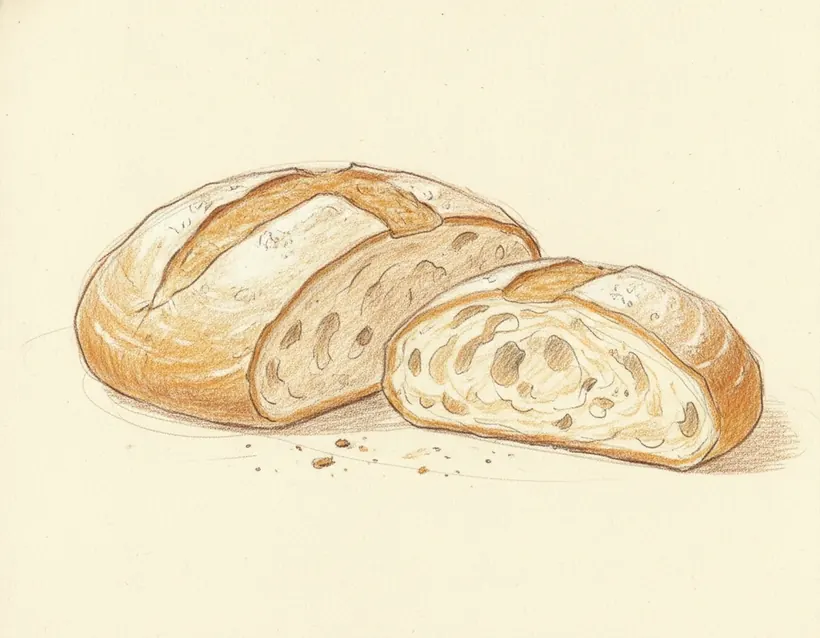
The unsalted 'sciocco' Tuscan bread with a crisp crust and open crumb, made to carry salty salumi and to thicken soups.
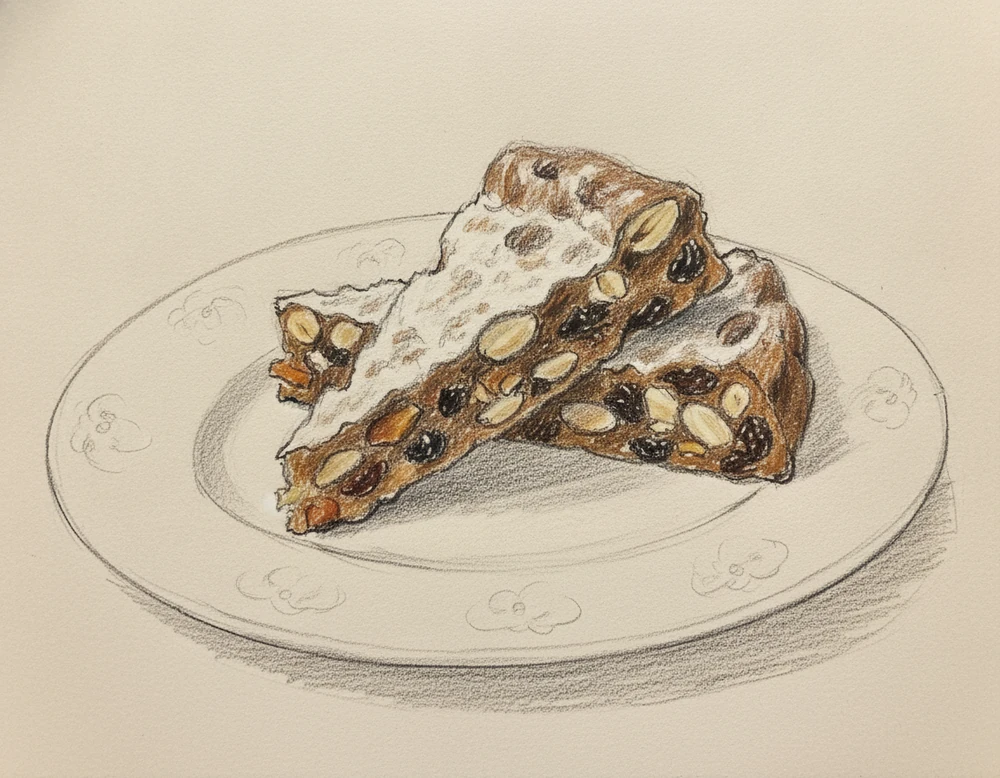
The medieval Sienese cake: flour, candied fruit, nuts, a mix of sugars, honey and spices, baked dense and flat. It comes in a white version dusted with icing sugar and a black version finished with spices.
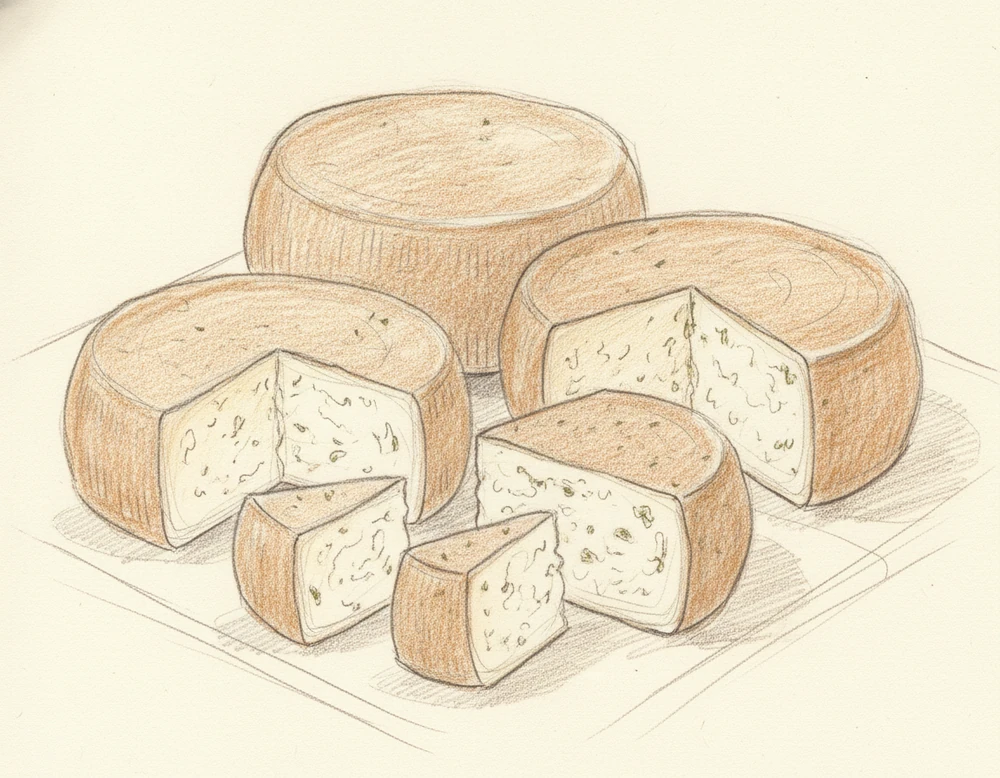
Grosseto's four rivers, the Fiora, Ombrone, Pecora and Albegna, cut the Maremma into as many plains, grazed since the Middle Ages and a winter destination for transhumant flocks from the 17th century. Siena taxed those pastures through the Dogana dei Paschi. Because the grazing was seasonal and settlement thin until the marshes were drained, the milk long went to make pecorino elsewhere, at Pienza or in the Casentino; only in the 20th century did the Maremma become Tuscany's main pecorino country.
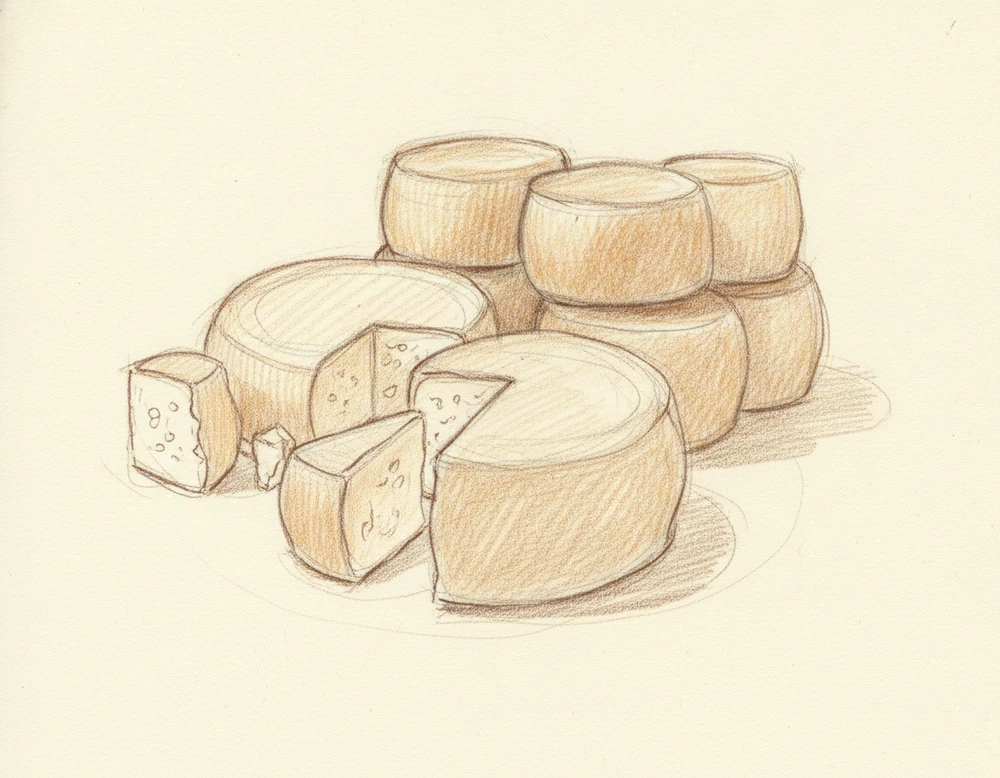
A handful of families in the mountains above Pistoia still make sheep's cheese as they did a century ago: mountain-meadow grazing, natural rennet and raw milk, which makes them rare in Tuscany. Their flocks are the black Massese, which lambs three times in two years, so milk runs all year and the same farms also turn out raviggiolo and ricotta.
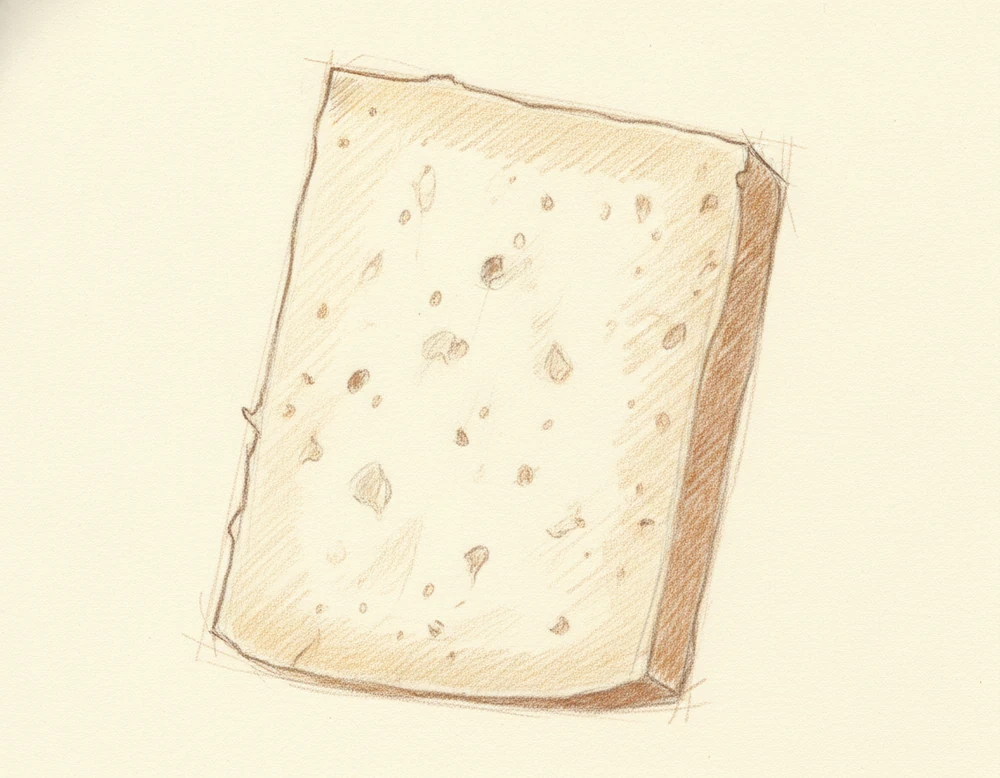
A sheep cheese made exclusively with vegetable rennet, from the thistle, and whole raw ewe's milk from the eroded balze country around Volterra. It is sold at four ages: fresco, semistagionato, stagionato and da asserbo.
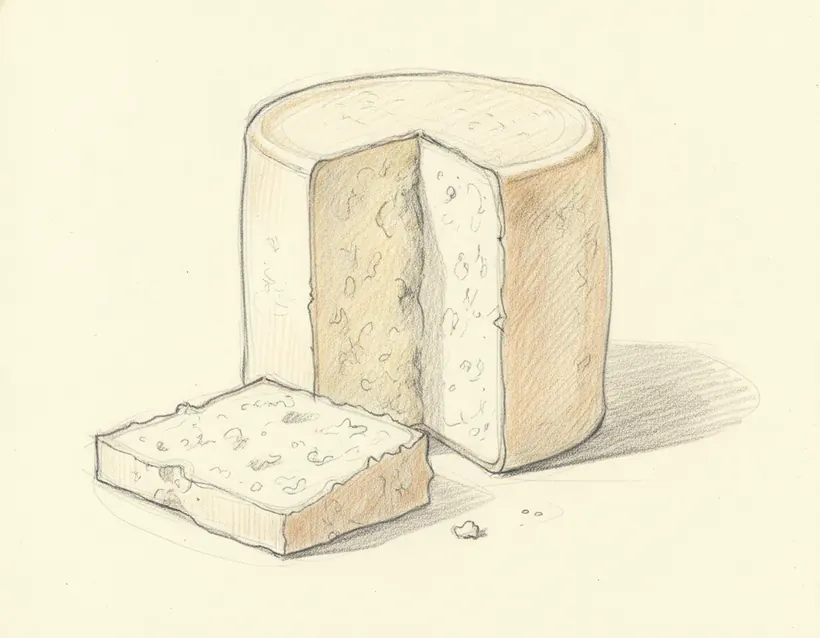
A hard, salty sheep's-milk cheese aged in tall drums, the sharp grating cheese behind carbonara, gricia, amatriciana and cacio e pepe.
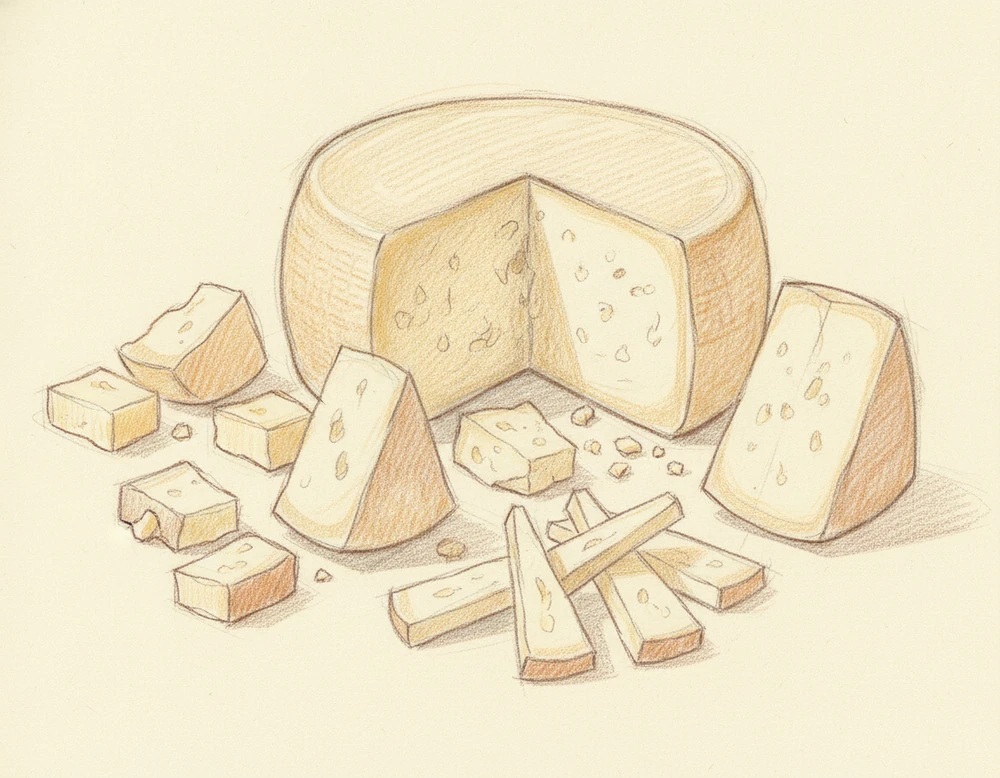
Made from whole sheep's milk from the zone alone, in a soft-paste and a semi-hard type. Soft matures at least 20 days, semi-hard at least four months.
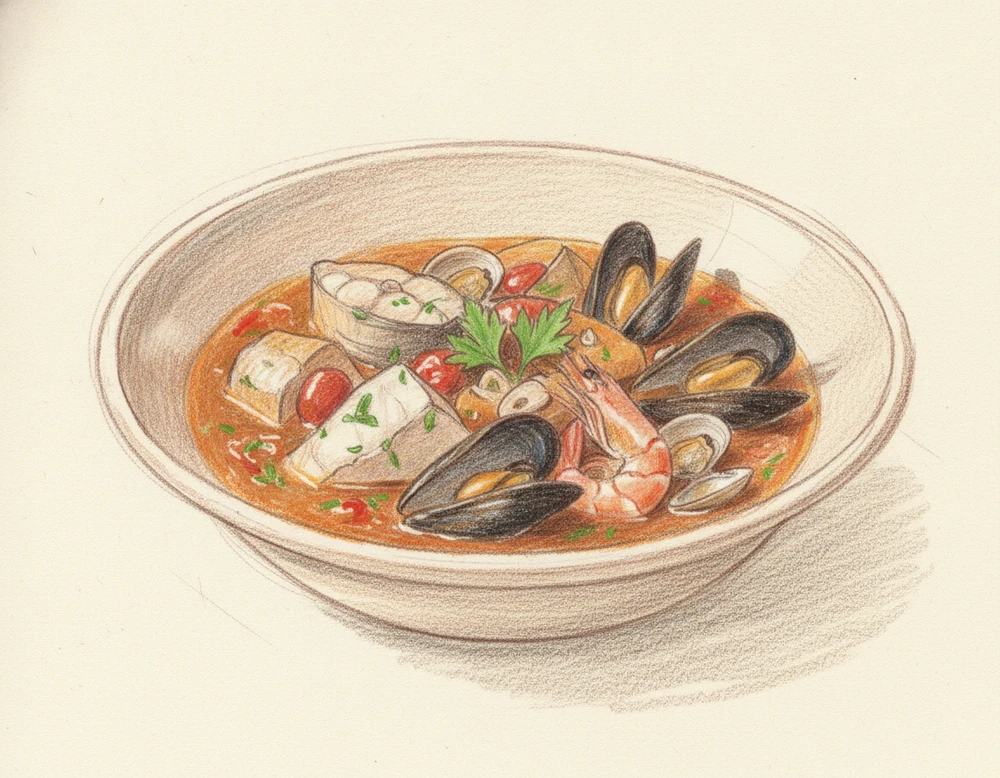
Small-boat fishing off Giglio, the second largest island of the Tuscan Archipelago, is old enough to have left Roman traces on the island, including a processing plant and a fish tank at a villa. Mass tourism nearly finished it off, since much of the catering trade switched to cheaper imported fish, and the fleet is now down to seven boats working Giglio and Giannutri.
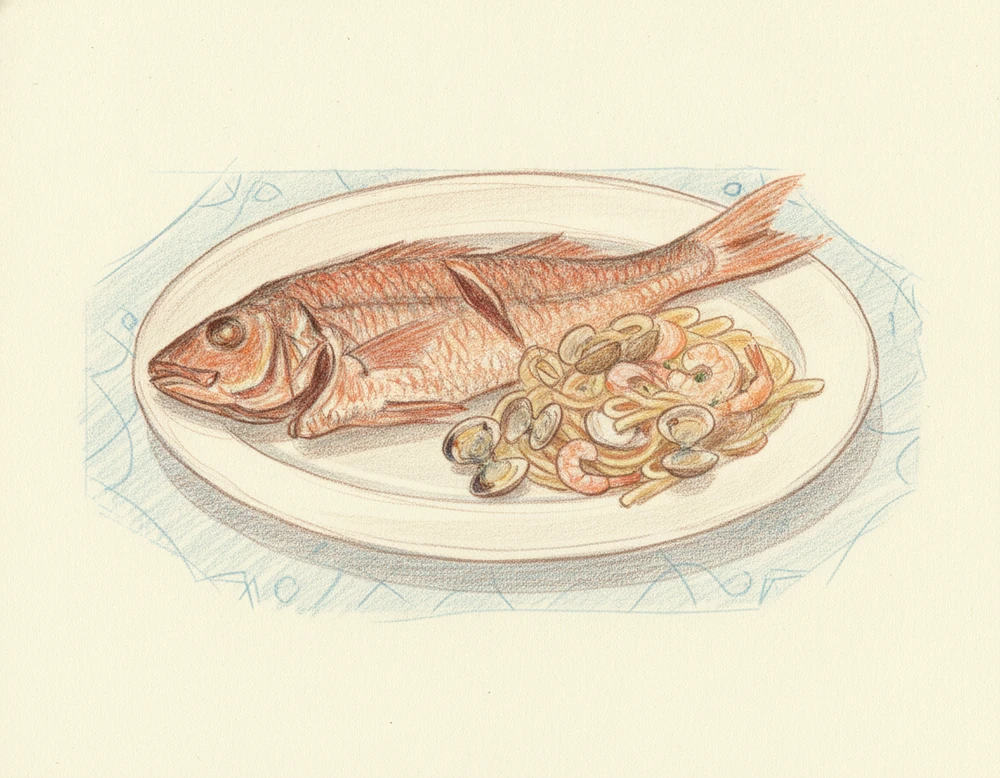
The Orbetello lagoon has been fished for a very long time and the trade still matters to the town. Sea bass, sea bream, grey mullet, eel, the small clams called calcinelli, mazzancolle shrimp and the winter crabs known as femminelle are the usual catch, and the processing tradition is as old as the fishing.
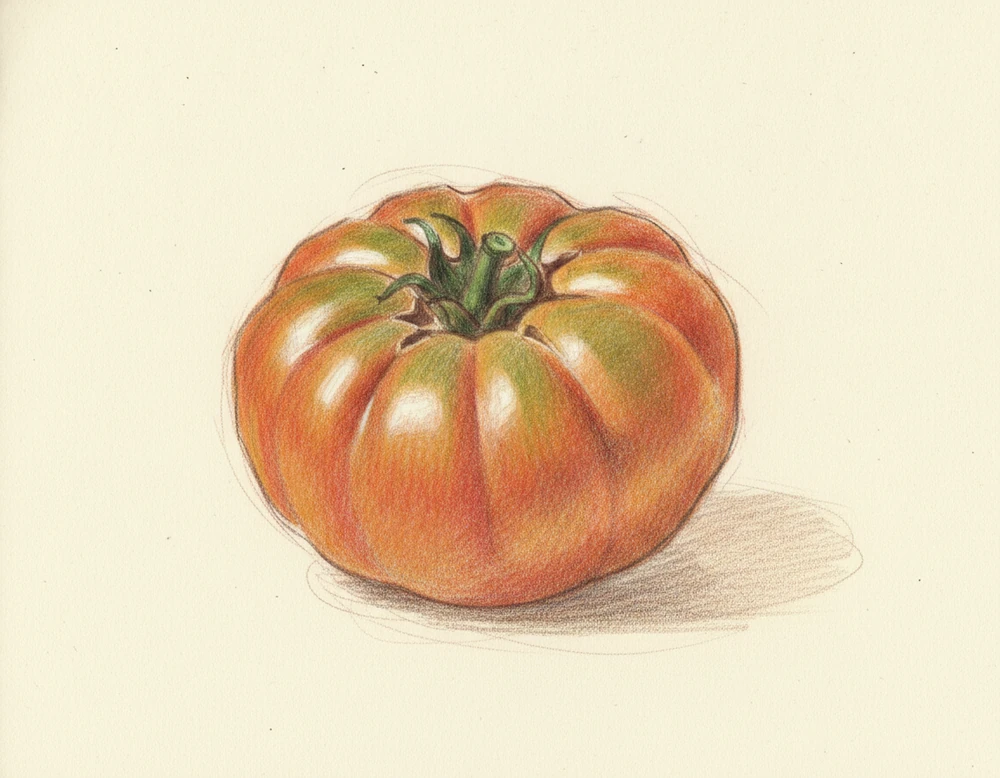
A ribbed Lucca tomato, also called Cresputo or Costoluto, long grown in family kitchen gardens and sold in the city markets, where it once fetched more than other varieties. Hybrid ribbed types pushed it aside from the late 1960s; a few custodian farmers kept the seed, and it entered the Tuscan biodiversity register in 2015. The name means little basket, and it is recognised as much by its flaws: green shoulders that stay green when ripe, and small clefts under the stem.
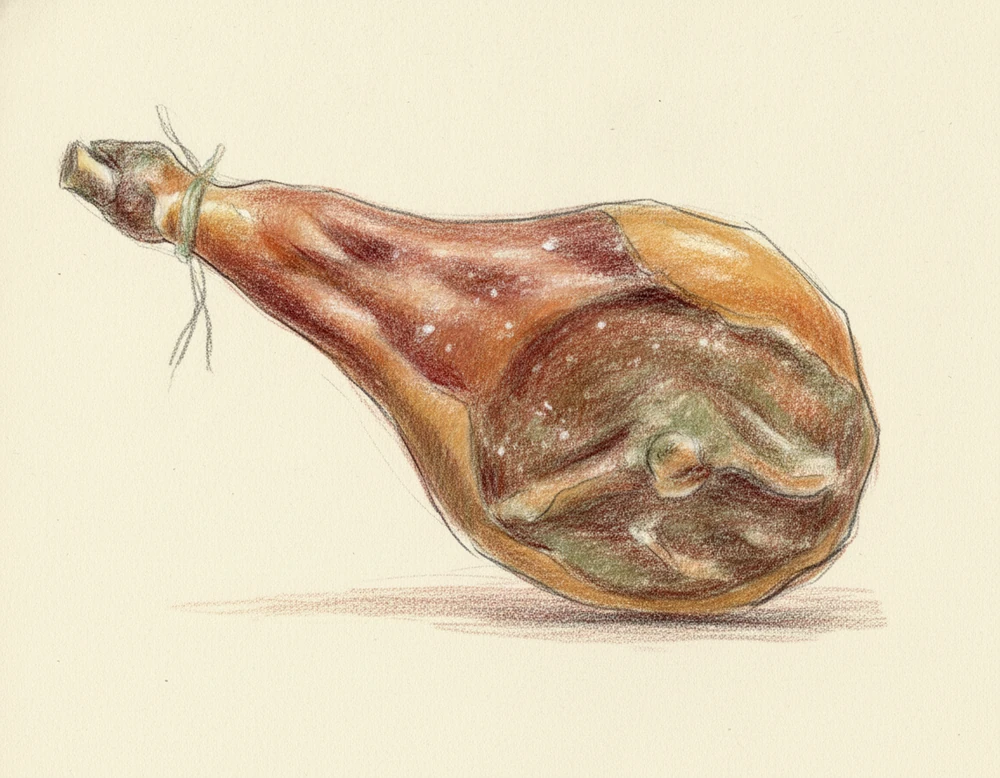
The name is dialect for a jutting chin, which is the shape of this long ham from the mountains above Lucca. Large households there raised very heavy pigs to carry them through the year, and the ham still reaches 16 to 18 kilos after ageing. Its size means it is cut by knife rather than machine.
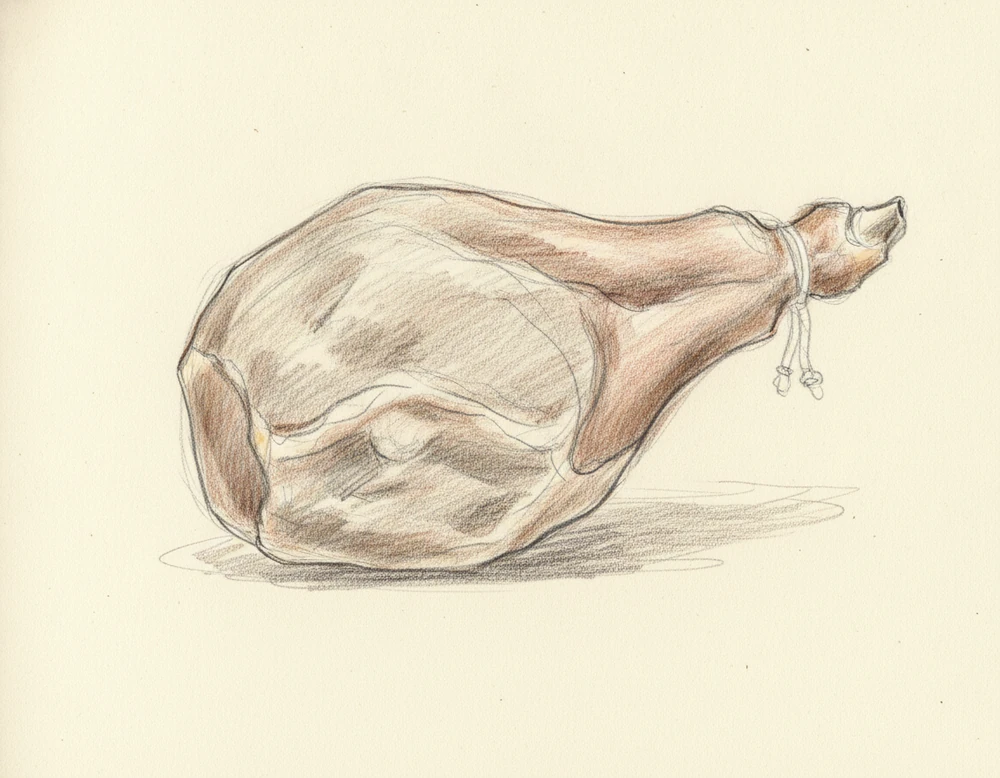
A ham from the Casentino valleys above Arezzo, already praised in print in the 19th century and shipped as far as Germany and England. Rounded, slightly long and flattened, 9 to 12 kilos, cutting a bright red with clean white fat.
A raw cured ham matured in the Tuscan climate, which the disciplinare treats as the reason the product can only be made here: a climate quite unlike the neighbouring regions and particularly suited to a long, even ageing.
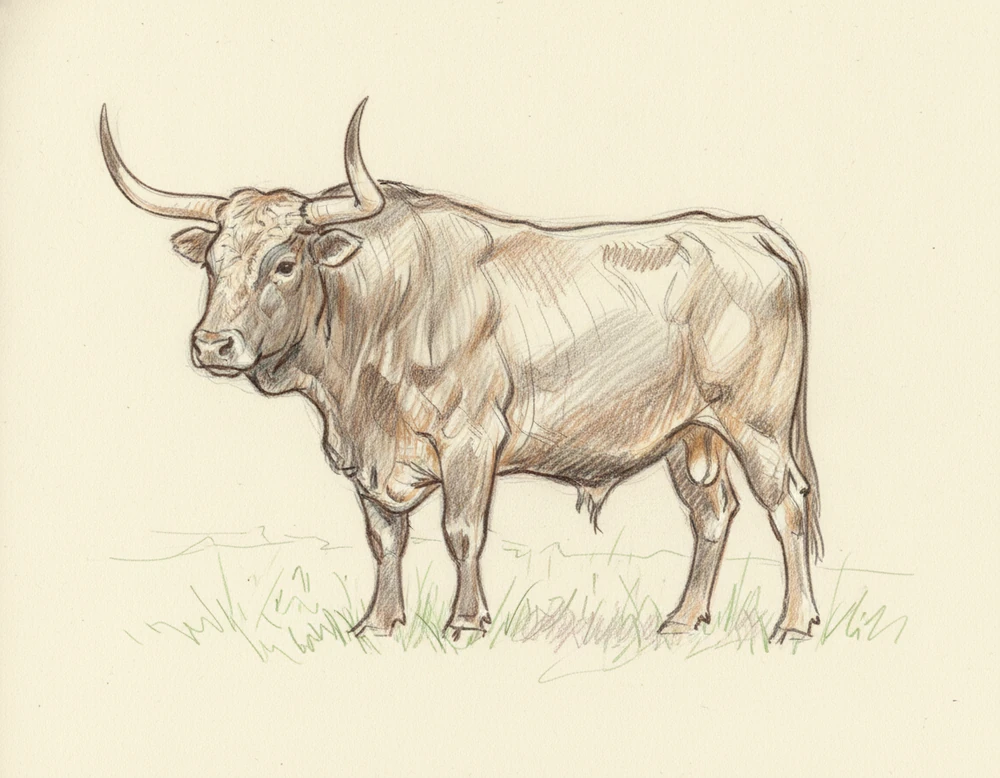
A grey-streaked, heavily built native ox: lyre-shaped horns on the cows, crescent horns on the bulls. The breed peaked between the wars, when even the quarrymen of Monte Amiata used it to haul marble, and it came close to extinction once land reclamation and mechanisation arrived. It is frugal enough to live in rough country and is still kept entirely outdoors, which is why the butteri, the mounted herdsmen who follow the cattle year round, are still at work.
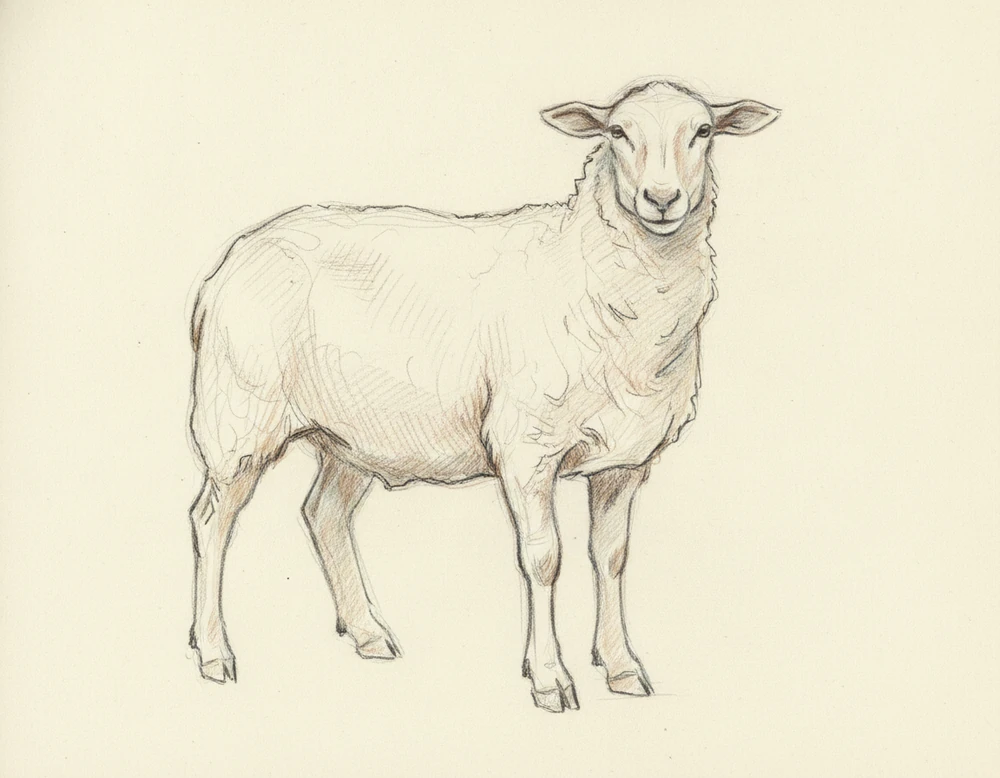
Twenty years ago only a few hundred head were left, in the comune of Pomarance that gave the breed its name and in the Cecina valley; the sheep are still found around Volterra and towards Siena. It was selected over centuries out of the Appenninica, the stock behind nearly every breed of the Tuscan-Emilian Apennines, with Merino apparently used along the way to improve the fleece. Medium-sized and white, narrow hornless head, small ears held out sideways, long body on sturdy legs.
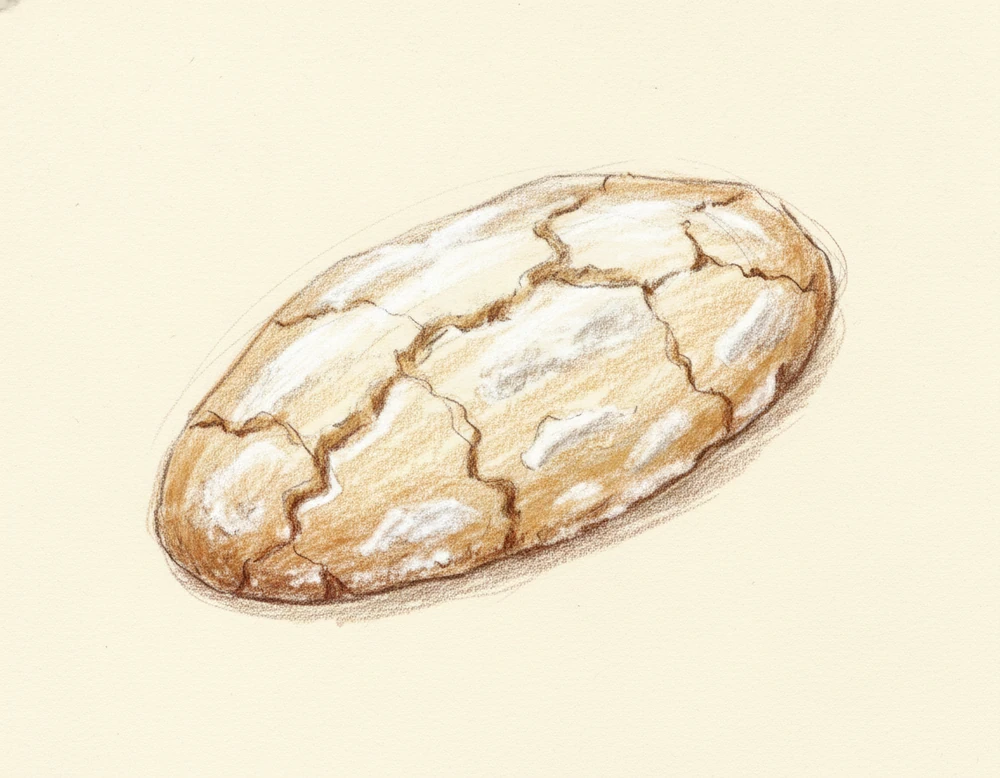
Soft almond biscuits of almonds, sugars and egg white, baked to a cracked, sugar-dusted top. Each is an ovalised lozenge of 10 to 30 g, 50 to 105 mm on the long diagonal, 30 to 65 mm on the short and 13 to 20 mm thick.
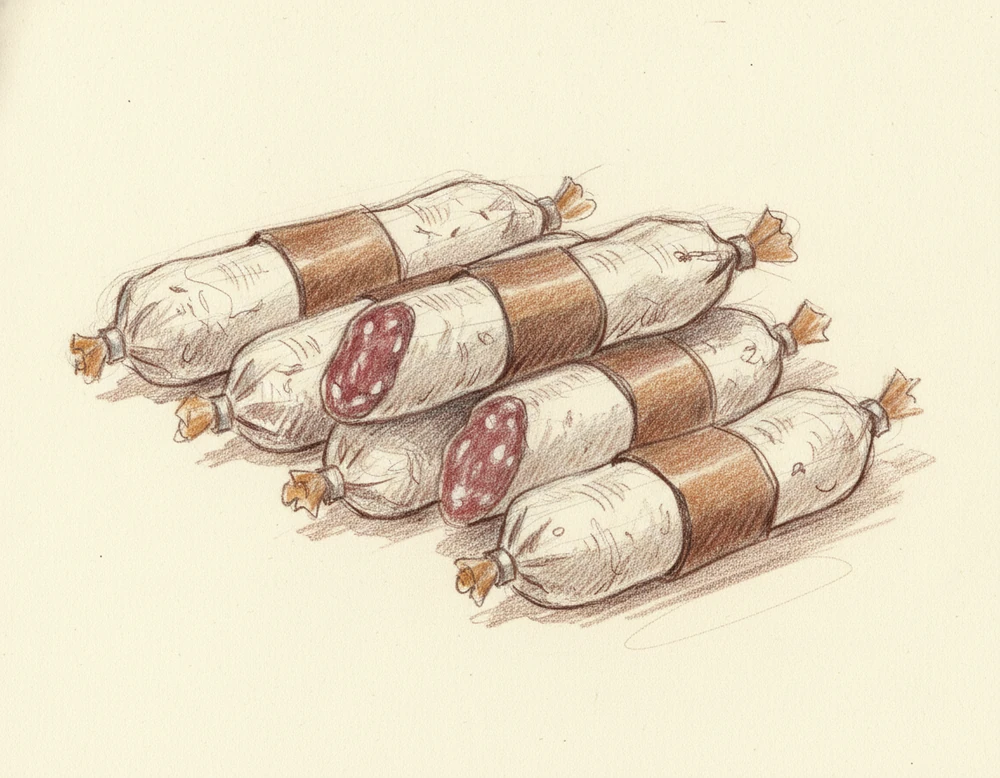
Small salami sized to be carried in a hunter's pocket, which is where the name comes from. The zone is unusually wide: pigs may be raised across eleven Italian regions, from Friuli down to Molise.
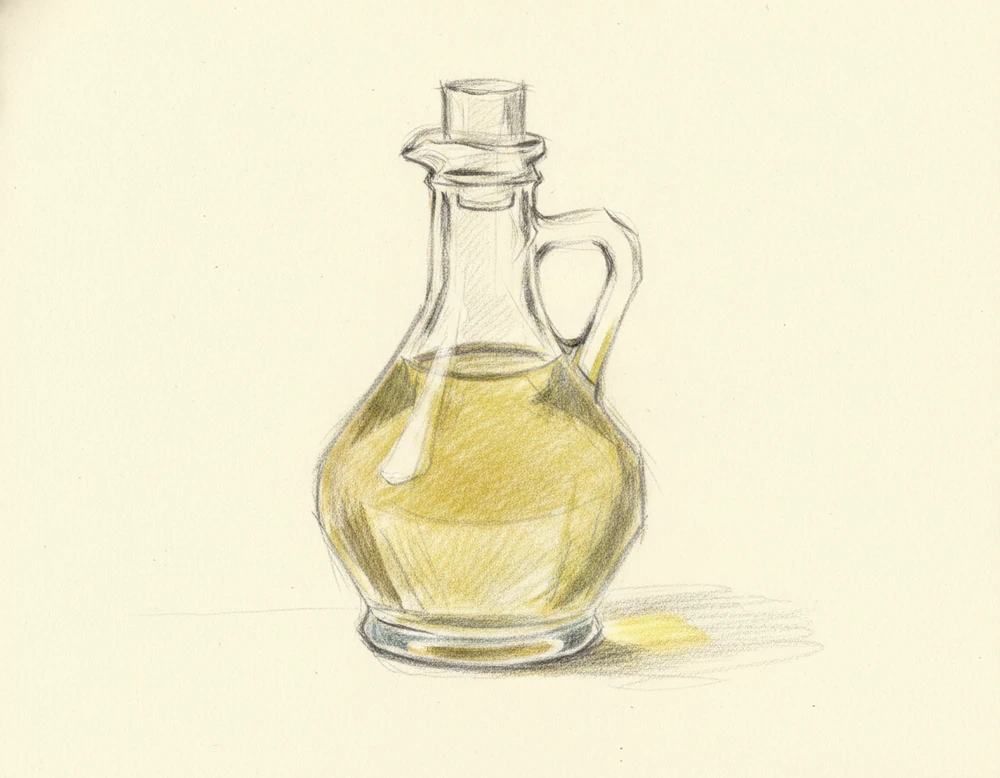
A single-cultivar olive oil from the Monte Amiata slopes: at least 85 per cent Olivastra di Seggiano, a variety that grows almost nowhere else, with a maximum of 15 per cent from other varieties.
A flat pancetta of extraordinary size, its sides 50 centimetres and sometimes 80, cut from the back, the belly and part of the prized chine of heavy pigs that used to reach 200 kilos. The flavour is long and pronounced but softer than most cured meats made the same way.
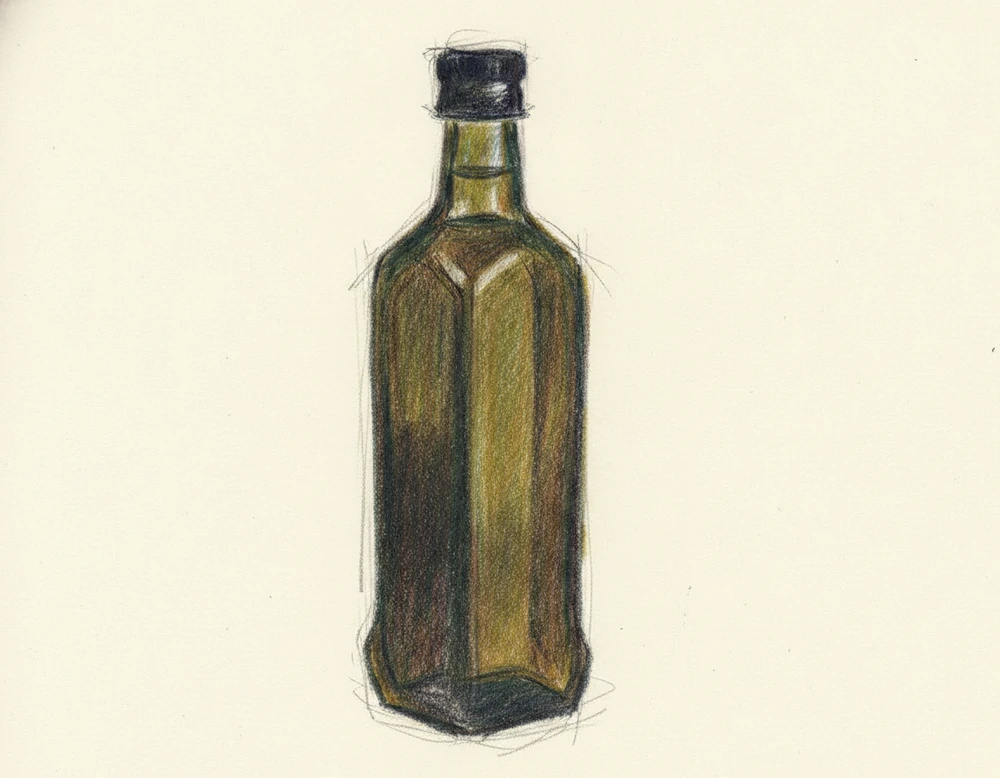
Extra-virgin olive oil from the Sienese hills, covering the olive groves that share the country of Chianti, the Crete and the Val d'Orcia.
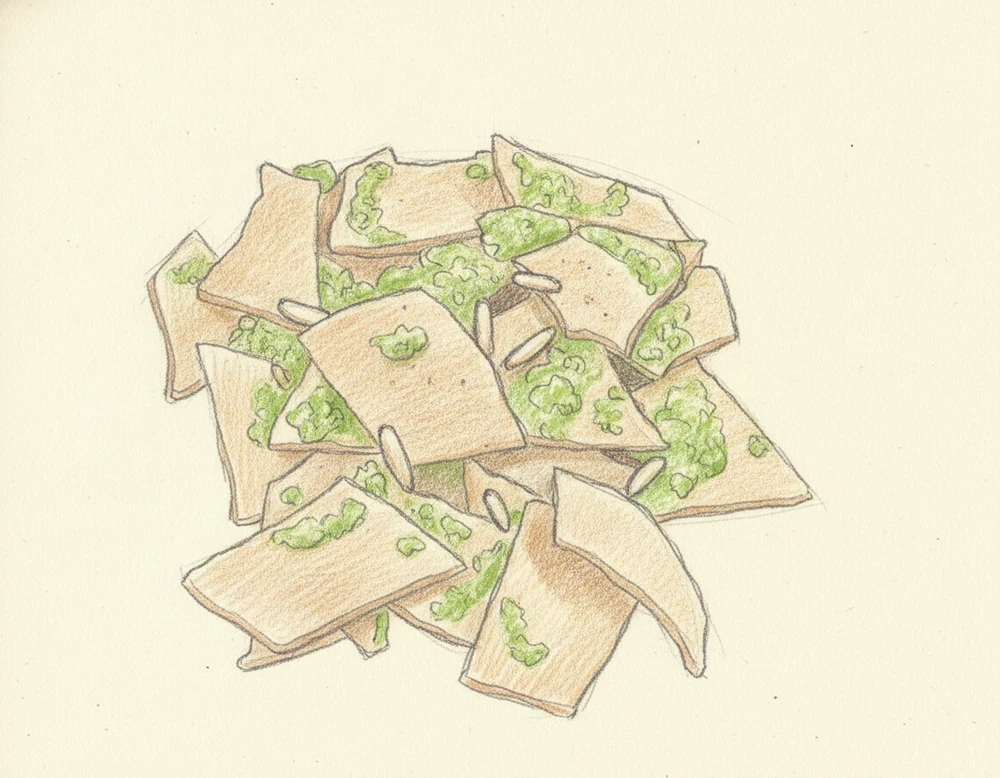
A thin pale disk, 35 to 45 cm across, made from nothing but flour, warm water and salt. It belongs to the Lunigiana around Pontremoli and is treated as pasta rather than bread: cut into diamonds and dropped into water taken off the boil, then dressed with a fresh pesto of cheese, basil and olive oil.
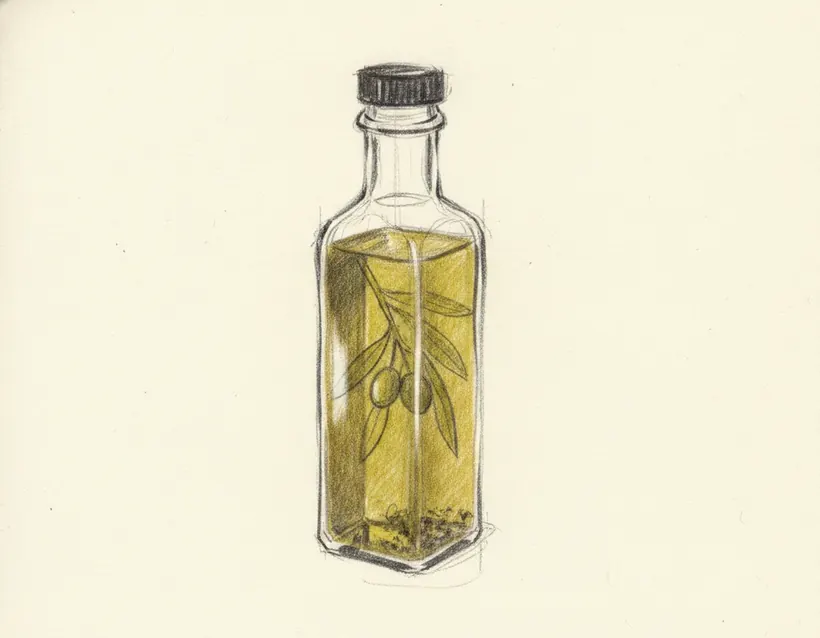
Green, peppery extra-virgin olive oil pressed from Frantoio and Moraiolo olives of the Tuscan hills.
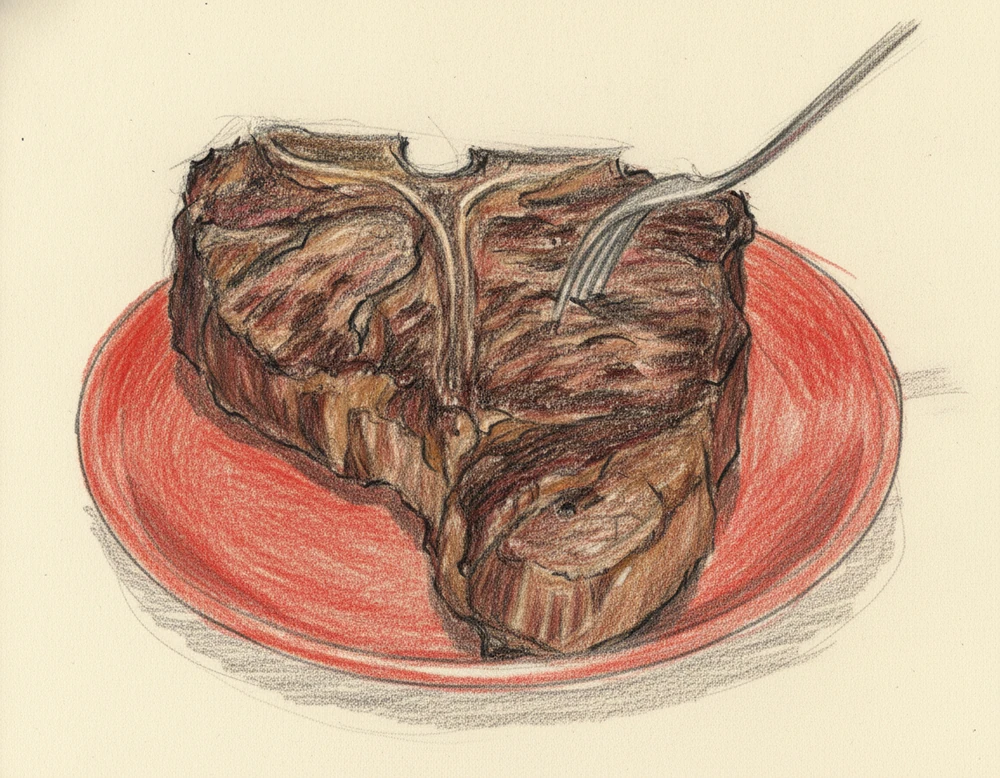
Beef from the white cattle breeds of the central Apennine spine, covering a band of thirty provinces from Bologna down to Latina. It is the designation behind the Chianina, Marchigiana and Romagnola beef that Tuscan and Umbrian cooking is built on.
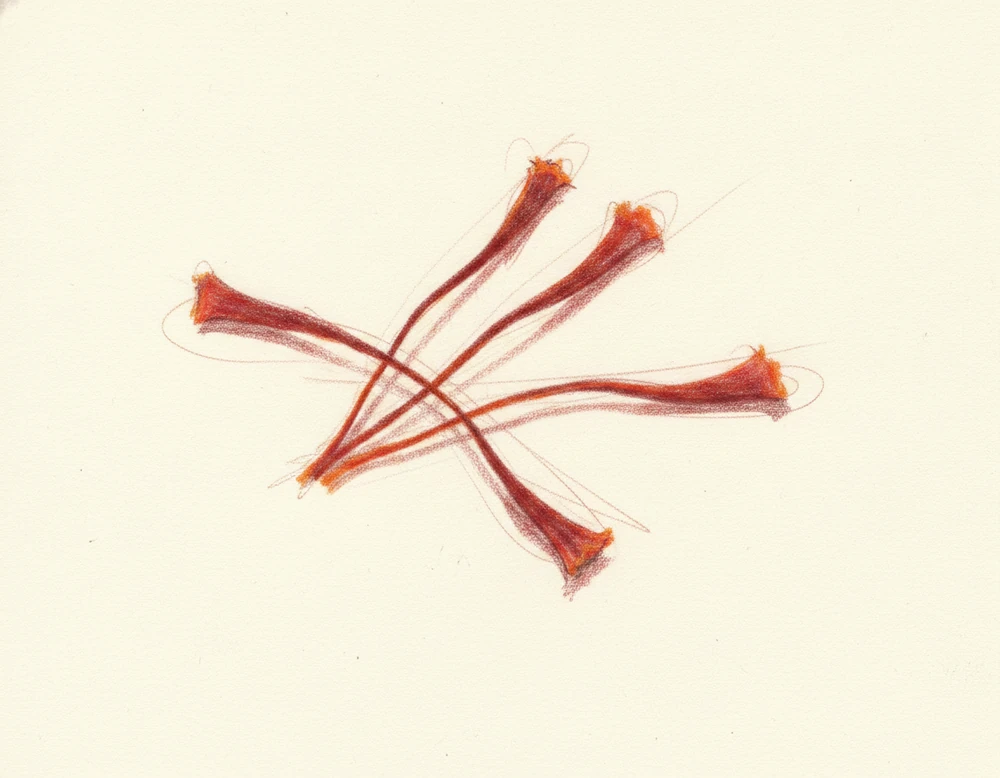
Saffron consisting only of the orange-red, toasted stigmas of Crocus sativus. The filaments are dilated and frayed at the tip, and toasting turns them from orange to a characteristic bordeaux red.