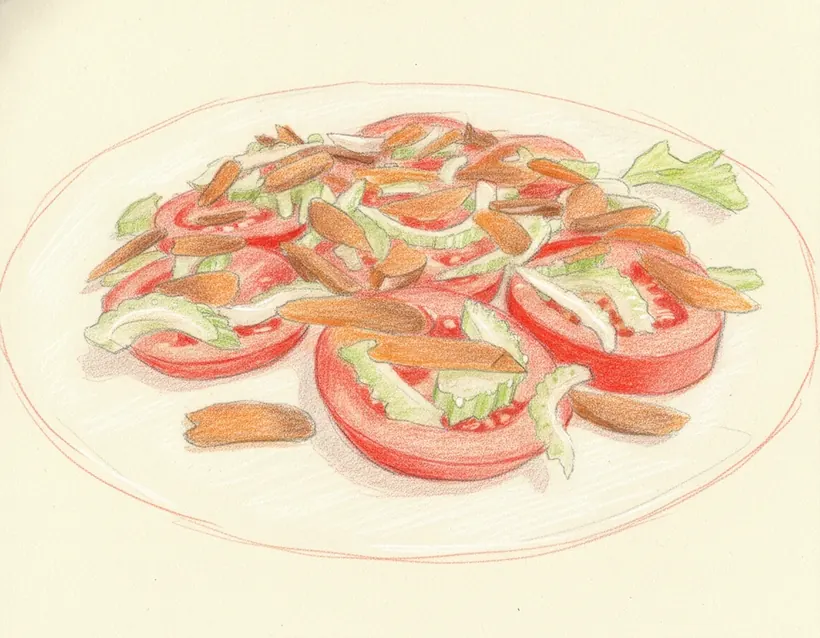
Bottarga di MuggineCured grey-mullet roe
Salted, pressed and dried grey-mullet roe from the Cabras lagoon, shaved thin over bread and oil or grated onto pasta, Sardinia's 'sea gold'.
Pairs with
Sardinia's cooking is pastoral and island-bound: suckling pig roasted with myrtle, sheep's-milk pecorino, saffron and durum semolina, bottarga and clams from the lagoons, and the crisp carasau bread of the shepherds. Its wines are Vermentino, crisp on Gallura's granite, and the warm Cannonau and Carignano reds, with Vernaccia di Oristano and Malvasia di Bosa for the sweets.
Salted, pressed and dried grey-mullet roe from the Cabras lagoon, shaved thin over bread and oil or grated onto pasta, Sardinia's 'sea gold'.
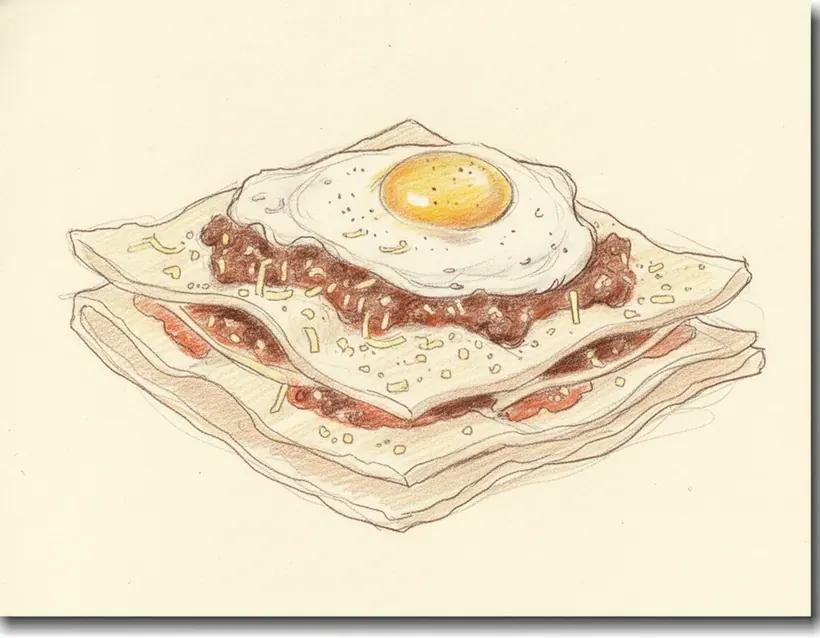
Sheets of crisp carasau bread softened in broth and layered with tomato sauce, grated pecorino and a poached egg, a shepherd's dish of the Barbagia.
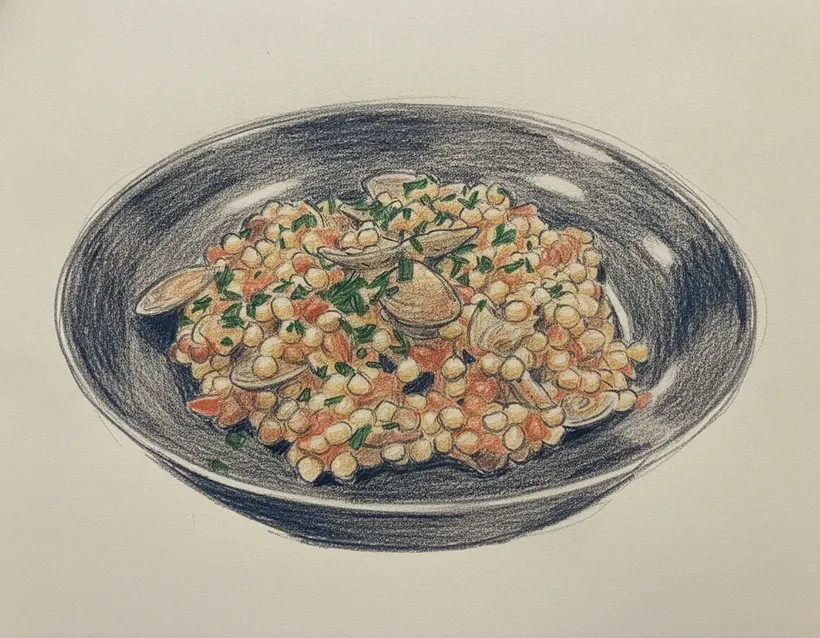
Hand-rolled, toasted semolina 'fregola' cooked risotto-style with small clams (arselle), tomato and garlic.
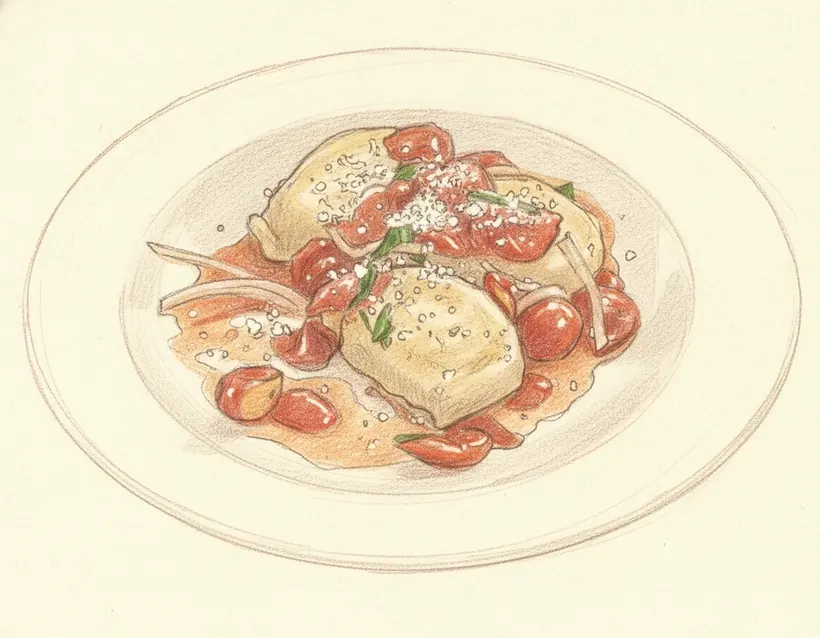
Pasta parcels closed with a wheat-ear pleat, filled with potato, pecorino and mint, dressed simply in tomato and cheese, the pride of the Ogliastra.
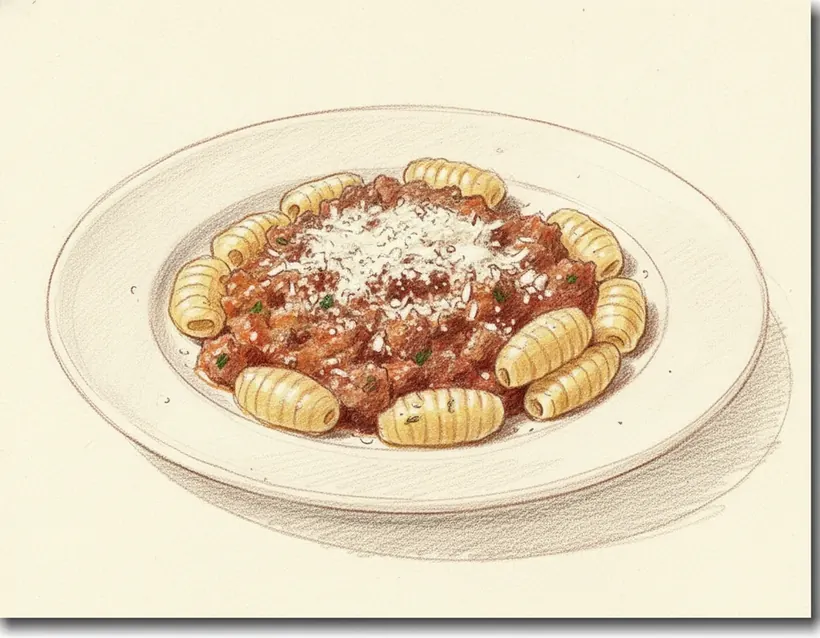
Ridged semolina 'gnocchetti sardi', often saffron-scented, in a ragù of fresh sausage and tomato with grated pecorino.
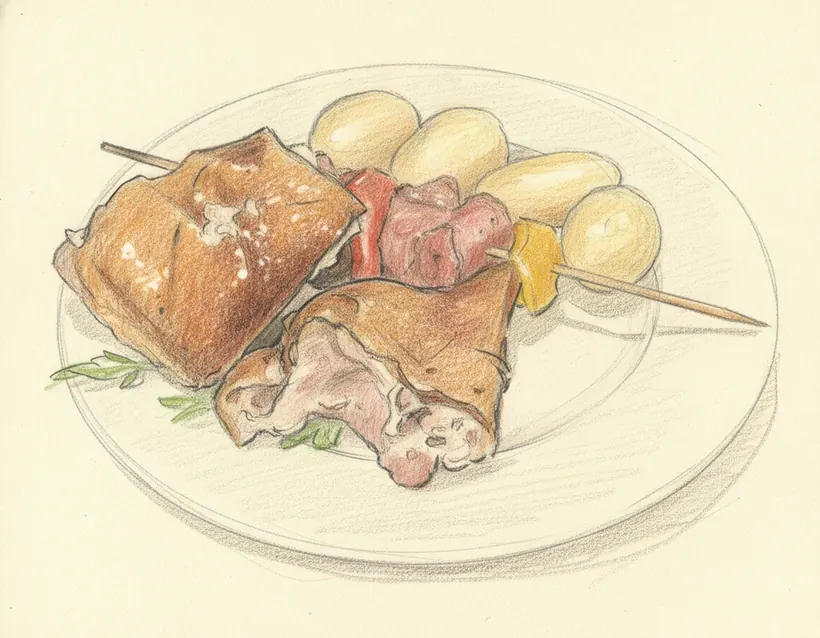
A whole suckling pig slow-roasted on a spit over aromatic wood and rested on myrtle branches, the skin crisp and the meat sweet.
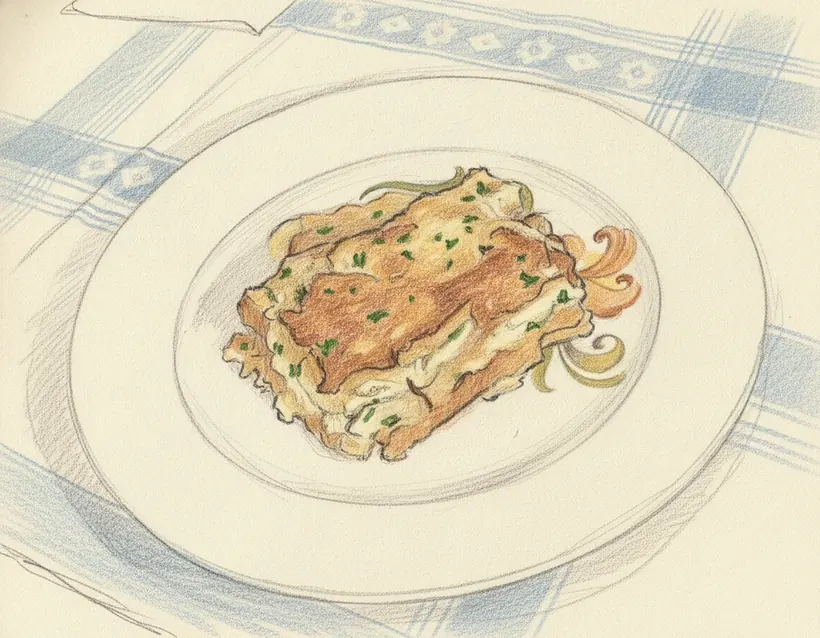
Despite the name, a solid casserole: layers of stale bread soaked in meat broth with sheep's cheese and parsley, baked until golden, the festive dish of Gallura.
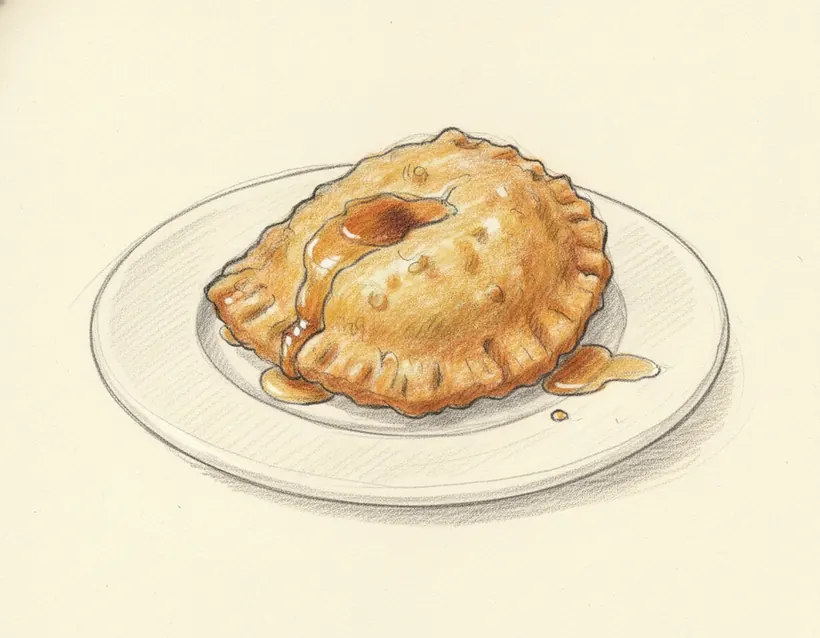
Large ravioli of thin pastry filled with young sour pecorino, deep-fried and drizzled with bitter honey, Sardinia's cheese dessert.
DOP, IGP, STG, Slow Food Presidia and traditional specialities of Sardinia.
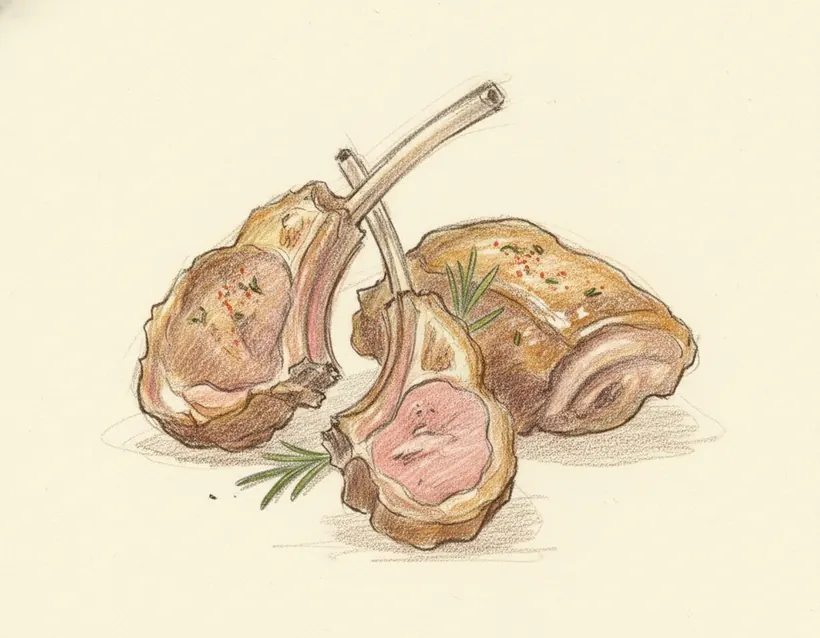
Milk-fed lamb of the island's free-grazing flocks, tender and delicate, the meat of Sardinian feasts.
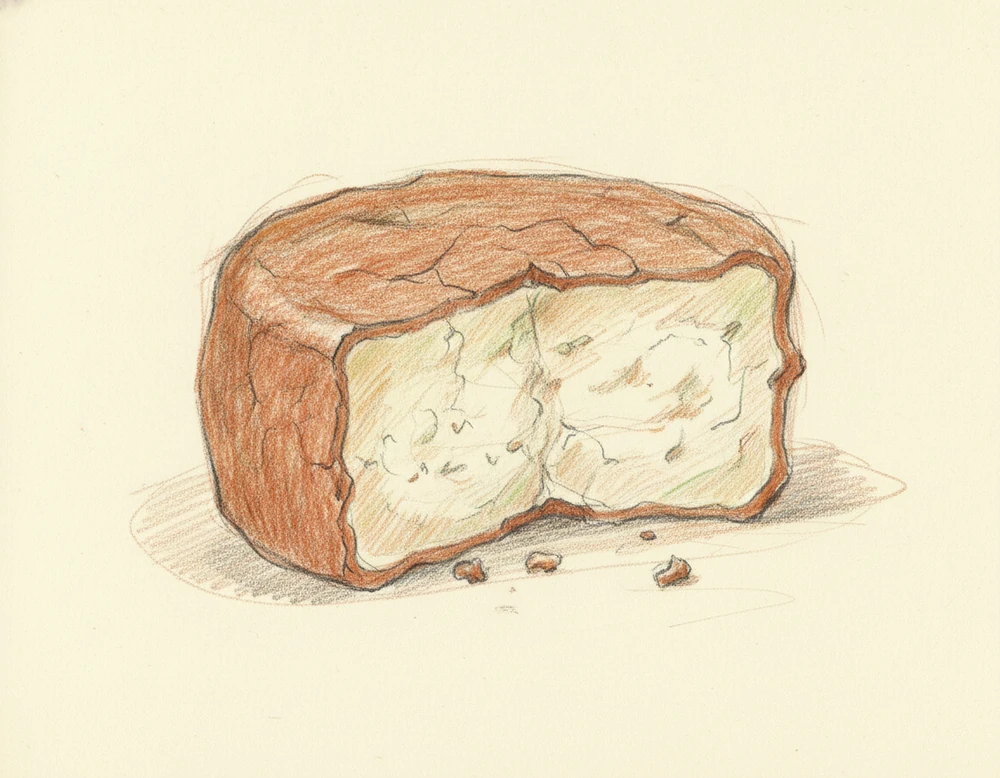
There is no other cheese like it, and it belongs to one town: Escalaplano, just over 2,000 people on the arid plateaus between the Flumendosa and the Flumineddu in the southeastern interior, country once known for cork. Axridda is the Sardinian for clay, and the cheese is sealed in it. Sardinian summers are long, dry and hot, and cheese matured in natural cellars did not always survive them; the families here worked out that clay would carry it through.
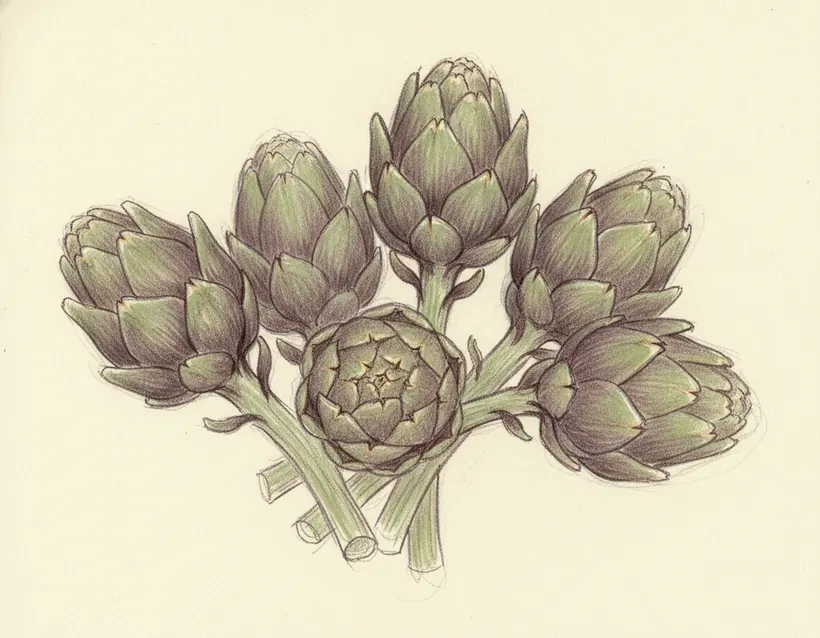
A slender, violet, sharply spined artichoke, tender and faintly bitter, eaten raw or braised.
Sardinia is sheep country, but the Montiferru a few kilometres from Oristano also keeps an old and highly regarded stretched-curd cheese of cow's milk. It was women's work: fresh milk, the curd then worked in hot water into the rounded pear shape that is its signature. Past a couple of months' ageing it puts green, grassy, buttermilk notes together with something of woods and leaves and finishes faintly of almond.
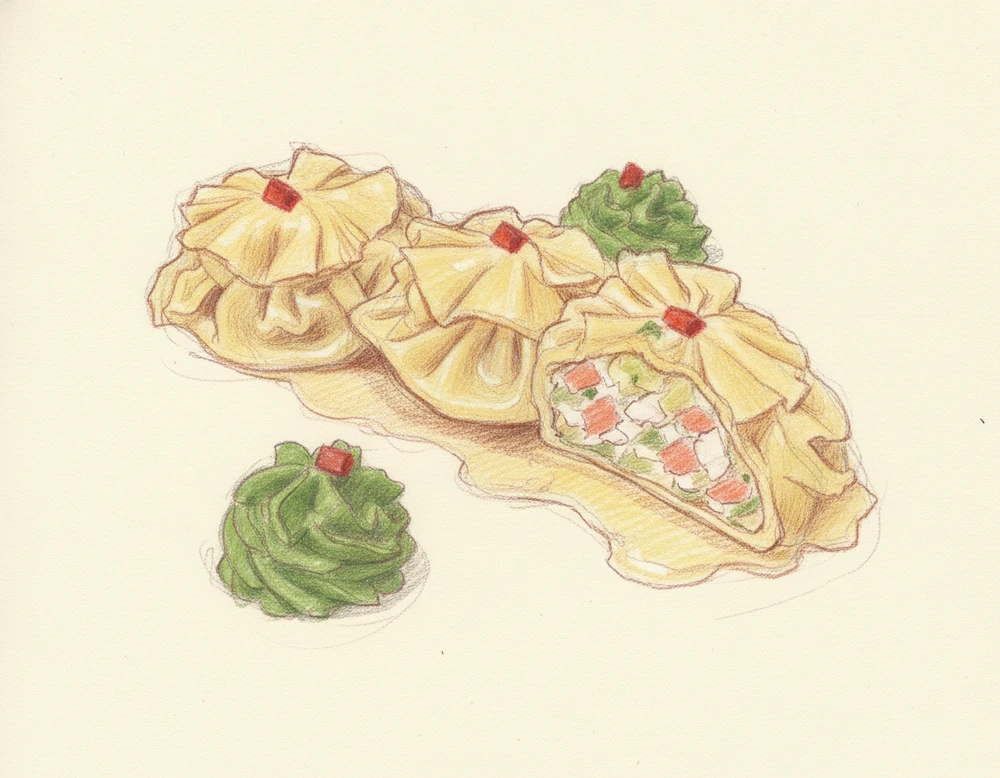
Fresh pasta parcels closed by hand into a pleat that looks like an ear of wheat, filled with fresh or flaked dried potato, cheeses, vegetable or animal fats and flavourings.
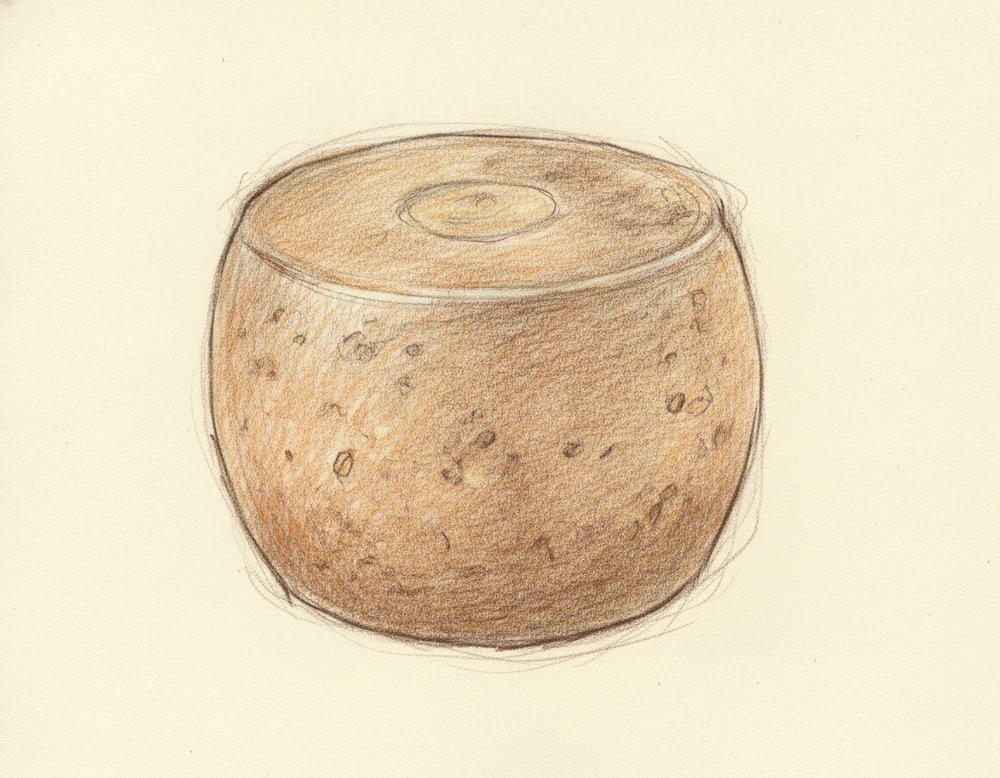
This was the cheese of the Sardinian shepherds, and the island's most-made cheese until milk went from the shepherds to the industry and Pecorino Romano took over. Fiore, flower, seems to come from the thistle flowers once used as rennet, though another account has it from the flower, asphodel or peony, carved into the wooden moulds, by which you could tell one maker or one village from another. The flavour is strong and its own.
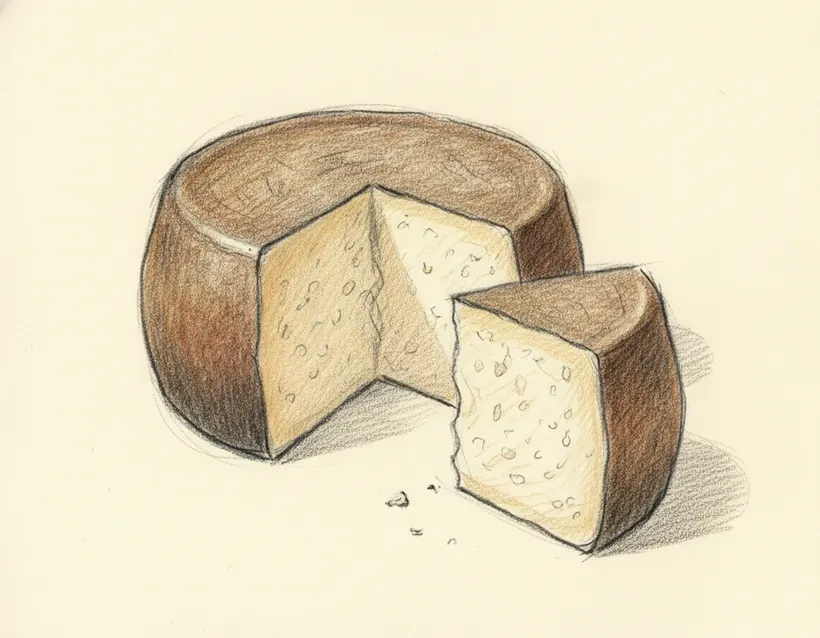
A hard, smoky raw sheep's-milk cheese shaped by shepherds and lightly smoked over aromatic wood, aged to a sharp, resiny depth.
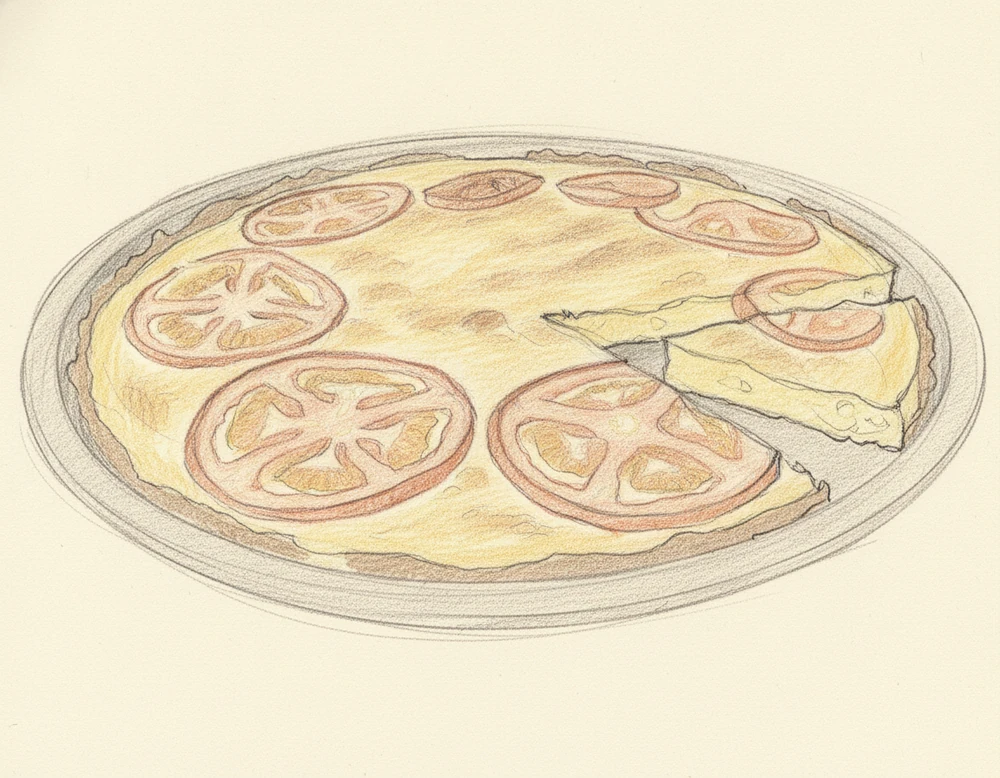
Ittiri is an old town of the Coros, in the Logudoro between Sassari and Alghero, its centre on a plateau at 450 metres among rocky valleys, ridges, streams and lakes, with nuraghi and rock-cut pre-Nuragic tombs, the domus de janas, called coroneddo in dialect, all over the country. It farms artichokes, vines, olives and sheep, and alongside the famous Sardinian raw-milk pecorini it makes fresa.
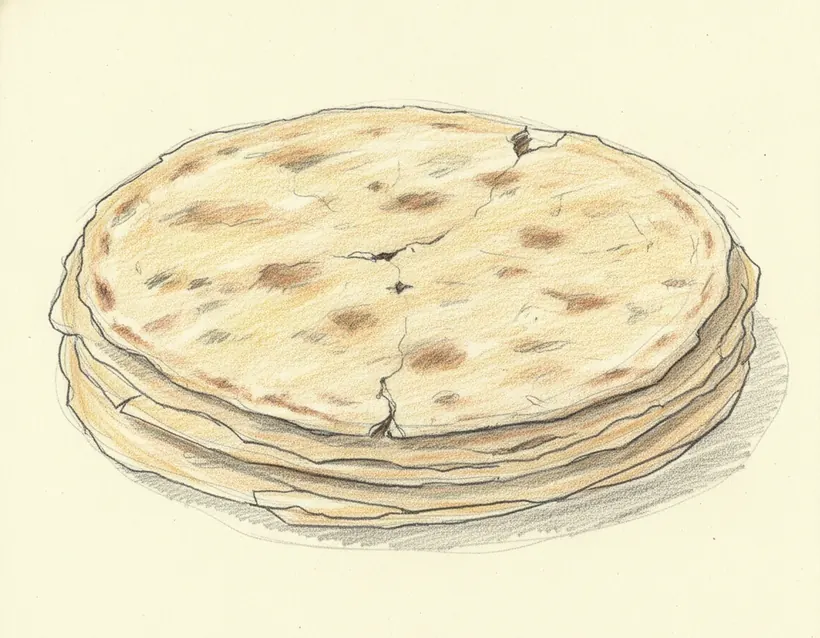
The shepherd's paper-thin, brittle crisp-bread baked twice into wafer-like golden sheets that keep for months, 'carta da musica'.
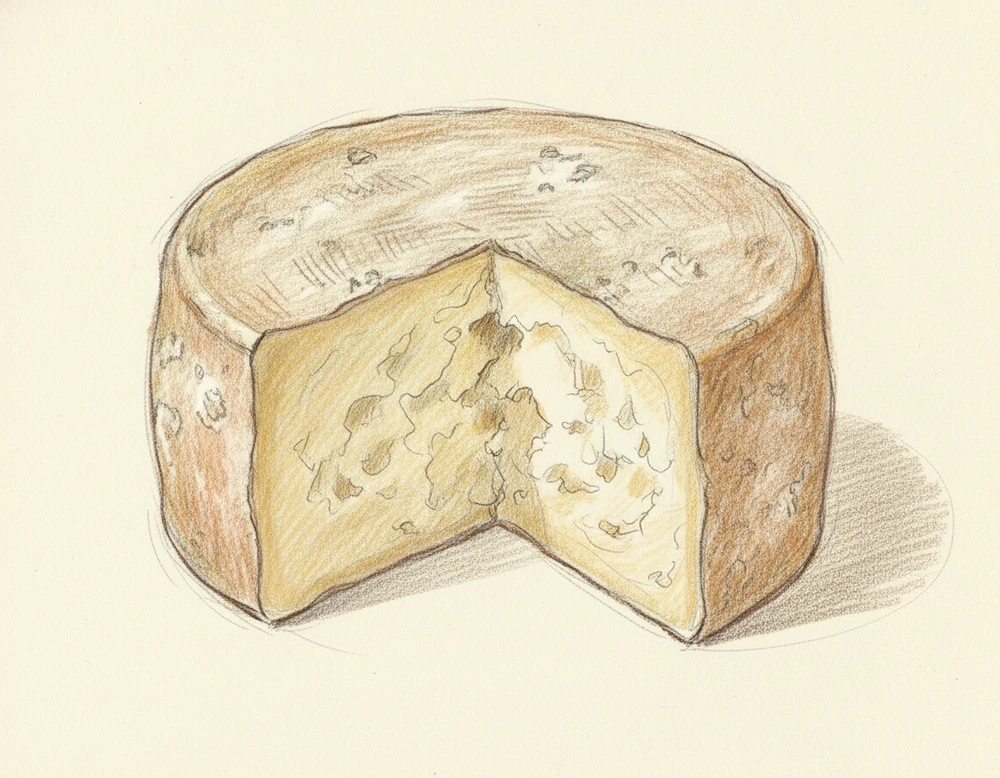
Thinly populated country in the northeast of the island, inside the Tepilora park, over a hundred thousand hectares of it, rising from 300 metres under the limestone of Monte Albo, which tops 1,000. It is heavily wooded and also carries wide pasture of mastic and strawberry tree, the Mediterranean scrub the sheep here eat; the ground has always suited grazing better than anything else. The cheese is a Sardinian pecorino of semi-cooked curd.
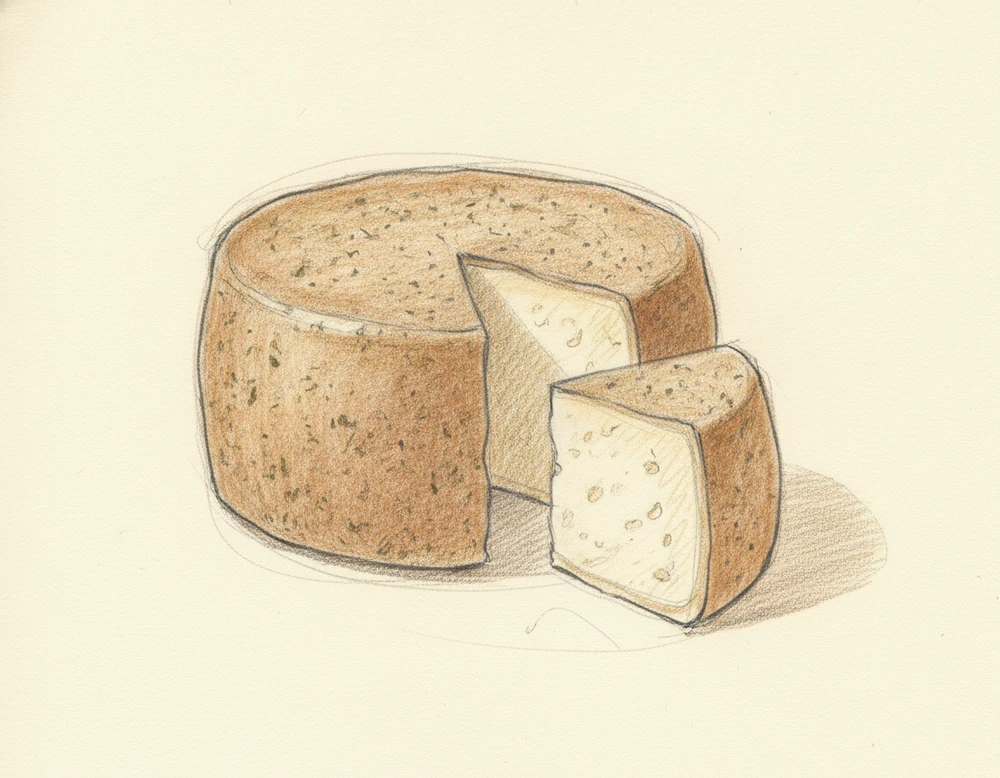
A little smaller and taller than the standard Sardinian wheel, and remarkably smooth on the palate, which comes from pressing it.
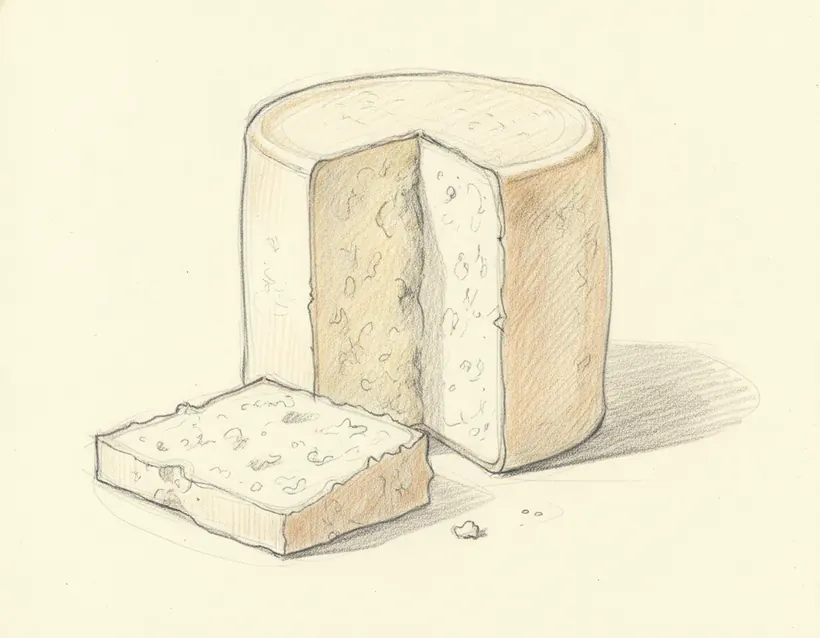
A hard, salty sheep's-milk cheese aged in tall drums, the sharp grating cheese behind carbonara, gricia, amatriciana and cacio e pepe.
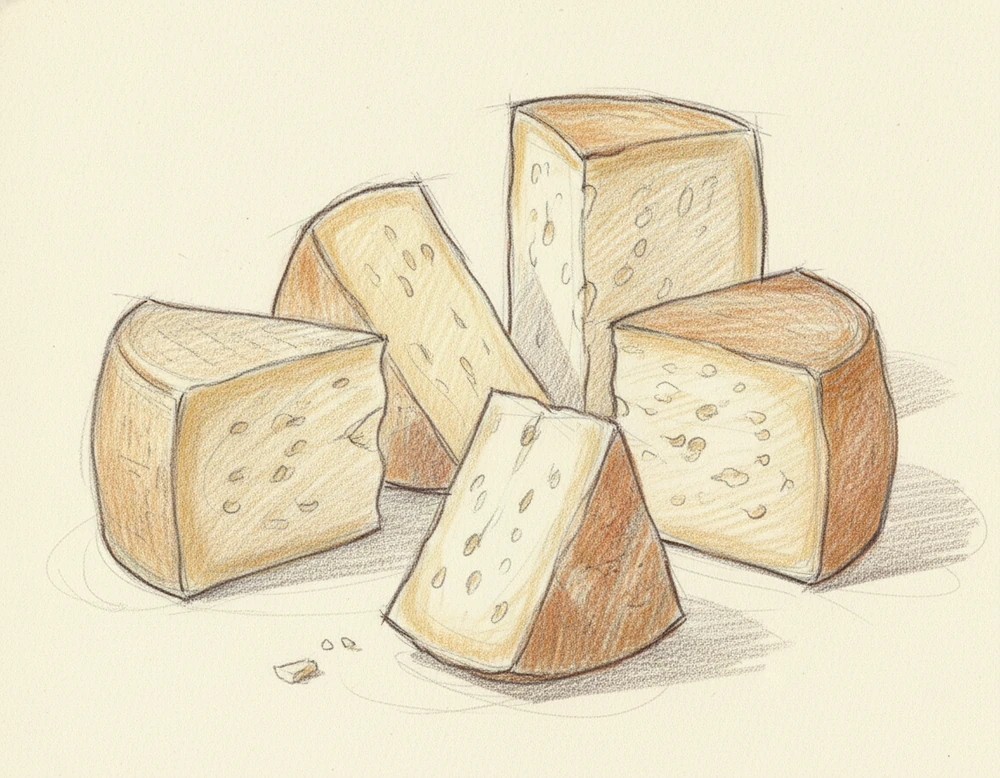
A semi-cooked cheese made only from whole sheep's milk, optionally thermised or pasteurised, in two types: Dolce, briefly matured at 20 to 60 days, and Maturo, aged no less than two months.
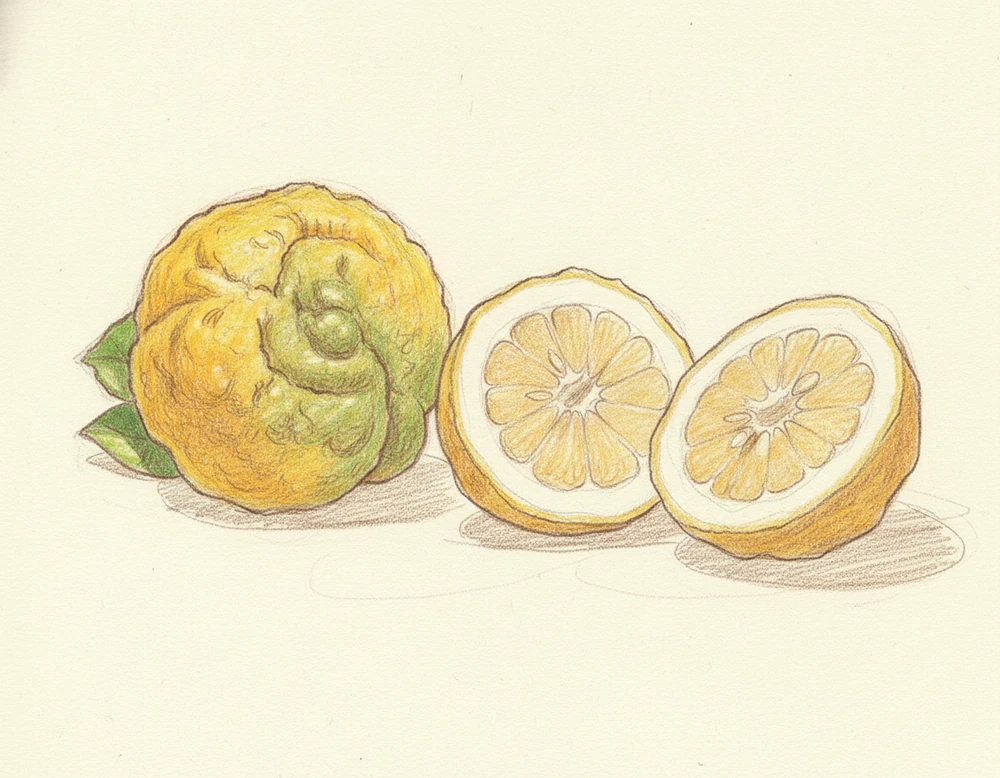
The tree looks like an orange and the fruit does not: as big as a grapefruit or bigger, bright yellow, the skin thick, ribbed and wrinkled. It grows wild in the scrub and in the citrus groves only in Sardinia, in the Baronia around Siniscola, and has been cultivated here at least two hundred years. It carries some of the island's sweets, sa pompìa intrea above all, in which the pith is candied in honey, and the rind flavours spirits.
The Montiferru pastures smell of myrtle and wild chamomile and are ruled off by dry-stone walls of black lava, against which the copper-red coats stand out. The breed lives out all year, in all weather, day and night. It was made at the end of the 19th century by crossing local Podolica-line cattle with Modicana bulls brought from the Ragusano, and gives both excellent milk and dark, well-flavoured meat. Just over 3,000 animals are left and the market for them is entirely local.
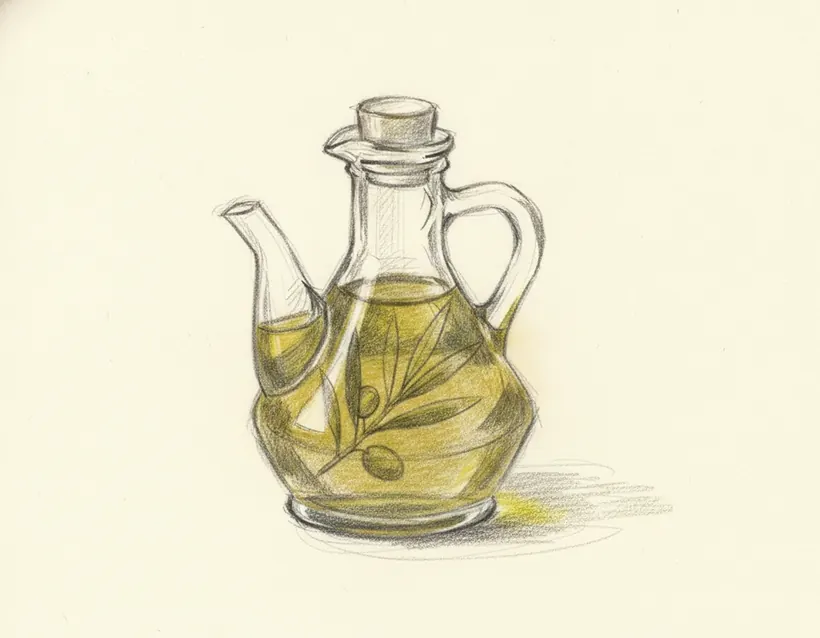
Extra-virgin oil from island olives such as Bosana, fruity, faintly bitter and peppery.
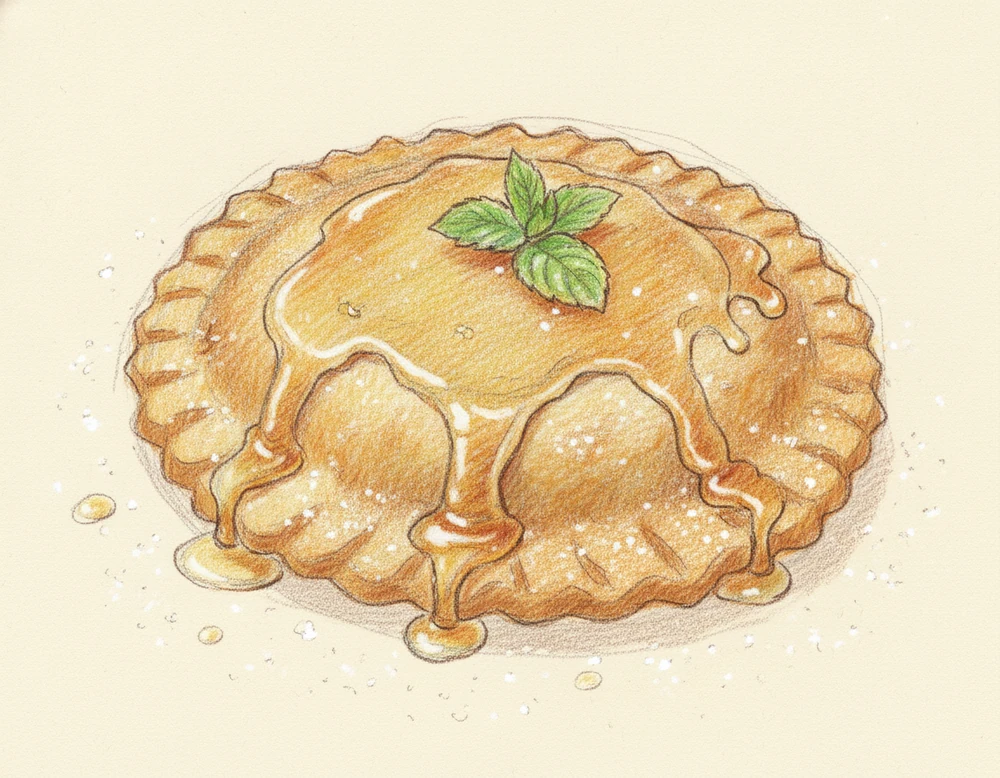
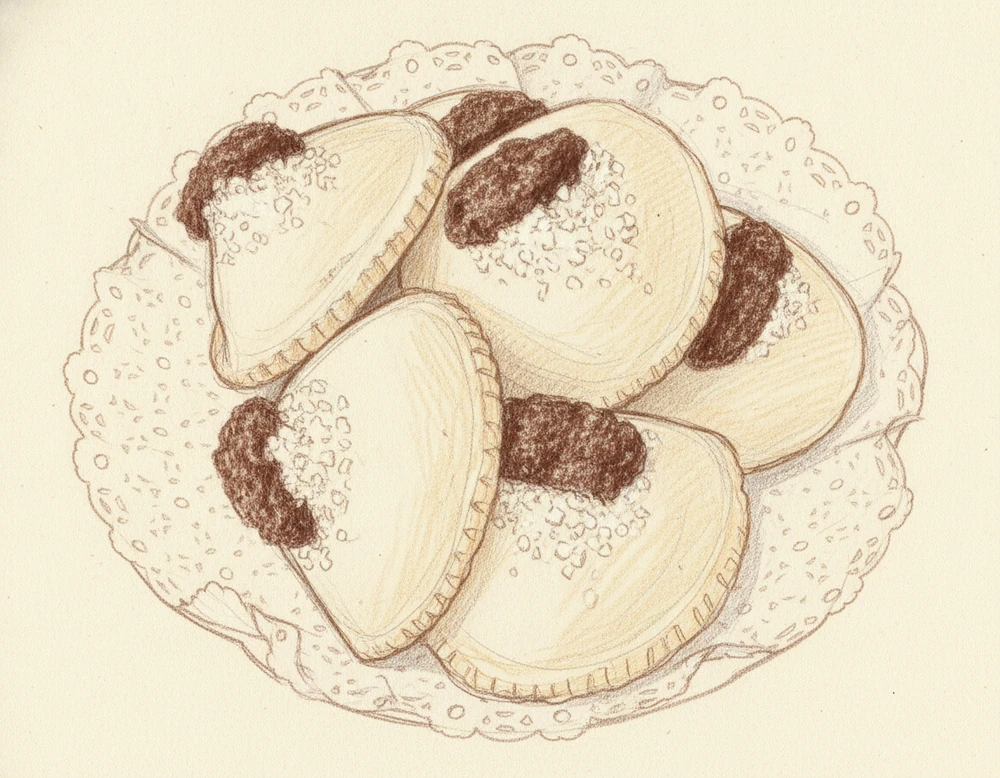
A fresh-pasta round or oval of two sheets with a wavy, sometimes decorative edge, enclosing a filling of fresh cheese. Fried and dressed with honey, it is Sardinia's best-known dessert.
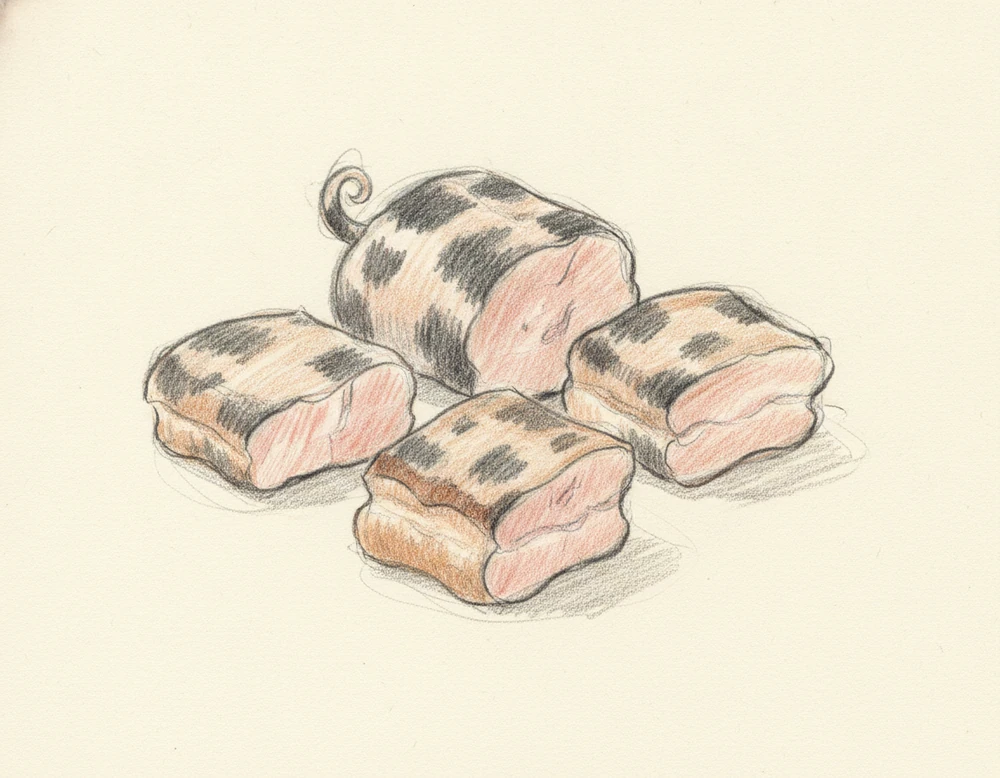
Small dark pigs were kept out in the woods across the Barbagia around the Gennargentu and the Supramonte, in Ogliastra, and less so in the Sarrabus-Gerrei, the Monte Linas country and the Sulcis-Iglesiente, alongside the dairy animals. There was forest to keep them in: until the first half of the 1800s woodland covered 70 percent of that country, and the pigs went where the crops would not. Pigs have been on the island since at least the 6th millennium BC; the Nuragic period left bronzes of both domestic pigs and boar, medieval documents record the keeping of them, and several chapters of the code of Marianus IV of Arborea deal with it.
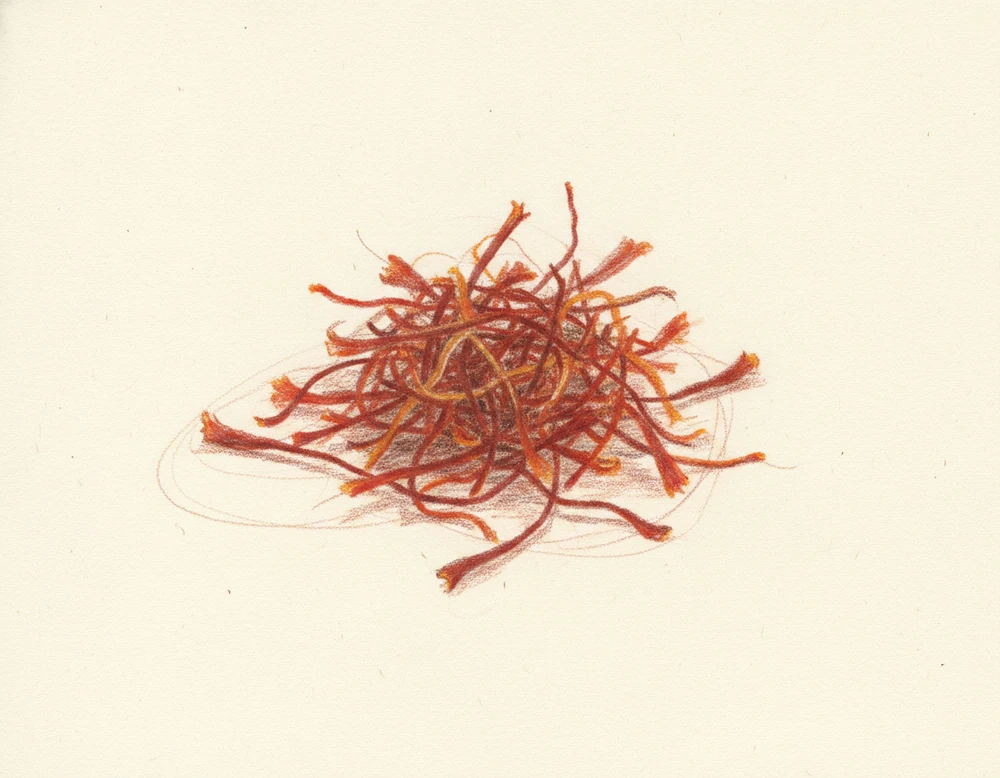
The crocus is picked by hand in the first hours of the day, the flowers still shut or barely open, and laid gently into baskets so nothing is crushed. Then the slow part: the petals are opened by hand, the stigmas drawn out, moistened with lightly oiled fingers and set to dry, in the sun or before a fire, but never above 45 degrees, so that they dry slowly.
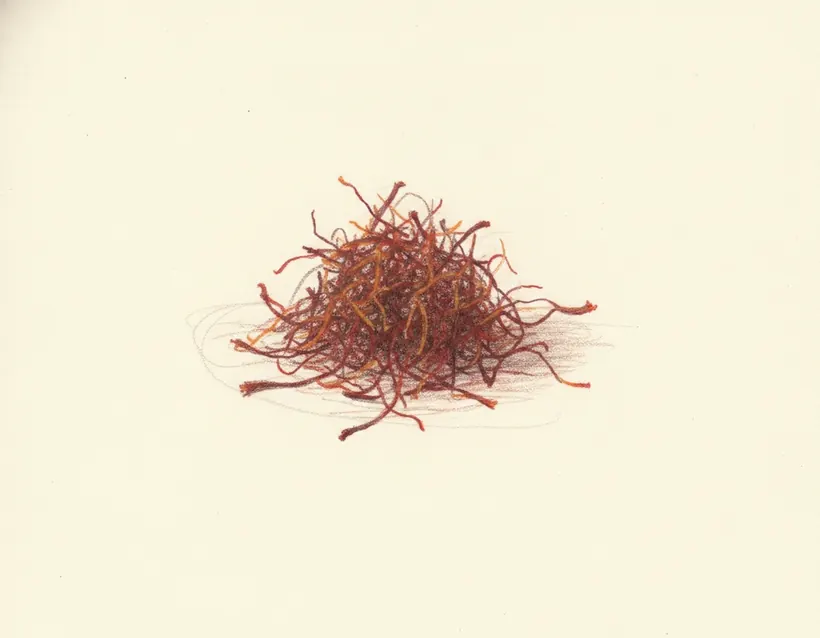
Intensely coloured, aromatic saffron hand-picked around San Gavino Monreale, colouring the island's breads and malloreddus.