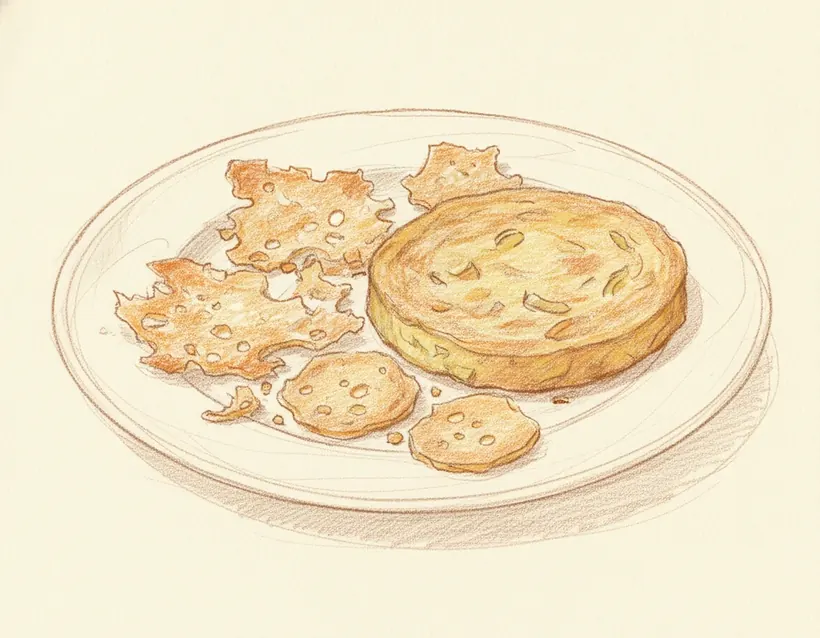
FricoCrisp fried Montasio cheese
Montasio cheese fried, alone into a lacy crisp, or with potato and onion into a soft golden cake, the mountain dish of Carnia.
Pairs with
Friuli's table sits where Italy meets the Alps and the Slav and Austro-Hungarian worlds: Montasio cheese and San Daniele ham, polenta and brovada, plum gnocchi and the spiral gubana. It is Italy's great white-wine region, Friulano, Ribolla Gialla, Malvasia Istriana, with dark Refosco and the sweet Picolit and Ramandolo for its pastries.
Montasio cheese fried, alone into a lacy crisp, or with potato and onion into a soft golden cake, the mountain dish of Carnia.
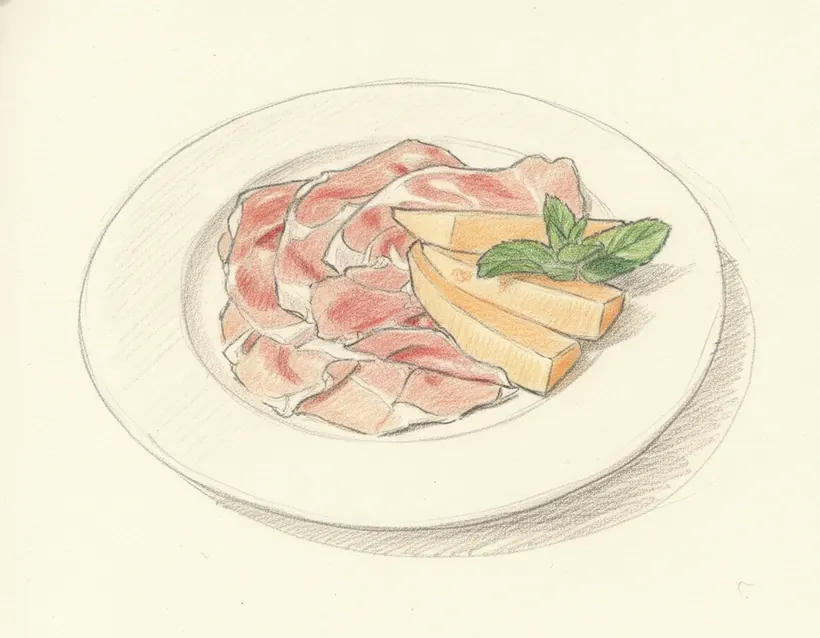
Sweet, slow-cured ham from the hill town of San Daniele, its microclimate shaping a delicate, faintly sweet flavour; sliced thin.
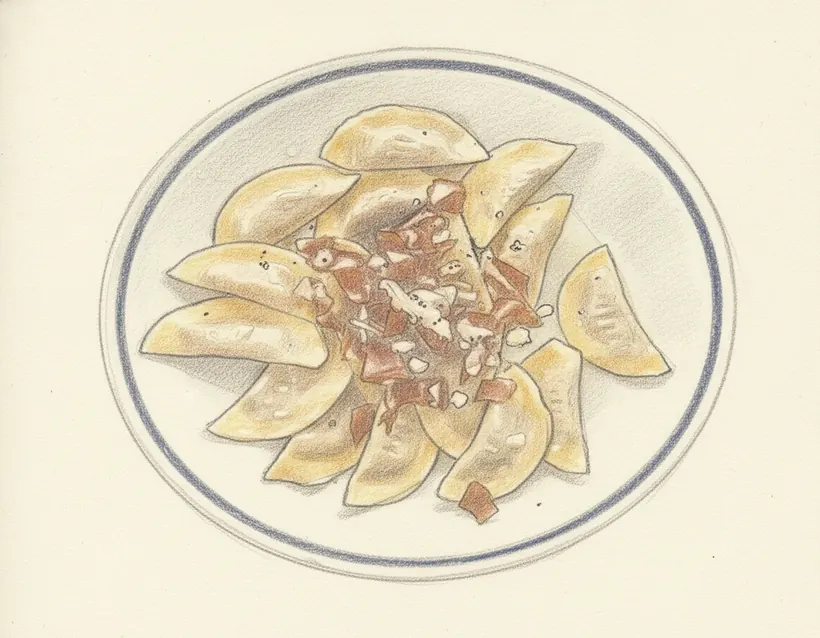
Carnia's half-moon pasta with a shifting sweet-savoury filling, herbs, dried fruit, spices, sometimes chocolate, dressed in smoked ricotta and browned butter.
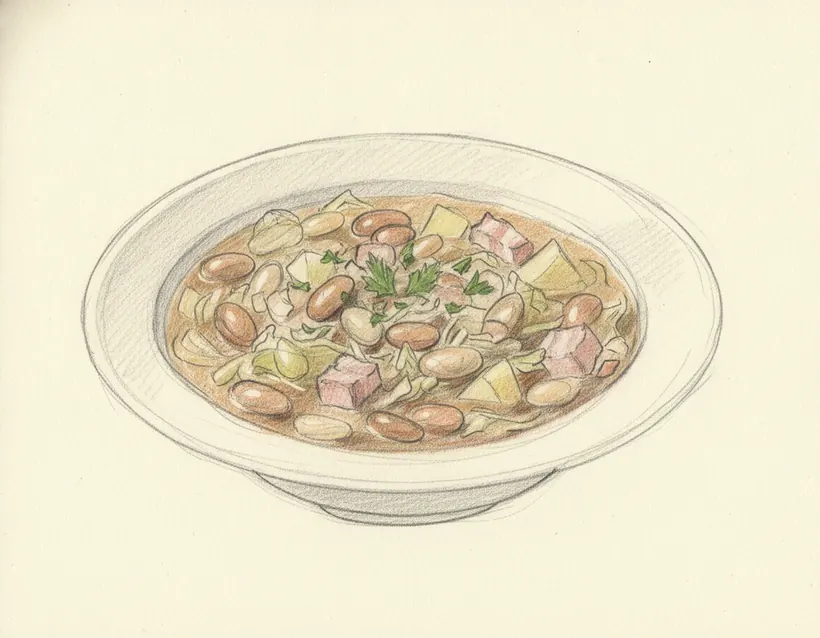
A thick Trieste soup of borlotti beans, sauerkraut (or fermented turnip), potato and pork, an Austro-Slav legacy of the Carso.
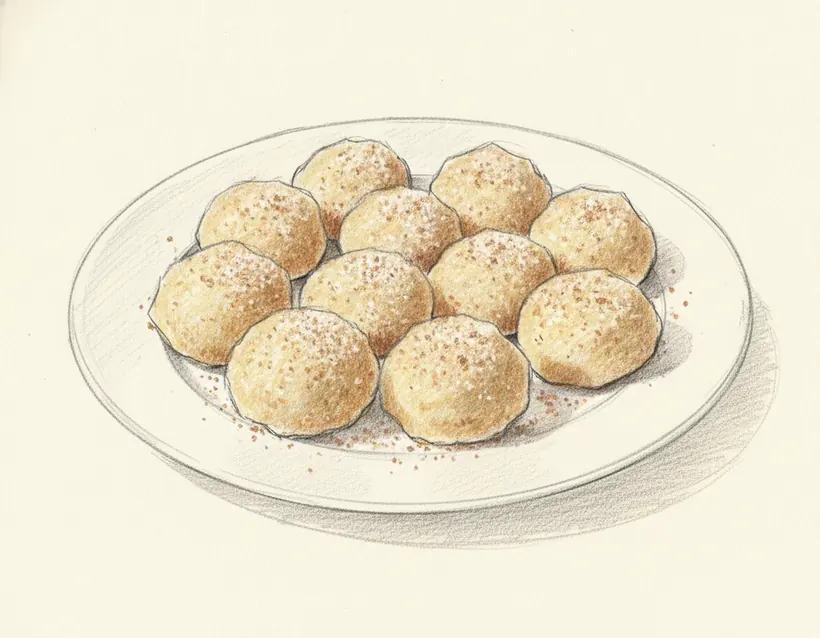
Potato gnocchi wrapped around a whole plum, boiled and rolled in cinnamon sugar and browned breadcrumbs, a sweet Trieste primo of Habsburg descent.
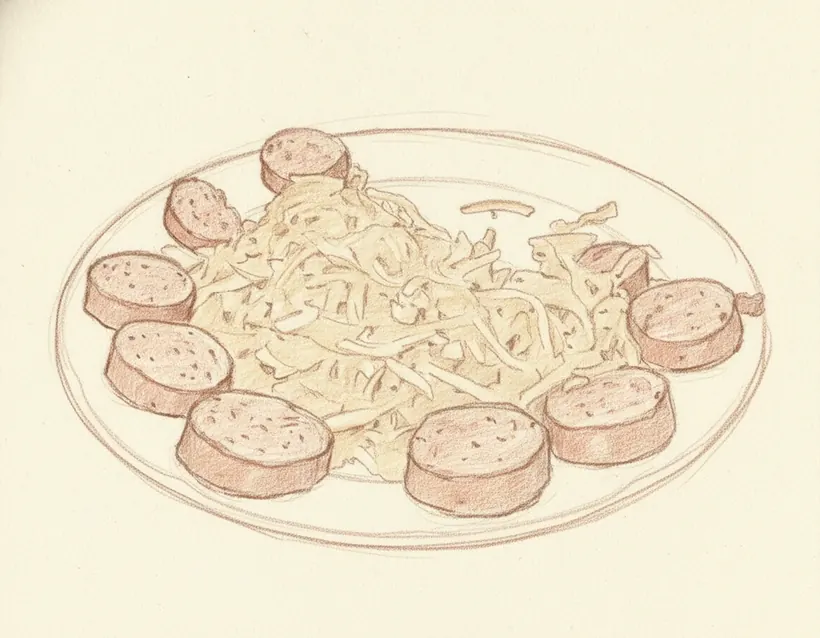
Turnips fermented in grape marc, grated and stewed, served with 'muset' (a cotechino-style pork sausage), the winter dish of the Friulian plain.
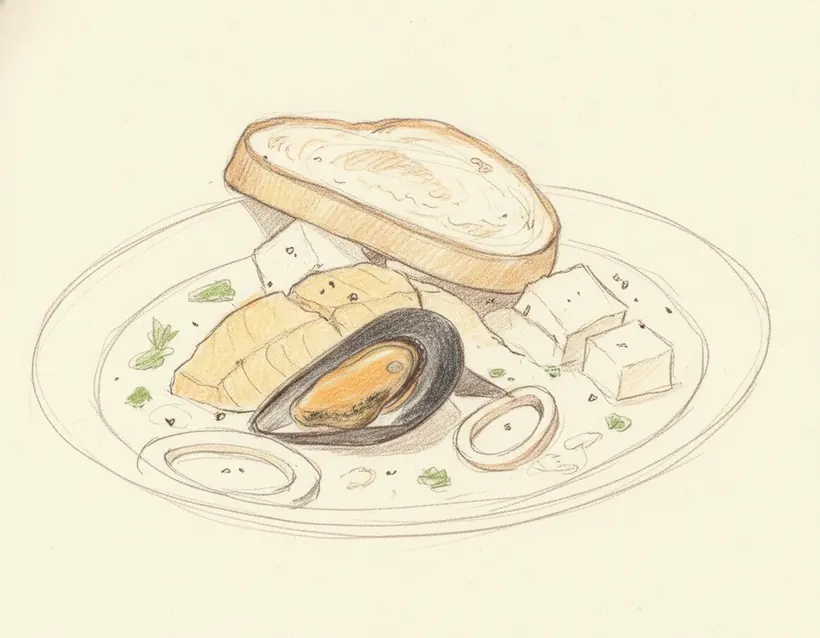
A stark white fish stew from the lagoon island of Grado, fish cooked in oil, vinegar and lots of pepper, no tomato, served over white polenta.
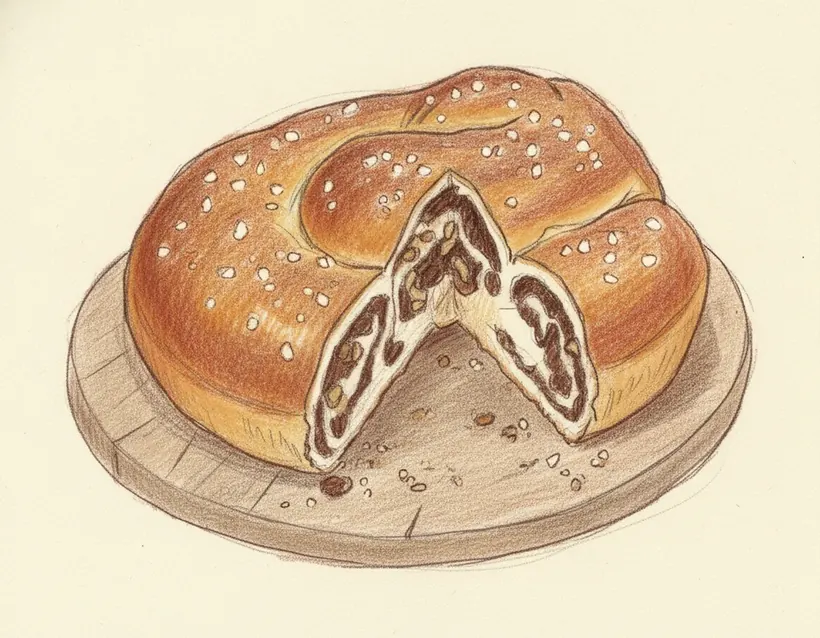
A coiled sweet dough of the Natisone valleys filled with walnuts, raisins, pine nuts and grappa, baked into a snail-shell spiral.
DOP, IGP, STG, Slow Food Presidia and traditional specialities of Friuli-Venezia Giulia.
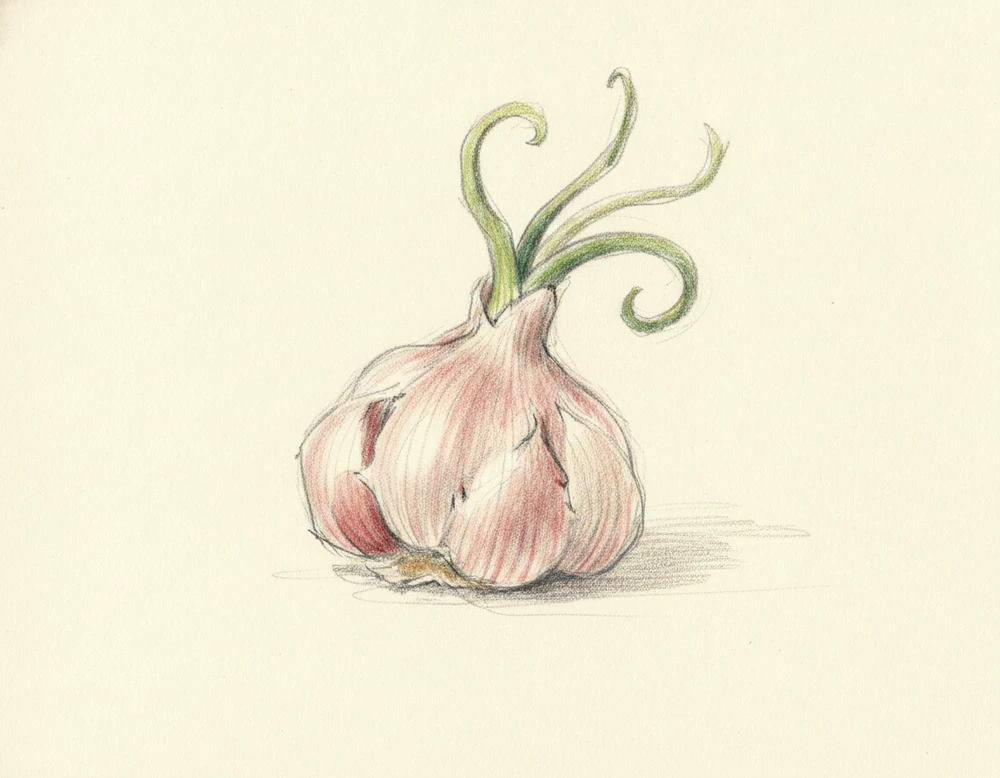
Resia is wedged between Austria and Slovenia and speaks a dialect of Paleoslavic descent, probably from a small group off the eastern steppe who settled the narrow valley and kept to themselves; its music, dancing, dress and Püst carnival are its own as well. The same isolation preserved a great deal of plant diversity, this very aromatic garlic, strok, among it. The bulbs are tiny, six to eight cloves in a pinkish-red skin, with nothing in the middle.
Friuli has grown apples since Roman times, but the orchards proper came between the late 1700s and early 1800s in the hills and mountains, and from the end of the 19th century to the First World War the region shipped fruit to Austria and the rest of northern Europe, to Egypt and to the United States. Some varieties were native; others came home in the luggage of Friulian emigrants, as grafts and seed. The names record how they looked (Ruggine Dorata, Striato Dolce, Blancon), when they ripened (Rosso Invernale), where they were found (Zeuka di Treppo, Giallo di Priuso) or who kept them (Marc Panara).
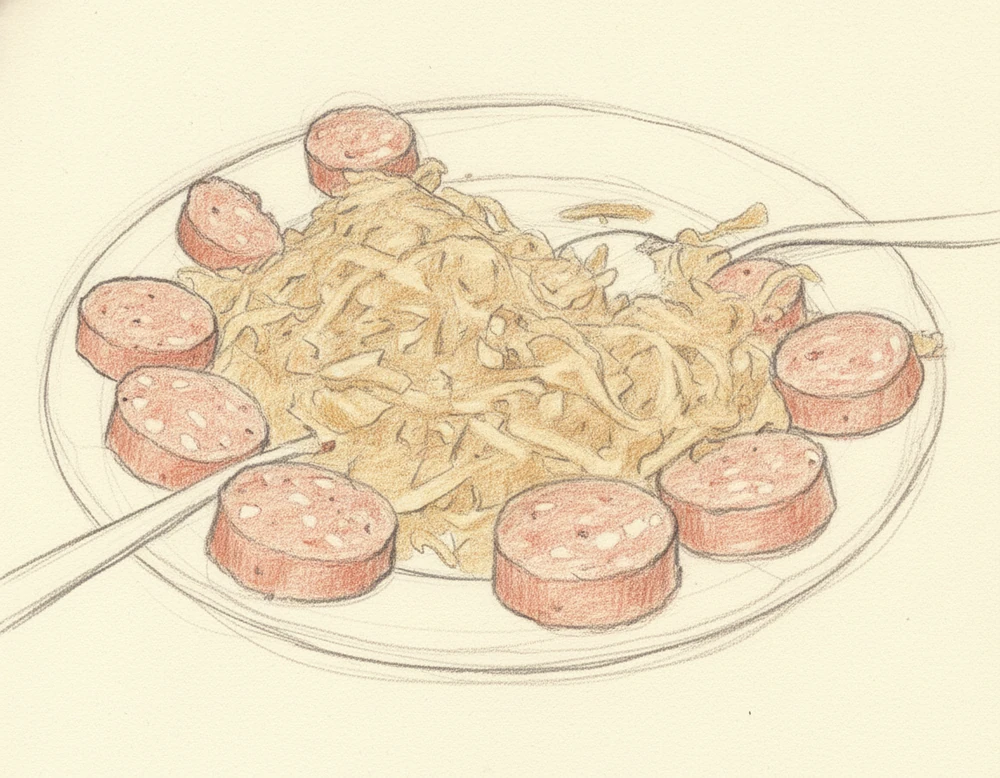
Turnips of the local rapa da brovada ecotype, fermented in grape marc and then shredded. At field maturity the root must be cylindrical or truncated-conic to suit the shredding, at least 12 cm long, with firm flesh.
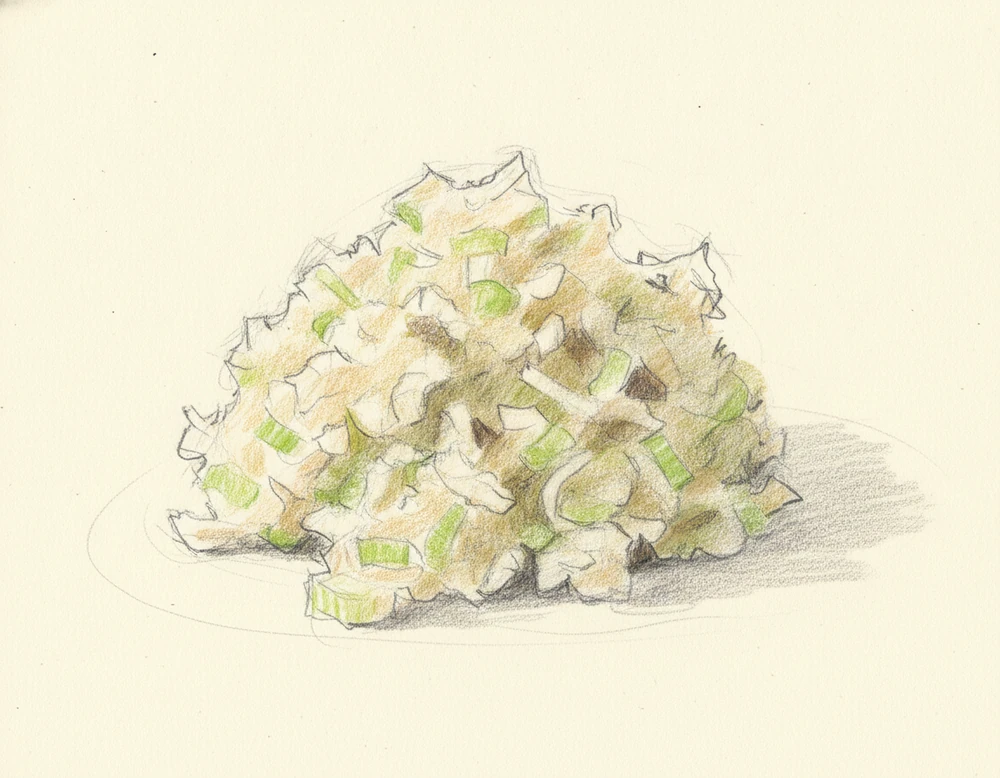
A mountain dish of fermented white turnips, related to the better-known brovada but not the same thing: brovedâr also names the pot the turnips ferment in, and Friulian has no other word for either. Where it came from is not documented; what it answers is the standing mountain problem of getting through the winter. Turnips were grown up here long before the potato, the bean and maize came from the Americas.
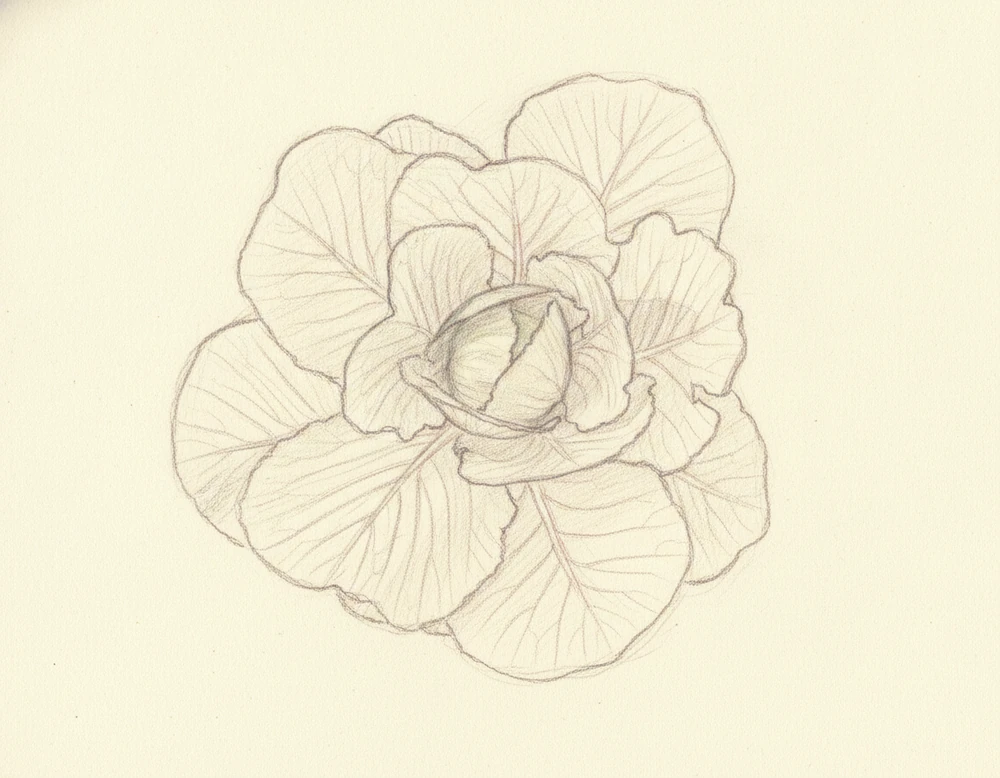
The name is not a hill but a hamlet: Collina, in the comune of Forni Avoltri, between 1,100 and 1,330 metres under Monte Coglians, the highest of the Carnic Alps. The climate is cold, wet and cloudy, and the swing between day and night temperatures is exactly what the cabbage wants. With barley and rye it was one of the few things that would grow up there, and old people in the valley still call it by its dialect name, cjapût. The head is flattened rather than round, 20 to 30 cm across and 1.5 to 2 kilos, thin leaves with reddish veining, white within and pale green without.
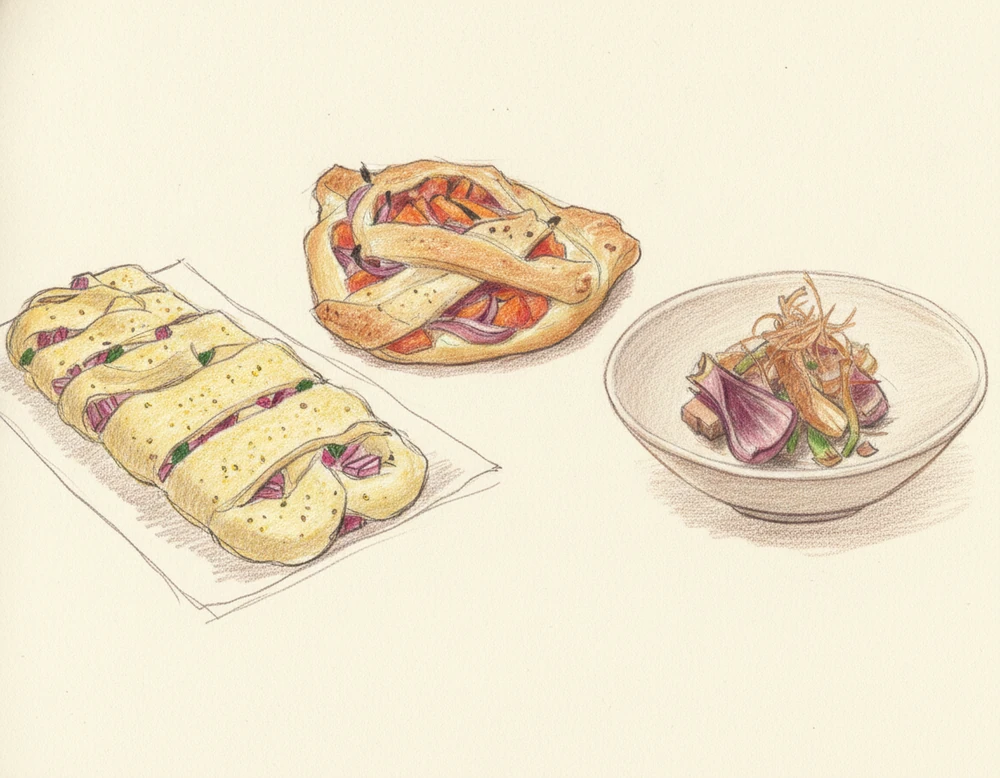
A red onion of the barren ground at the foot of the mountains between the Meduna and the Cosa, the Cavasso strain deeper in colour than the one from the Cosa valley. The women plaited them into riesti with palut, a long tough reed, and sold them round the villages or, in hard years, bartered them for maize from the Bassa. Cultivation was dropped from the 1960s and survived in a handful of family plots, where the older generation kept the seed and the stories with it.
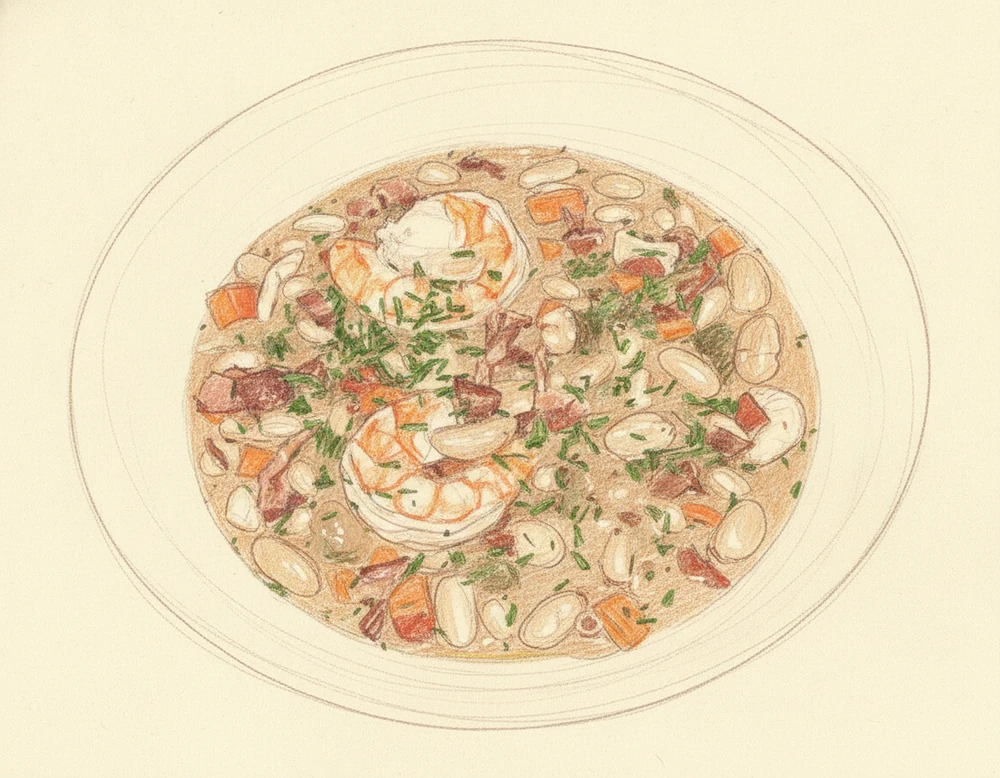
Beans, lentils and favas were grown around San Quirino near Pordenone by the start of the 1800s, on the evidence of both the histories and the older people's memories, and they were worth real money: at the Pordenone market the beans fetched more than oats or maize. The variety is long, pale brown, with a white eye ringed dark brown. Cooked, the skin all but disappears while the flesh stays firm and smooth.
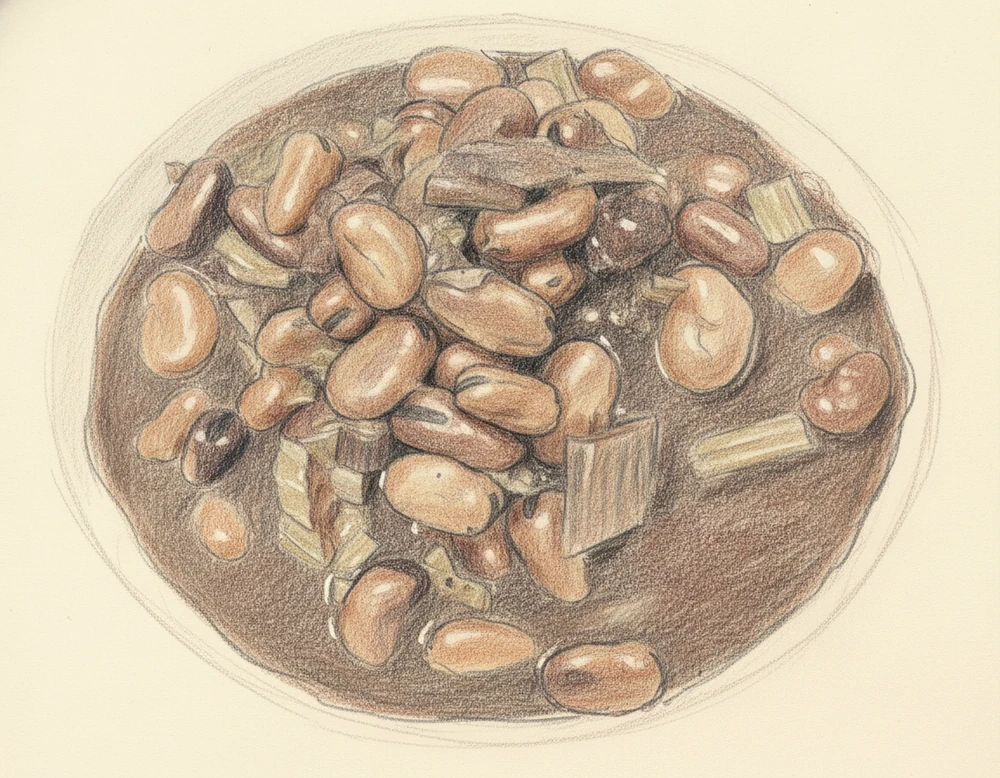
Sauris sits at 1,200 metres where the Val Lumiei opens into meadows, a German-speaking village of wood and stone under the Carnic Alps. Its fava, poan in the local speech, is first recorded in 1683, when a pilgrim from Frattina listed the local crops in his diary as wheat, rye and favas; a weekly menu of 1819 in the village archive has them on six days out of seven, twice in one day on one of them. Early 20th-century photographs show the seccaiole, the drying frames, which are still in use.
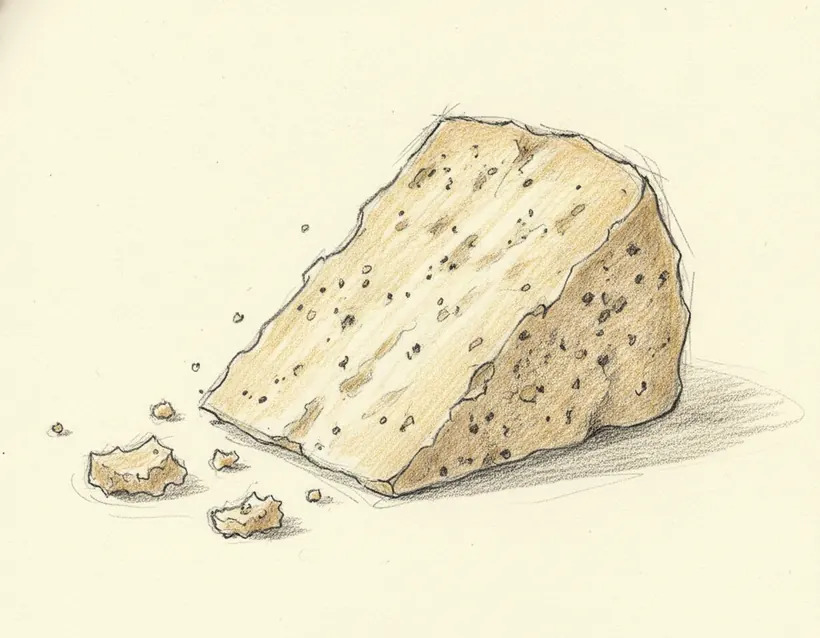
A Carnian cheese made by crumbling and re-pressing several aged mountain cheeses with milk, salt and pepper into a piquant paste.
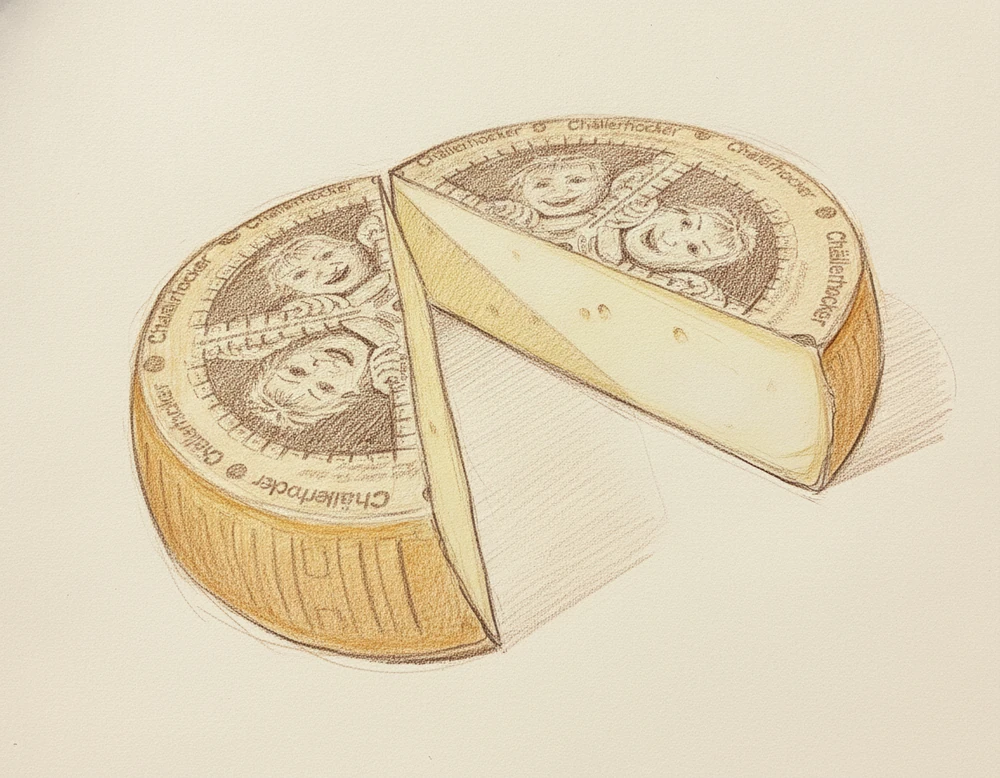
Not a recipe so much as an institution: the latteria turnaria was a cooperative dairy in which each member took his turn at the cauldron, made his own cheese and sold it himself. The system was formalised in 1880, the first opening at Maniago, and it spread by the dozen across Friuli and beyond into Veneto, Trentino and Slovenia. It was already being abandoned after the Second World War when the 1976 earthquake finished most of them; reconstruction closed many dairies outright, and the survivors went as the small family farms went and as policy pushed producers to merge for the volumes and certifications that national sale demands.
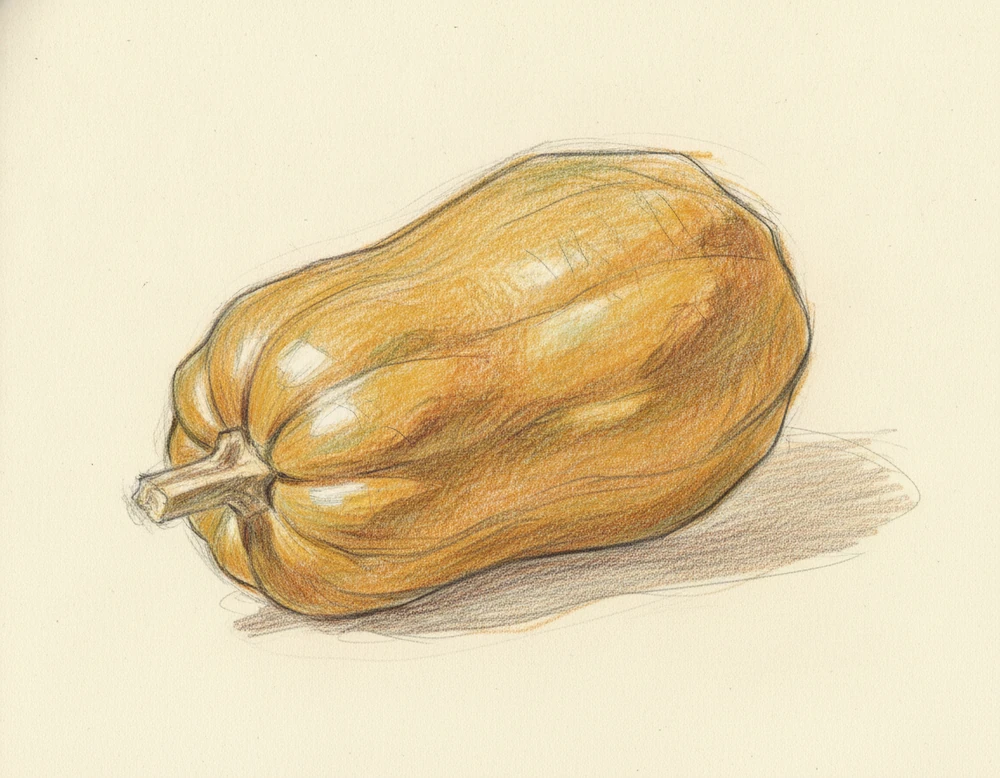
The Natisone valleys open northeast of Cividale towards the Slovene border under Monte Matajur, and they keep alpine habits: short mild summers, long winters, and a larder built on what will store. Malon is the exception, a squash grown on the high ridges for centuries although it keeps badly. Round and cylindrical, it looks like an outsized courgette when young and runs to 40 or 50 cm long and 30 to 40 across when ripe, the smooth green-and-white skin turning deep ochre yellow. A good plant carries up to five fruits.
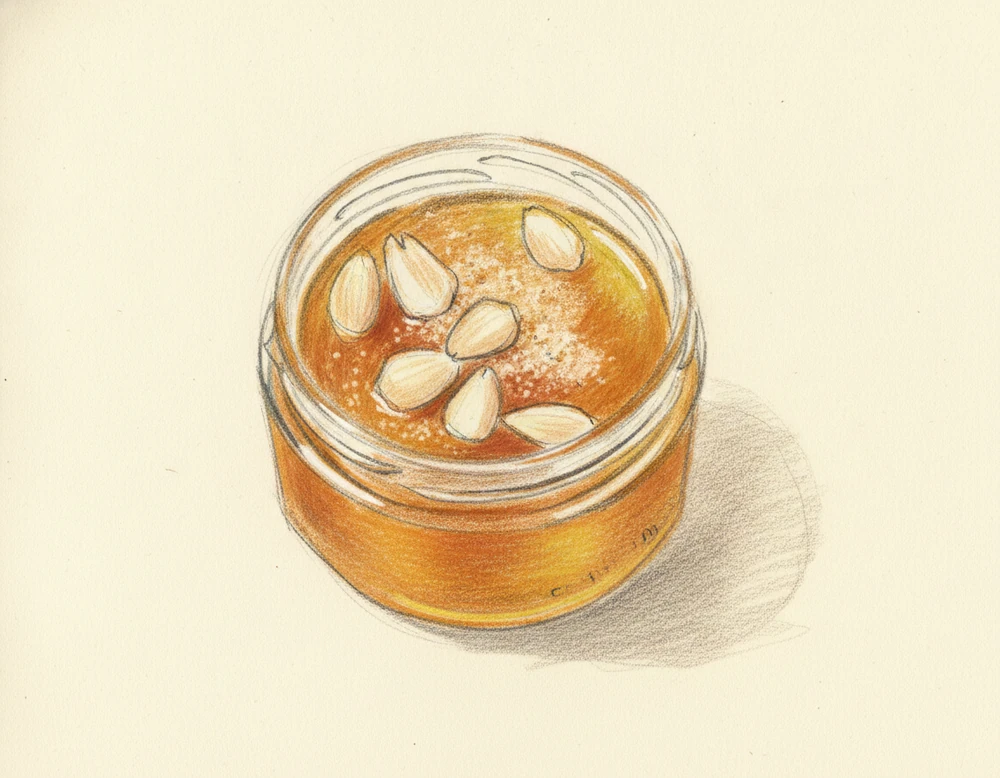
Rešelikov med in Slovene: a honey from the blossom of the mahaleb or St Lucie cherry, a small tree of the Trieste and Gorizia Karst. The species belongs mostly to the eastern Mediterranean and the Black Sea and is rare in western Italy; on the Karst it found its microclimate along the edges of the broadleaf woods, pastures and fields, though there are never many trees, so the crop is always small. Its presence there is documented by the botanist Francesco Blasi in 1933.
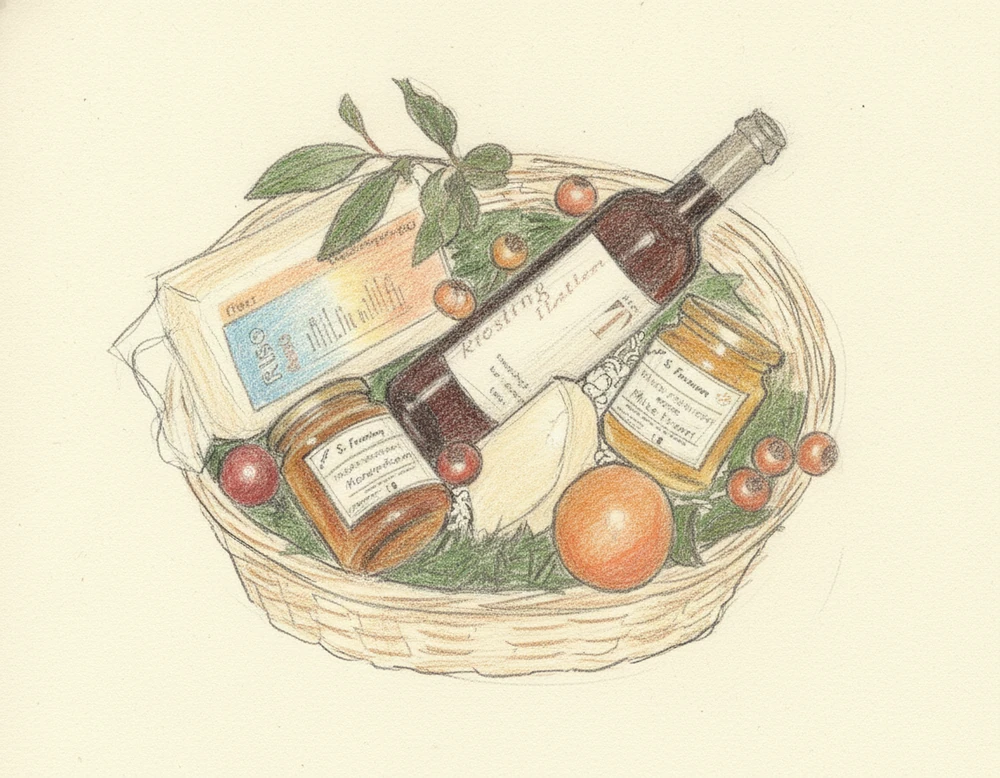
The classic Alpine honeys: rhododendron, millefiori and fir honeydew. Only nectar foraged above 1,400 m counts as high mountain, and even in a good season, which comes round every four or five years, the yield runs to a few hundred quintals.
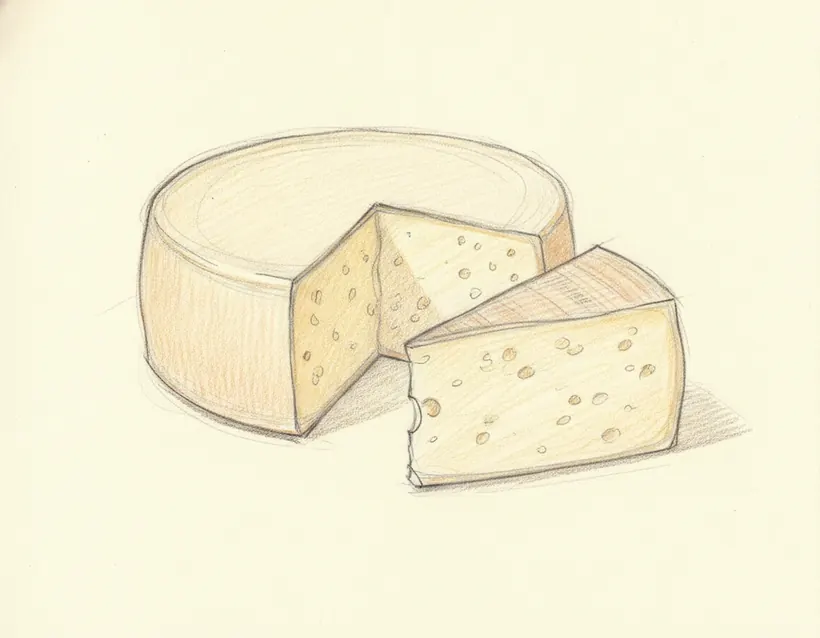
An Alpine cooked cow's-milk cheese first made by Benedictine monks, eaten fresh and springy or aged hard and grainy, and fried into frico.
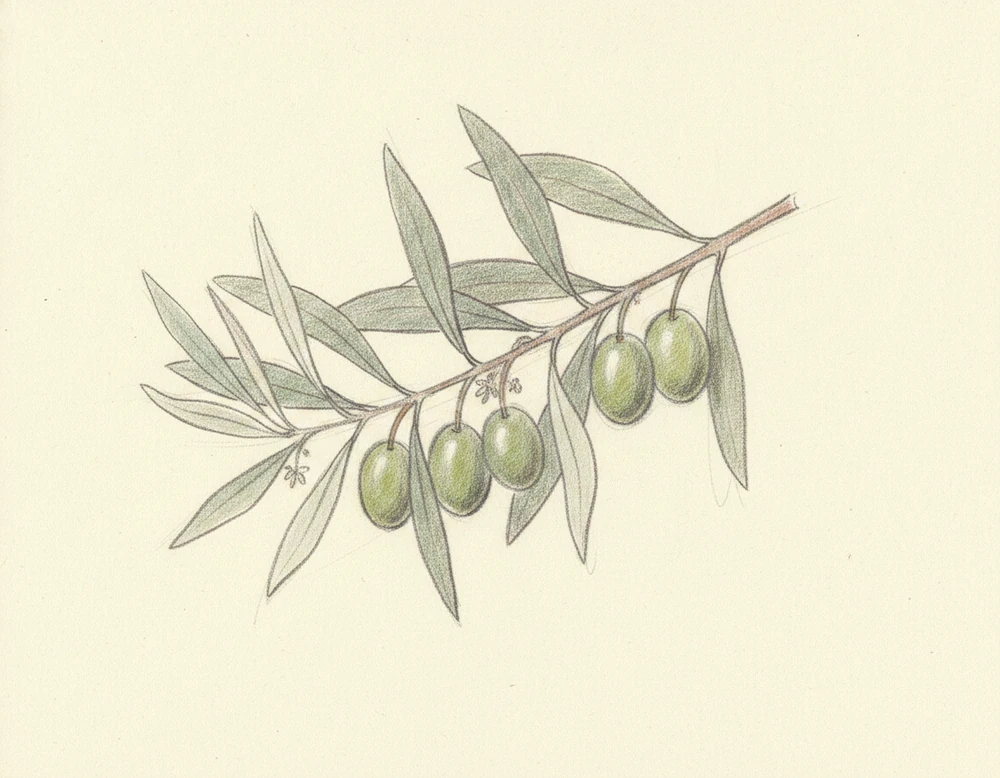
Friuli grows little oil but has grown it a long time: ancient trees between Trieste and the Karst attest that the olive settled on this corner of the Adriatic with the Phoenicians and then the Romans, though the frost of 1929, worse here than the famous one of 1985, killed 90 percent of the region's trees. The regional variety is the Bianchera, Belica in Slovene, probably out of San Dorligo della Valle and Muggia: vigorous, long fruiting branches, narrow slightly curled leaves, and a natural resistance to the bora, to cold and to chalky soil.
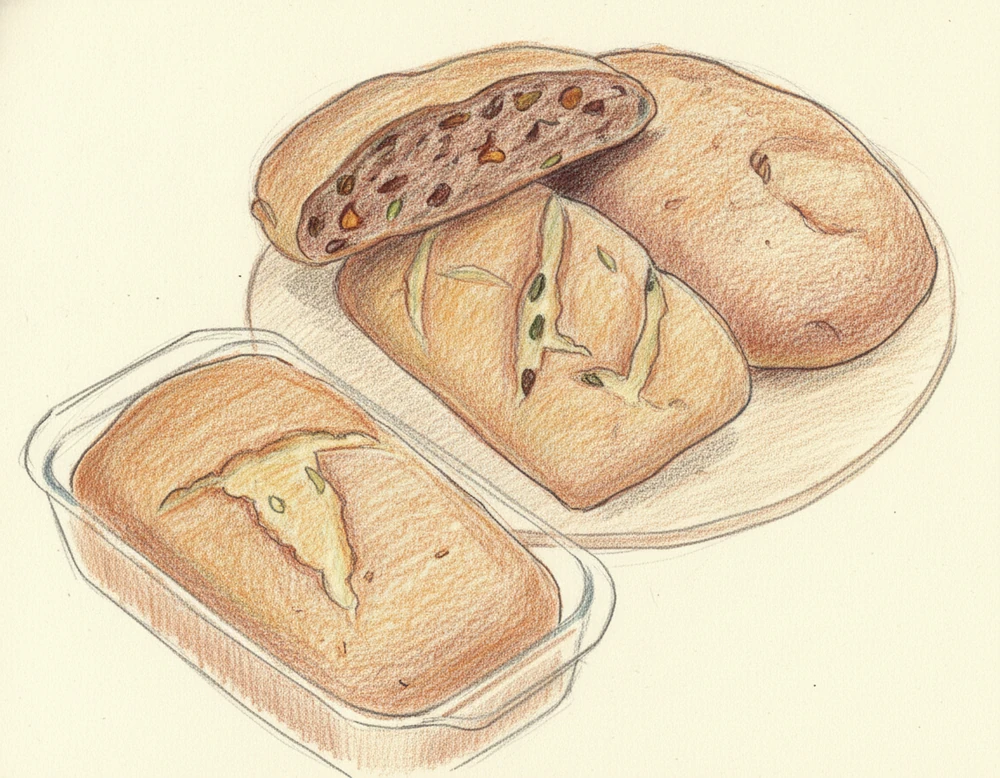
Anyone travelling from Italy into central Europe came through Gemona, and under the Habsburgs these valleys sent seasonal builders, artisans and skilled workers up to Vienna. They brought habits home, and pan di sorc is thought to be one of them: a sweet spiced bread made for feast days and above all at Christmas. Every family had its own version, always on maize flour (sorc in dialect) with rye and wheat and dried figs, usually raisins and fennel seed too.
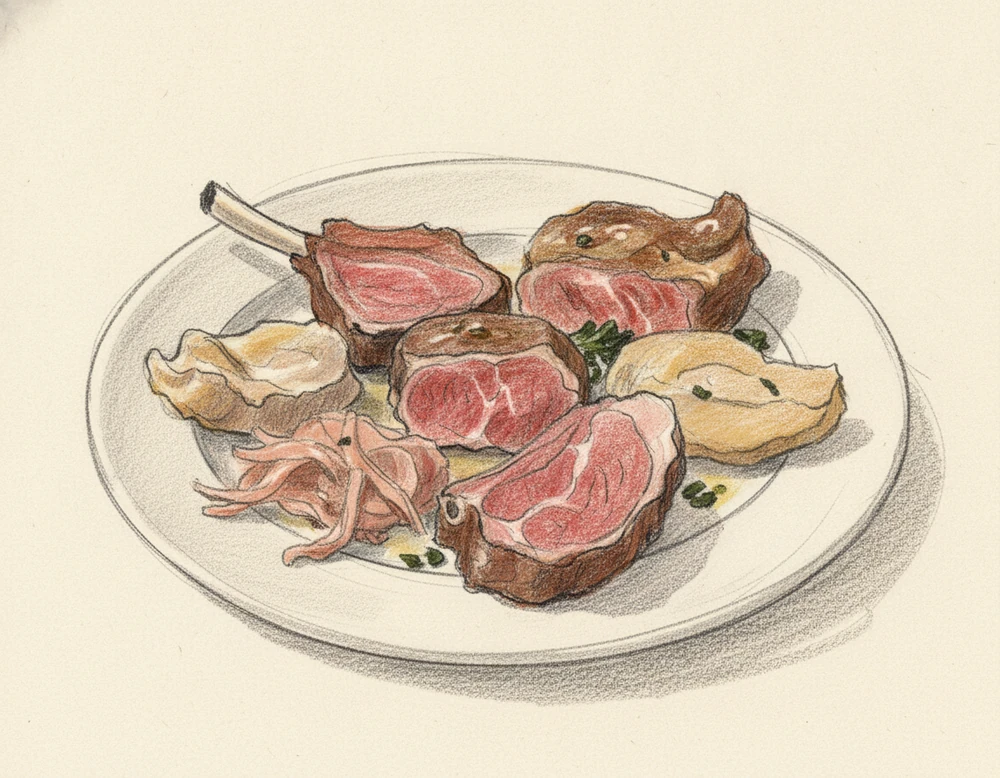
The kraška ovca, the sheep of the Karst plateau between Trieste and Istria, kept by Karst shepherds until the Second World War. Its country is the gmajna, a word out of the German Gemeinde that says what the place is: common land, still partly run through the collective Comunelle. The dry limestone meadows there are a half-natural habitat that centuries of sheep and goats made, and which is now closing over with scrub as the grazing goes.
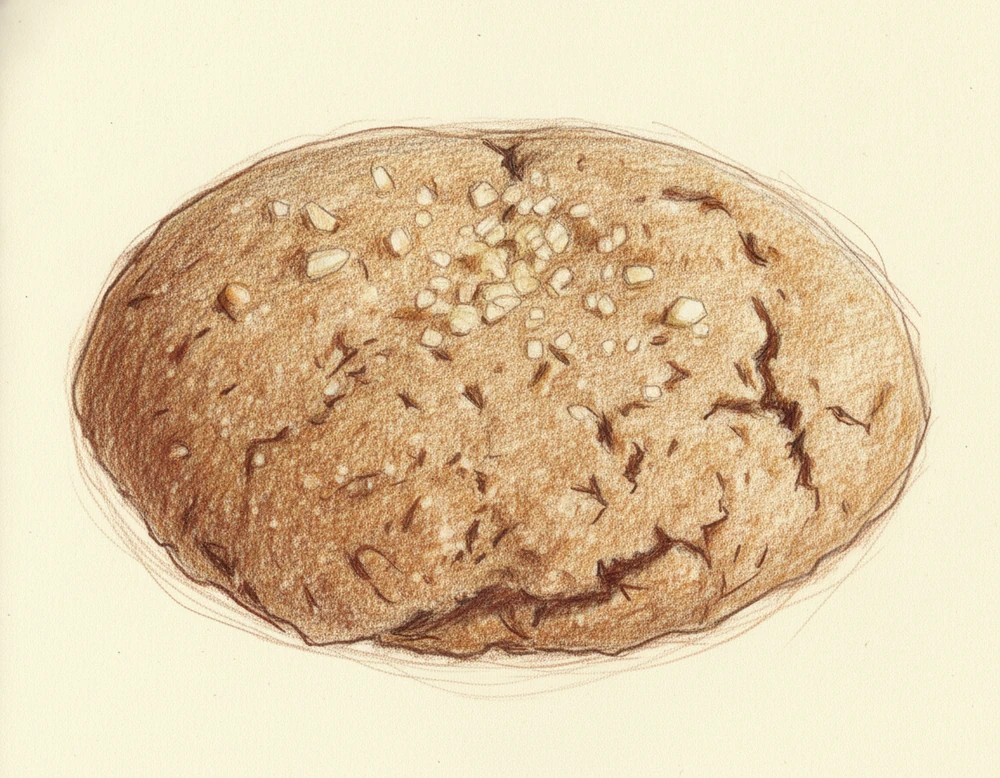
Per Martin in Carnia, Klotzen or Doerrbirne in Carinthia, Tepka in the Slovene valleys over the border. It is probably not one variety at all but a population of mountain pears adapted to that frontier, mixing Pyrus nivalis, the snow pear, silvery from the down on its young leaves, with the bright-green-leaved common pear. The flowers are small and white, the fruit small and round.
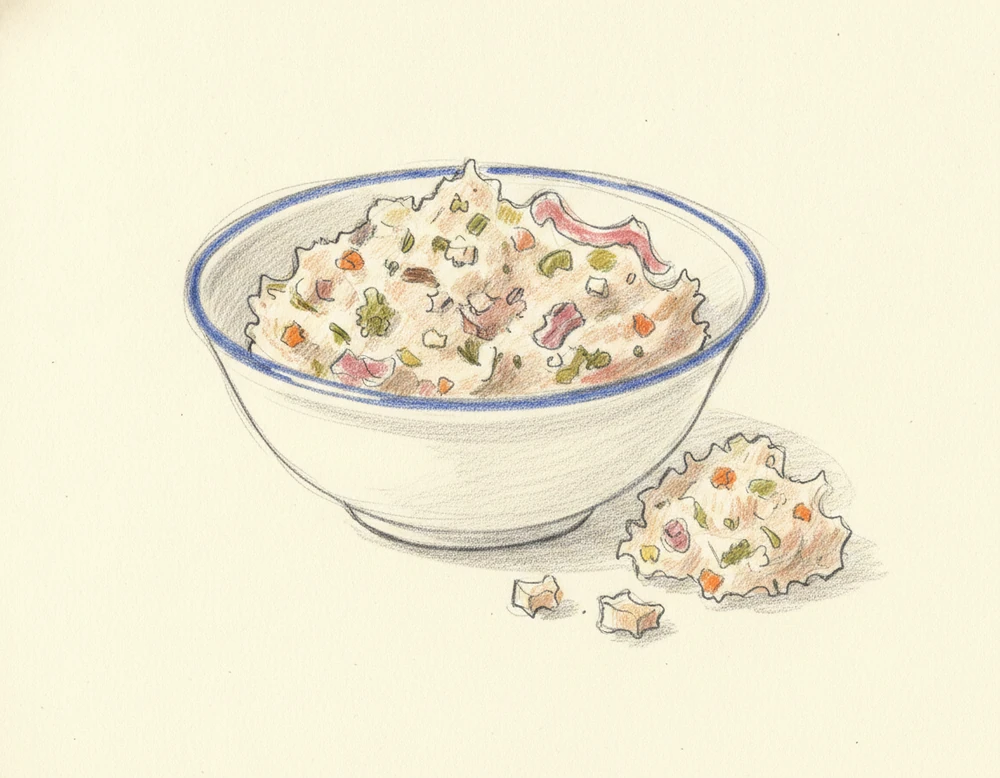
At Fagagna the purcitâr, the pork butchers, start their apprenticeship as boys, and pestàt is one of the things they kept: a way of holding the smell of autumn vegetables and herbs in pork fat through the winter.
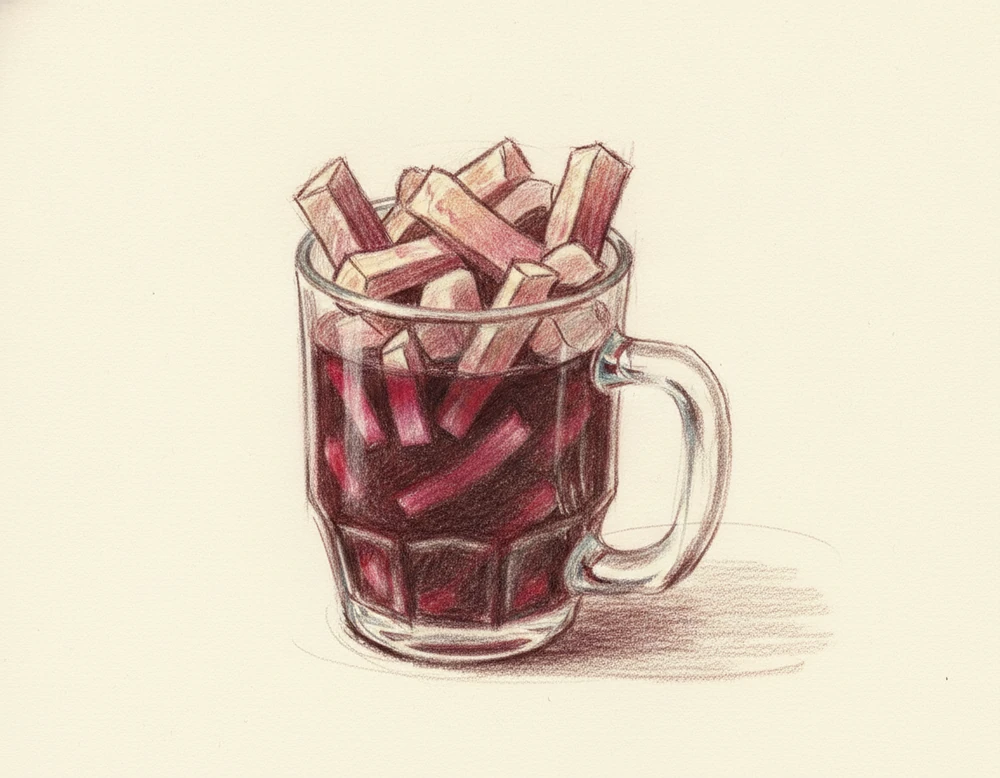
Winter food in the Val Cellina and the Val Vajont for centuries, made by macerating the purple-collared turnip. The valleys have many recipes for it and almost as many names.
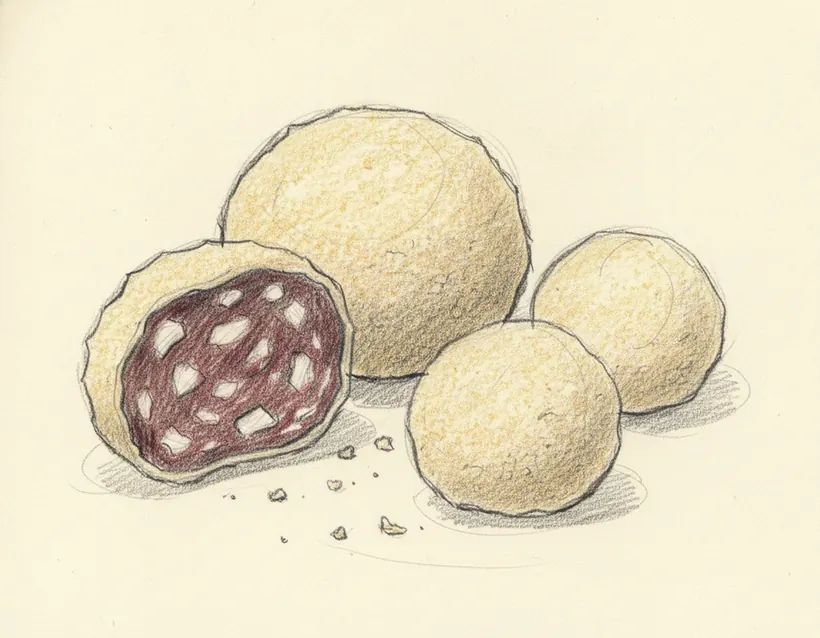
A ball of minced smoked meat (once game) rolled in cornmeal and smoked over the hearth, from the Val Tramontina.
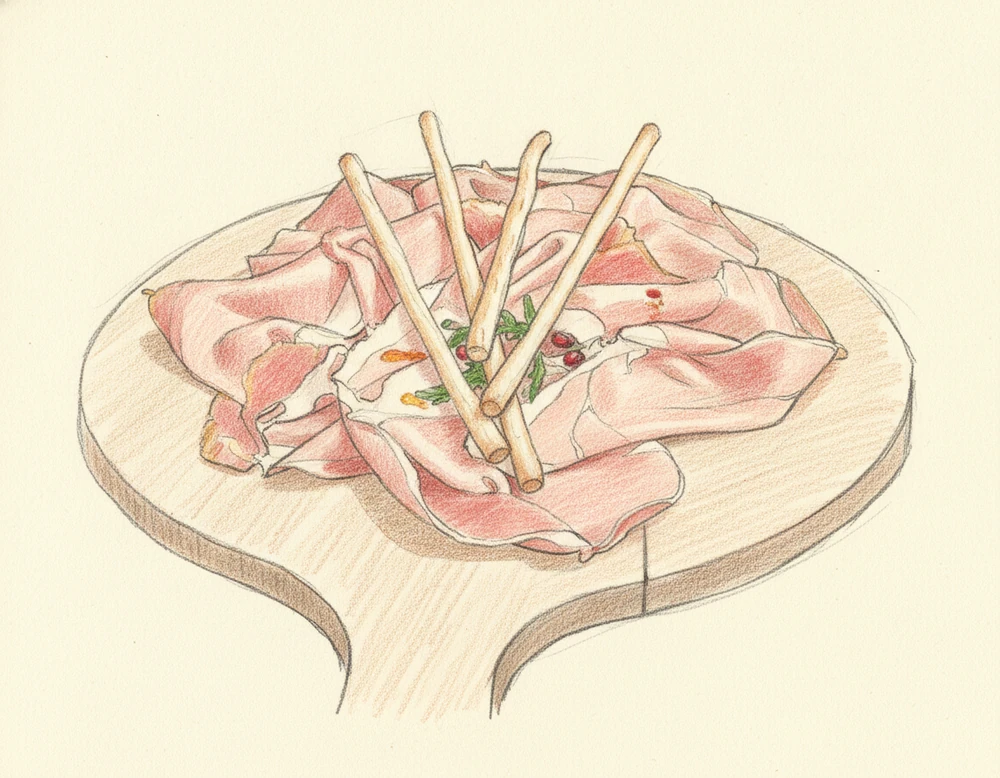
A raw cured ham salted and matured for no fewer than 400 days from the day salting begins, the longest minimum ageing of any Italian ham DOP. It keeps the trotter, which is how you tell it from Parma on sight.
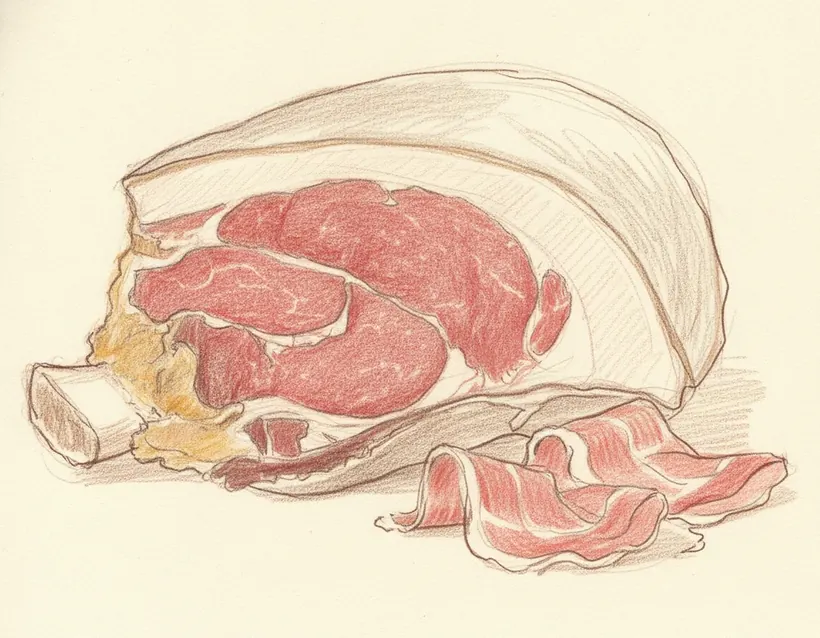
A gently beechwood-smoked cured ham from the high village of Sauris, sweet and lightly smoky.
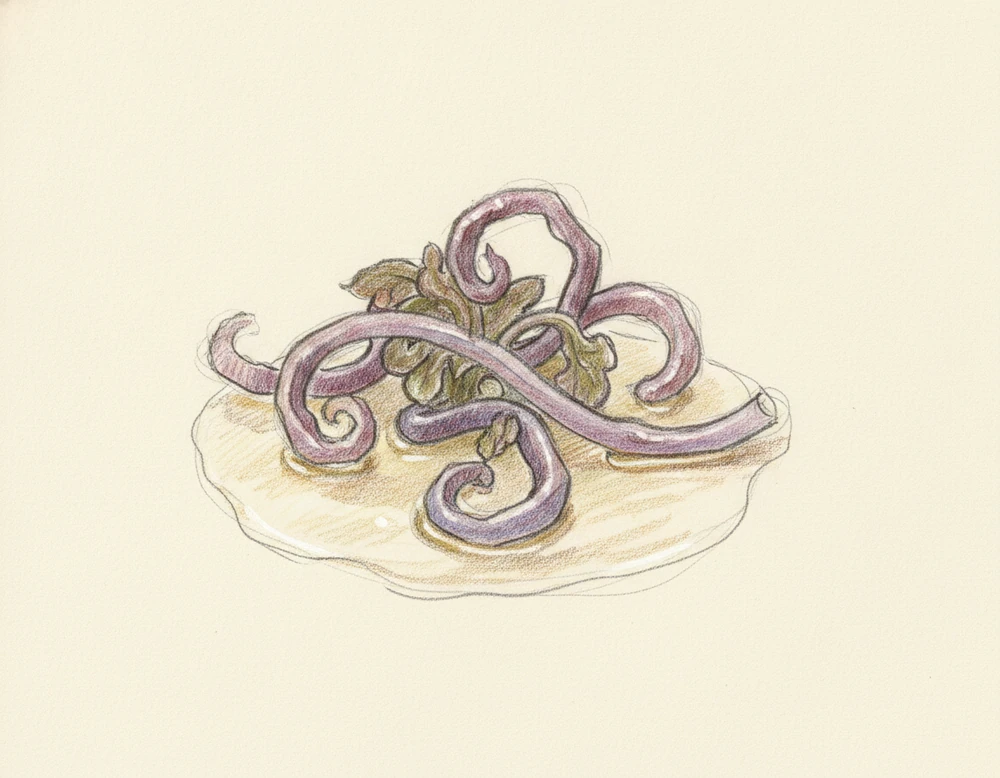
Cicerbita alpina, called radìc di mont or radìc dal glaz in Carnia, picked on the high pastures as the snow pulls back. The shoots come up an odd purple, deeper or paler with the ground, and the cold keeps them very tender. Other parts of the Alps gather it too, but preserving it in oil is a Carnian habit.
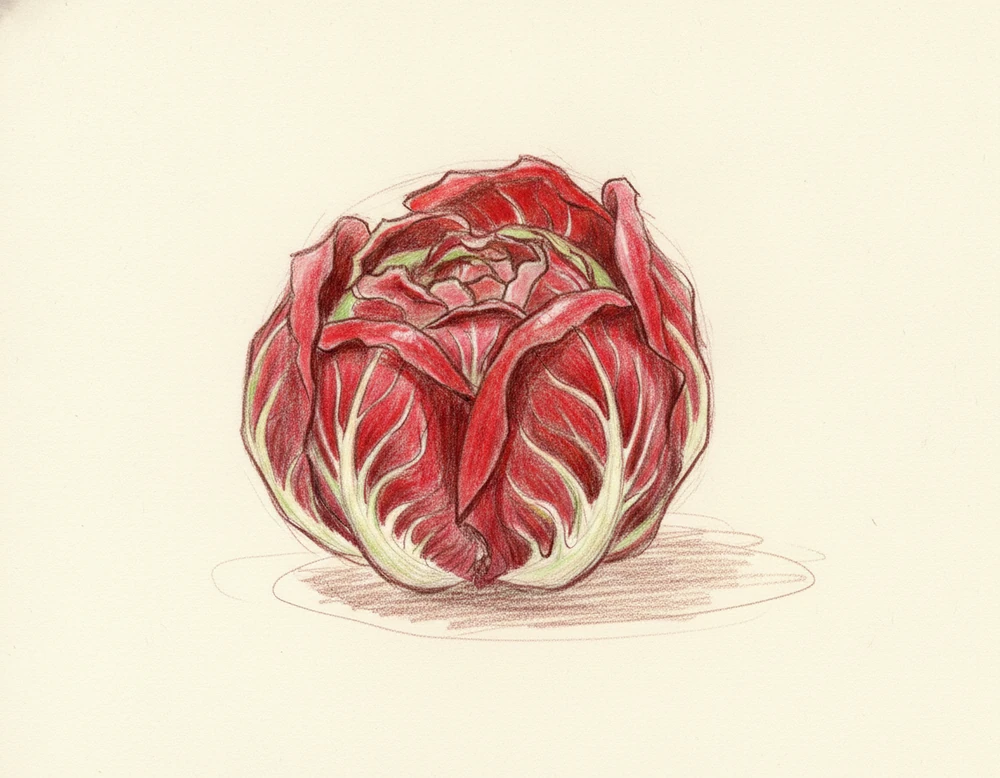
A red chicory grown in the market gardens of Gorizia, above all at Sant'Andrea and San Rocco, on the alluvial soil that made the town's name for vegetables. The head closes like a rosebud about to open, whence the name: leaves an intense bright red shaded to pink and garnet, crisp, strongly and pleasantly bitter. The oldest growers remember it always having been there, one of the few dependable winter earnings on farms that mixed vegetables, livestock and field crops.
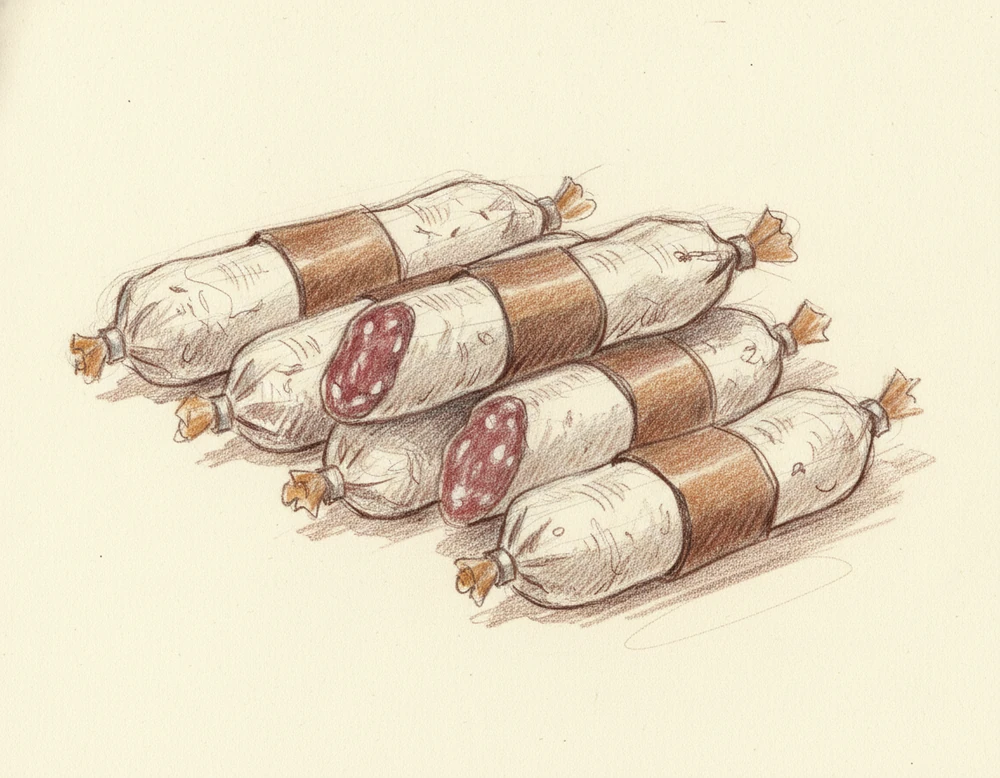
Small salami sized to be carried in a hunter's pocket, which is where the name comes from. The zone is unusually wide: pigs may be raised across eleven Italian regions, from Friuli down to Molise.
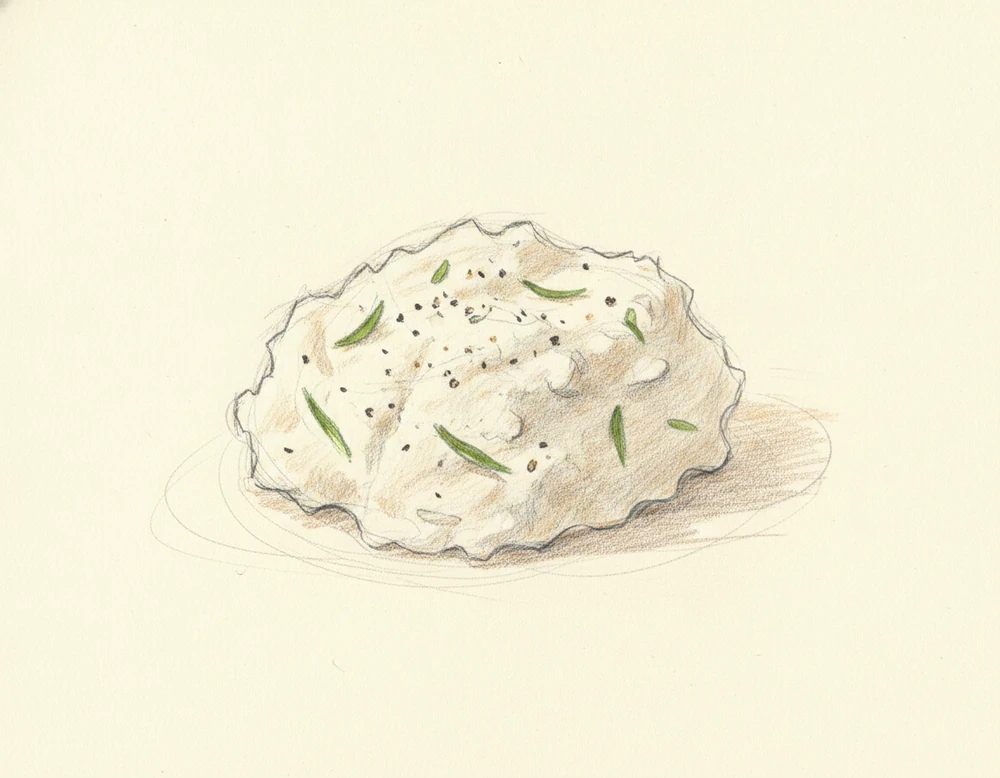
The name means sour ricotta in the German of Sappada, and the stuff looks the part, white, fresh, with no rind or set shape, but it is not a ricotta at all: it is a fresh cheese set by acid coagulation from raw whole cow's milk, with salt, pepper and tarragon. That tarragon is the point. Perschtroum, the mountain tarragon that grows wild along the edges of Sappada's pastures and woods, is gathered in summer and kept in salt for the year, and the village holds that ordinary tarragon will not do in its place.
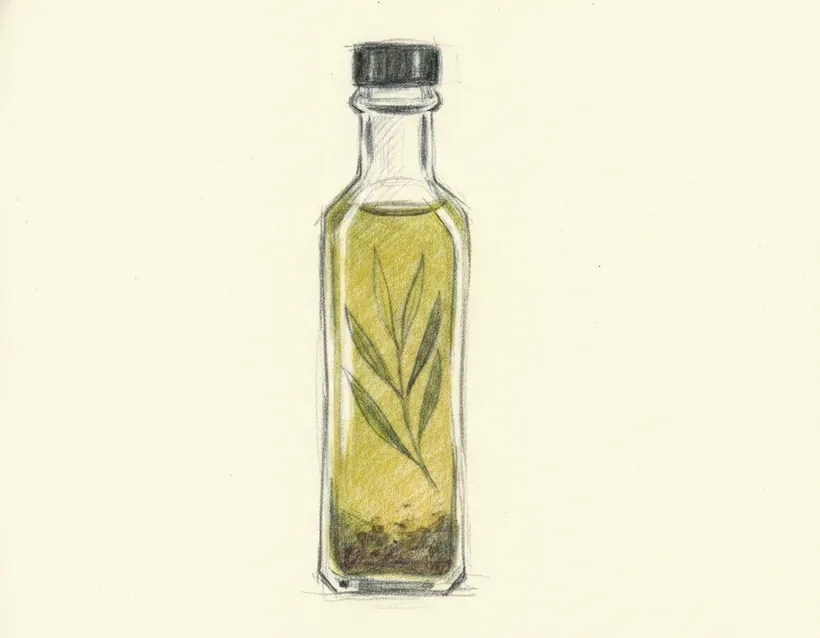
An intense, spicy-bitter extra-virgin olive oil of the Trieste Carso, from Bianchera olives.
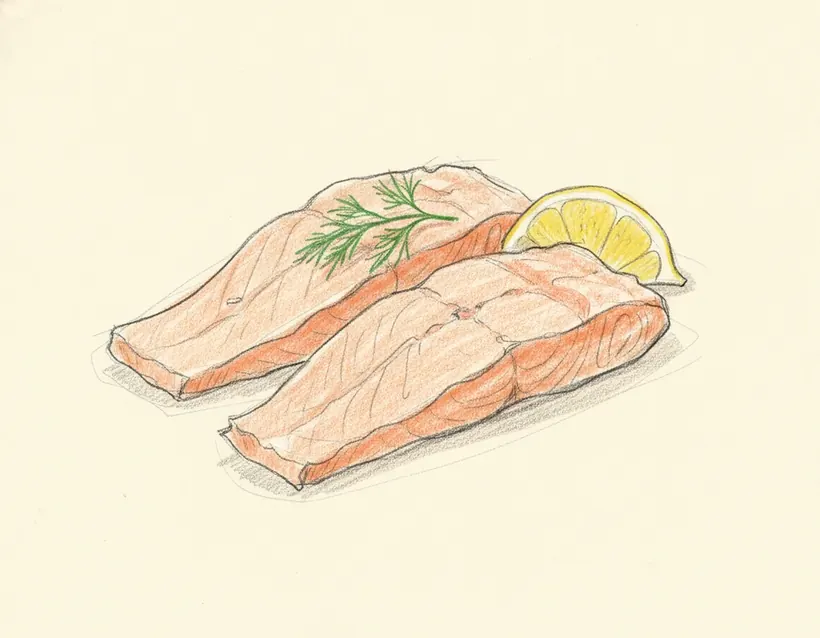
Trout from the region's cold spring rivers, filleted and cold-smoked to a delicate rosy flesh.
Every farm in Carnia kept a purcit, a pig, killed between October and February, part eaten fresh and the rest cured, salted or smoked. Varhackara came out of the tail end of that: a paste built on lard with the offcuts of salami, smoked speck, guanciale, pancetta and ossocollo worked in. The record ties it to Timau, the last village before the Plöcken pass into Austria, whose speech is South Bavarian. With Sauris it is a German-speaking pocket of Carnia, settled by miners out of the Carinthian valleys, the first around the year 1000 and a second group late in the 13th century, who brought their cooking with them.
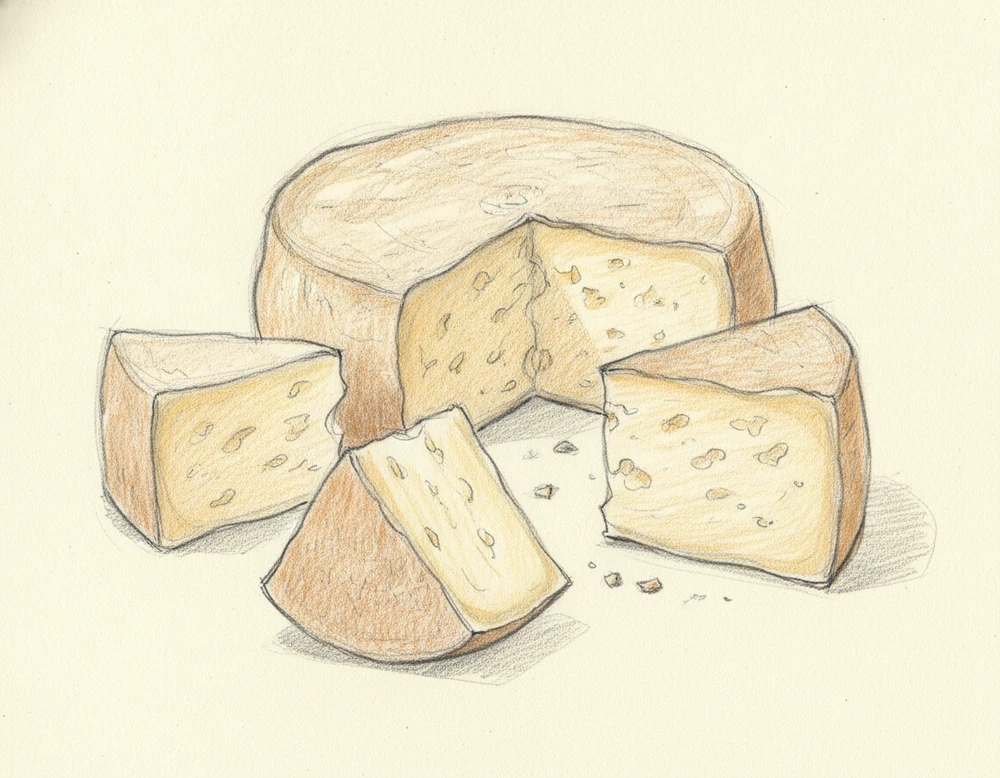
The summer-pasture cheese of Carnia, the Val Canale, the Canal del Ferro and the Friulian Dolomites, where moving the herds up to the alpine meadows is thousands of years old; documents of the Patriarchate of Aquileia were already setting rules for the pastures before the year 1000. Pastures were assigned by rotation, so a farmer rarely held the same one twice, and the making of formadi di mont, çuç in Friulian, travelled with the families rather than with the place. The cheese is little known today.