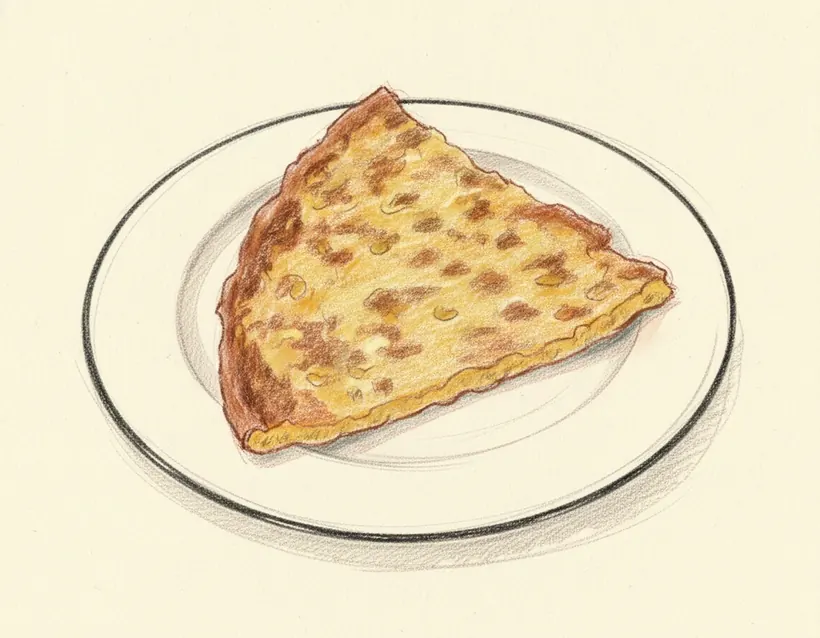
FarinataChickpea flatbread
A thin, savoury pancake of chickpea flour, water and olive oil baked screaming-hot in a copper pan until the edges crisp, Genoa's street snack.
Pairs with
Liguria cooks from a thin coastal strip of herbs, olive oil and sea: basil pesto and chickpea farinata, anchovies from the Riviera, elaborate seafood salads, rabbit with olives from the hills. Its wines are salt-tinged whites, Pigato and Vermentino of the Ponente, Bosco of the Cinque Terre, the rare red Rossese of Dolceacqua, and the honeyed Sciacchetrà passito.
A thin, savoury pancake of chickpea flour, water and olive oil baked screaming-hot in a copper pan until the edges crisp, Genoa's street snack.
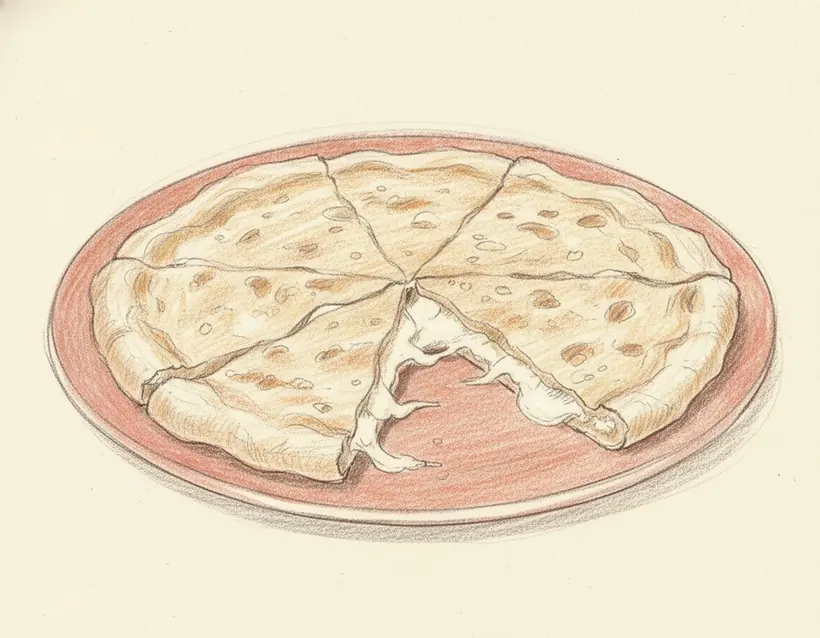
Two paper-thin sheets of unleavened dough enclosing molten stracchino cheese, baked until blistered, the pride of Recco.
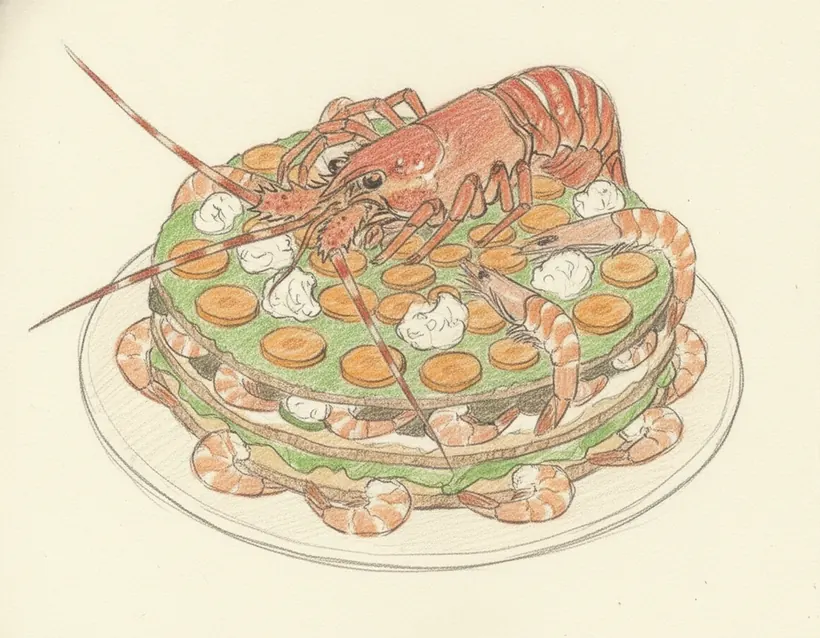
A towering 'lean' festive salad of hardtack, boiled vegetables, fish and shellfish bound with a green sauce, Genoese baroque on a plate.
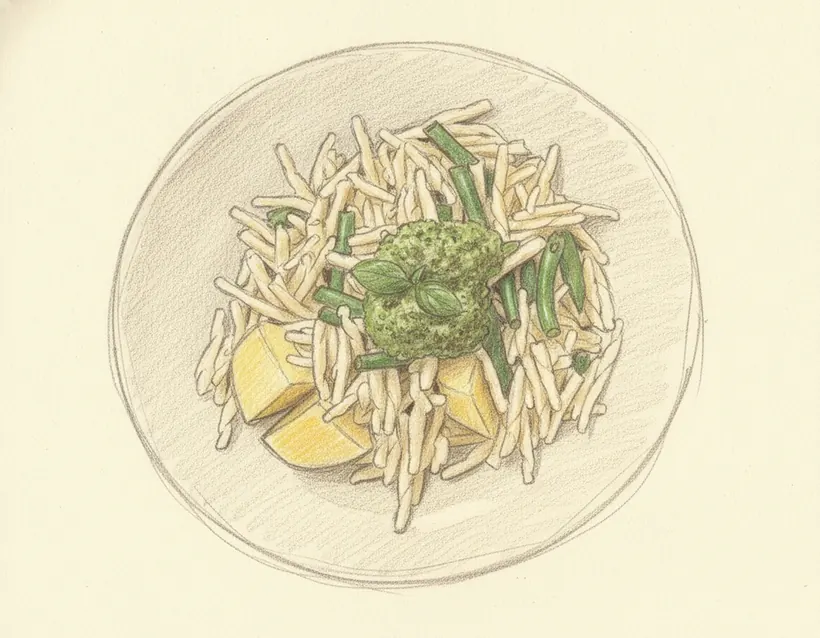
Little hand-rolled trofie tossed with pesto genovese (basil, pine nuts, garlic, Parmigiano and pecorino, olive oil), potato and green beans.
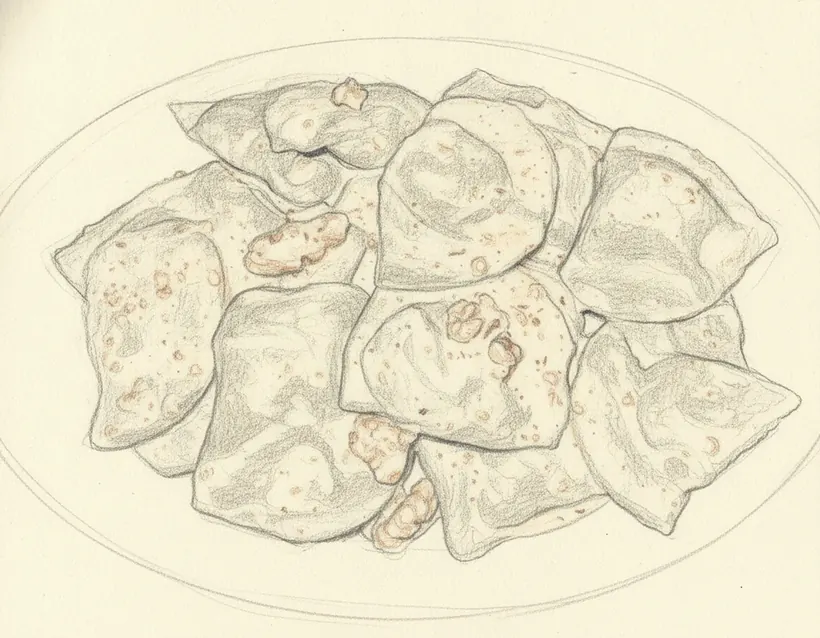
Triangular ravioli filled with 'preboggion' wild herbs and prescinseua cheese, dressed in a creamy walnut sauce.
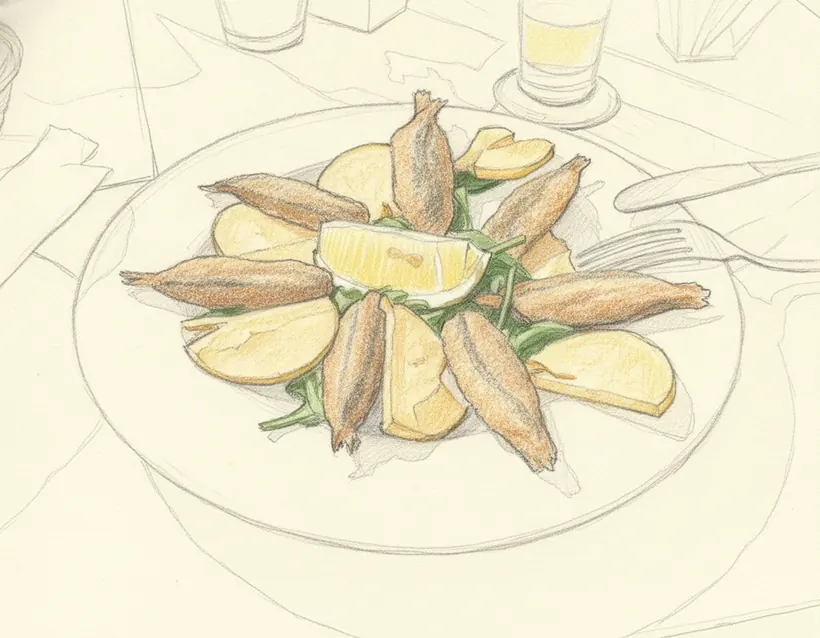
Fresh anchovies of the Riviera boned, stuffed with a herb-and-breadcrumb filling, breaded and fried.
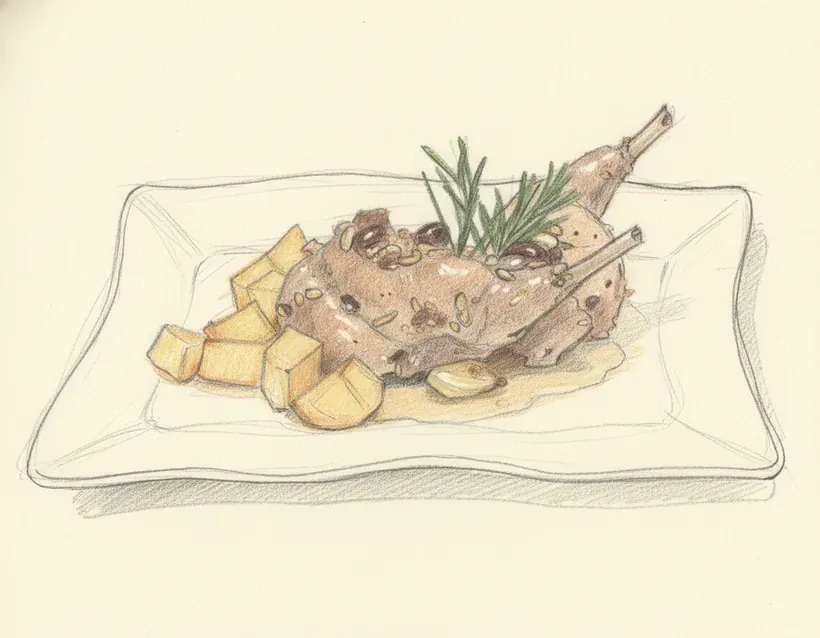
Rabbit braised with Taggiasca olives, pine nuts, white wine, rosemary and thyme, the Riviera's signature meat dish.
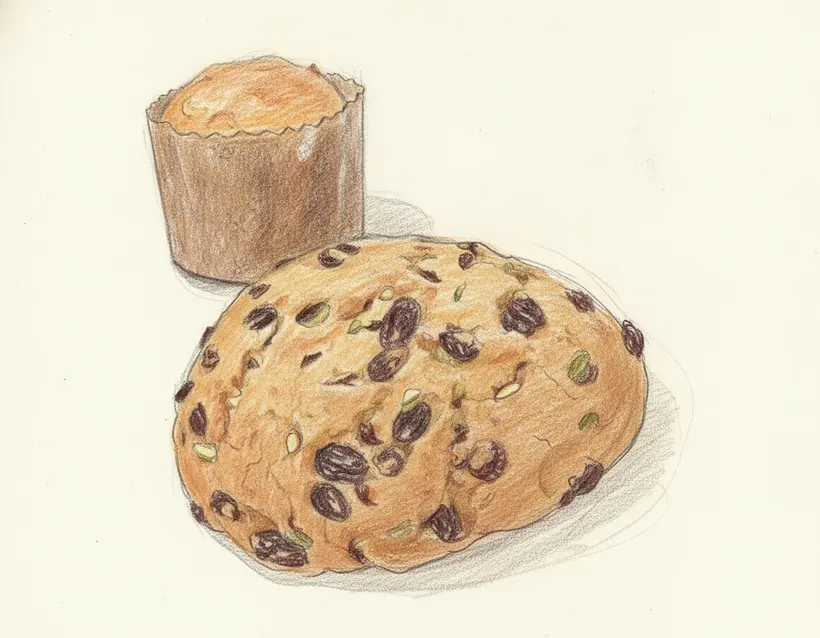
A dense Genoese sweet bread studded with raisins, candied fruit, pine nuts and fennel seed, the Christmas cake of the port.
DOP, IGP, STG, Slow Food Presidia and traditional specialities of Liguria.
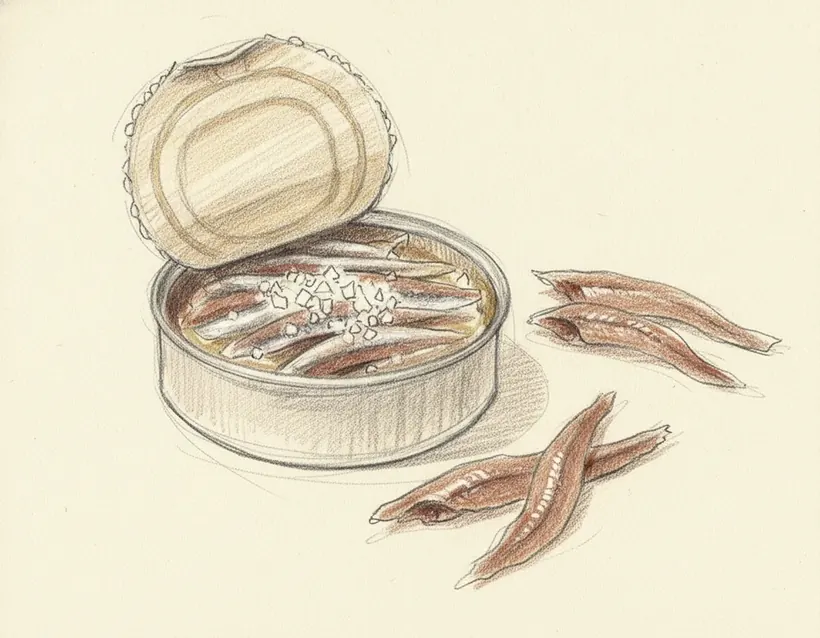
Anchovies of the Ligurian sea layered whole in coarse salt to cure, then filleted for pasta, focaccia and sauces.
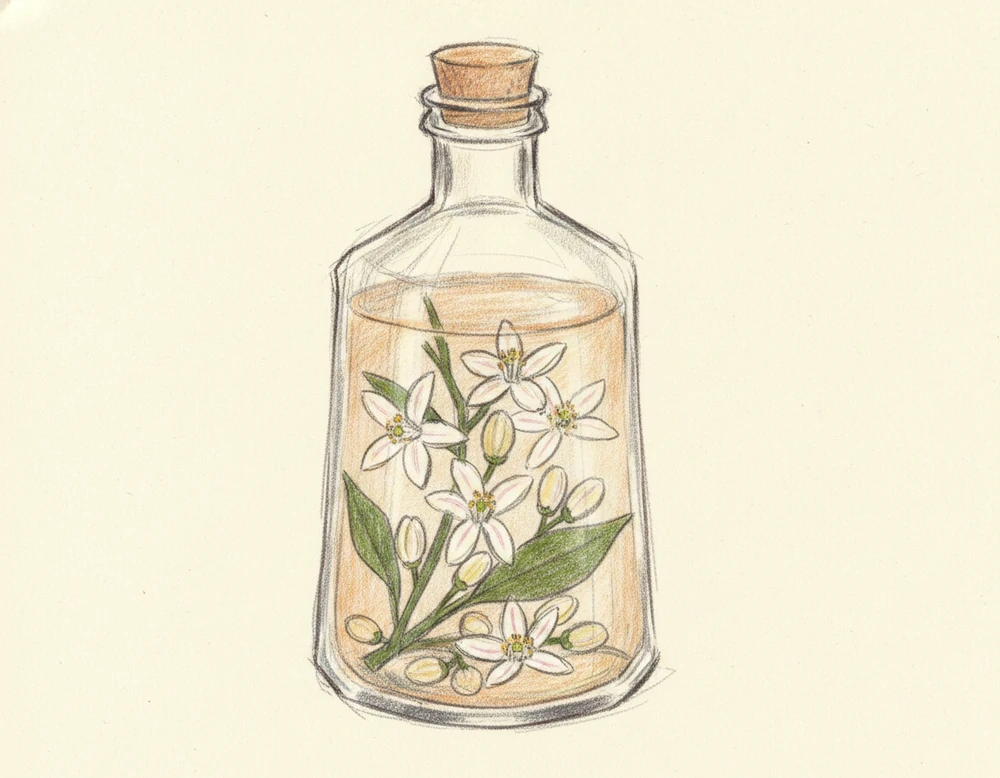
Vallebona is one of the narrow Ligurian valleys running up from the sea, a twisting road along the bottom and dry-stone terraces up the sides. Until a few decades ago those terraces carried orange trees, mostly bitter orange, with roses and lavender, thyme and rosemary. Grasse is not far over the French border, and these towns have a long habit of distilling scented waters and essential oils for the perfumers. The Guglielmi family opened a distillery at Vallebona in 1865 and closed it in the early 1960s; the Vacca distillery at Ventimiglia worked until recently and the Postiglietto at Borghetto San Nicolò, near Bordighera, has been shut for many years.
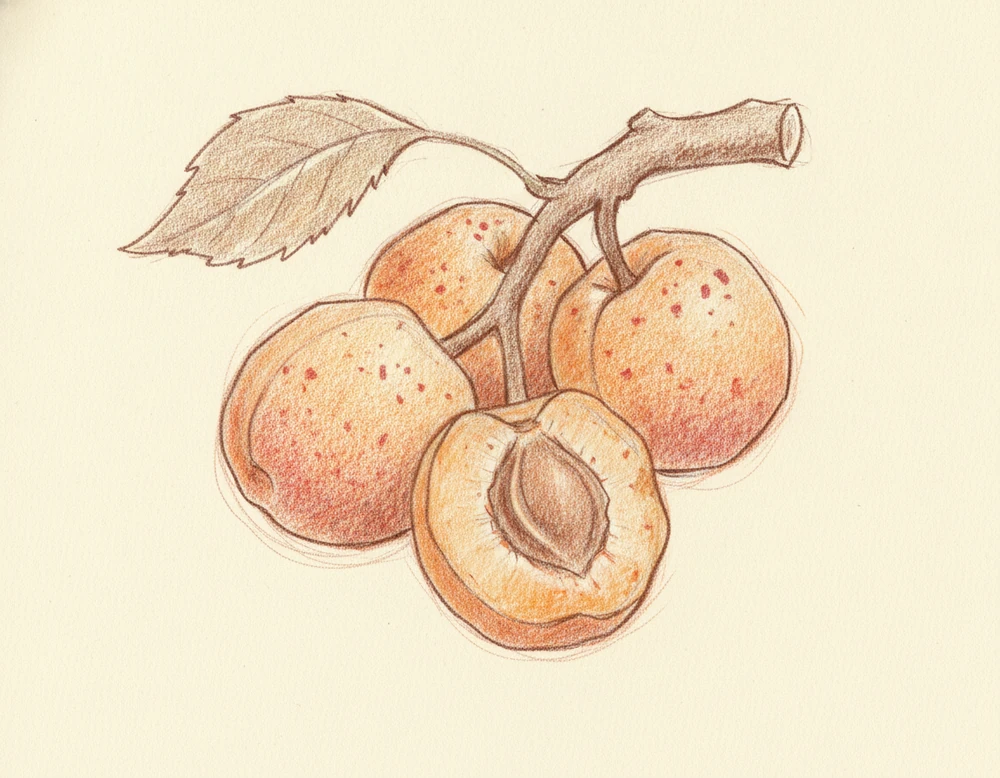
Grown along the Savona coast by the end of the 19th century and at its height in the 1950s and 1960s; Valleggia, a hamlet of Quiliano, grew the most of them. The fruit is small and unmistakable, thin delicate orange skin flecked brick red, and it smells and tastes far stronger than the apricots on the market.
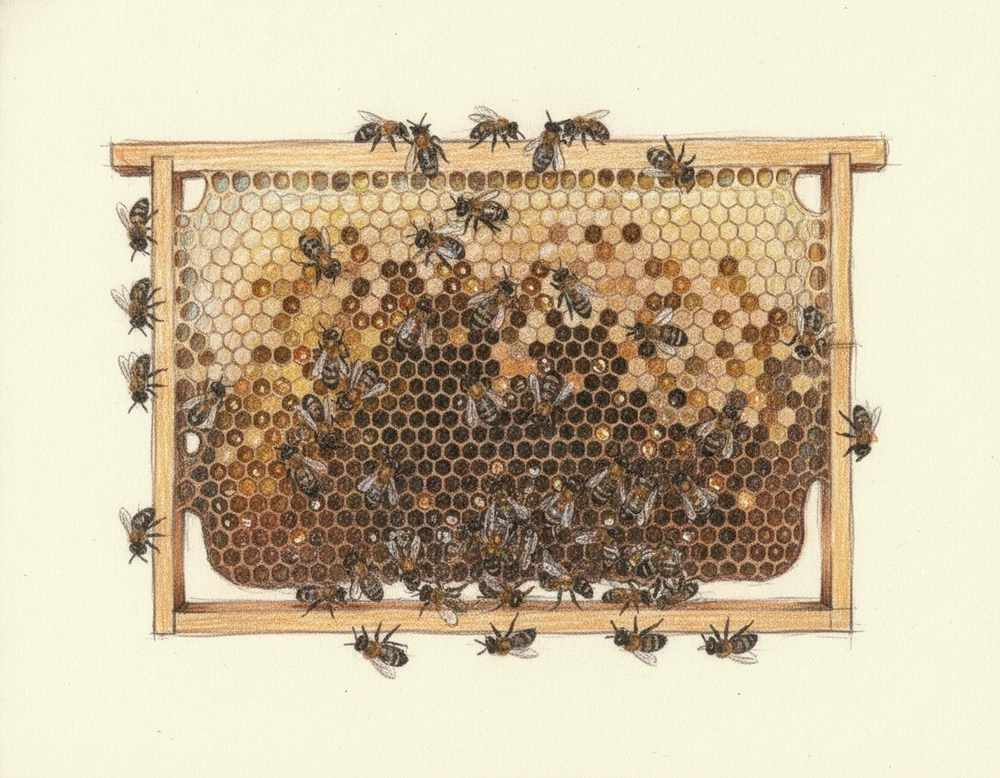
The Ponente is a thin strip between the western Ligurian beaches and the crest of the Maritime Alps that marks the French and Piedmontese border, cut by long narrow valleys, much of it wild and hard to reach. What arable land there is was taken off the rock as terraces, the fasce or maixei, and it still reads as an act of stubbornness. Along this border two subspecies meet, the blonde Apis mellifera ligustica native to the peninsula and the black Apis mellifera mellifera out of France; they have been hybridising naturally here for millennia, and the Ligurian bee is the result.
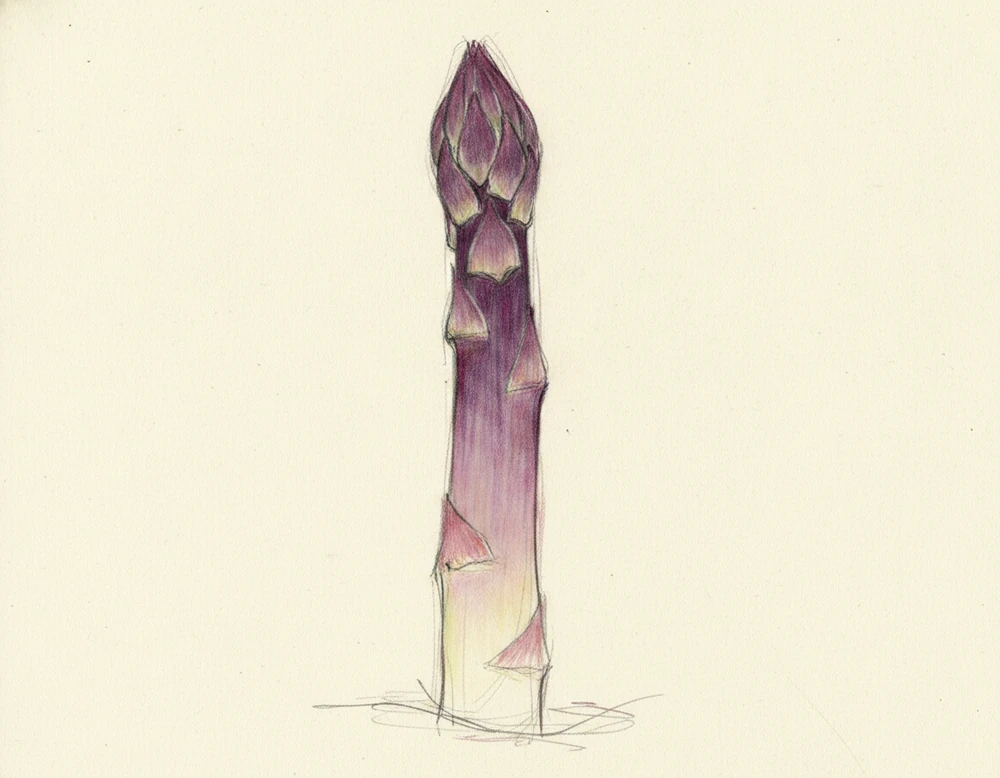
Big spears, deep purple at the tip shading to cream at the base. The colour is not a technique but genetics: this asparagus carries 40 chromosomes where every other variety has 20, so it cannot be crossed and diluted, which is why it still smells and tastes as it does. It was popular in the 1930s and has been all but given up since.
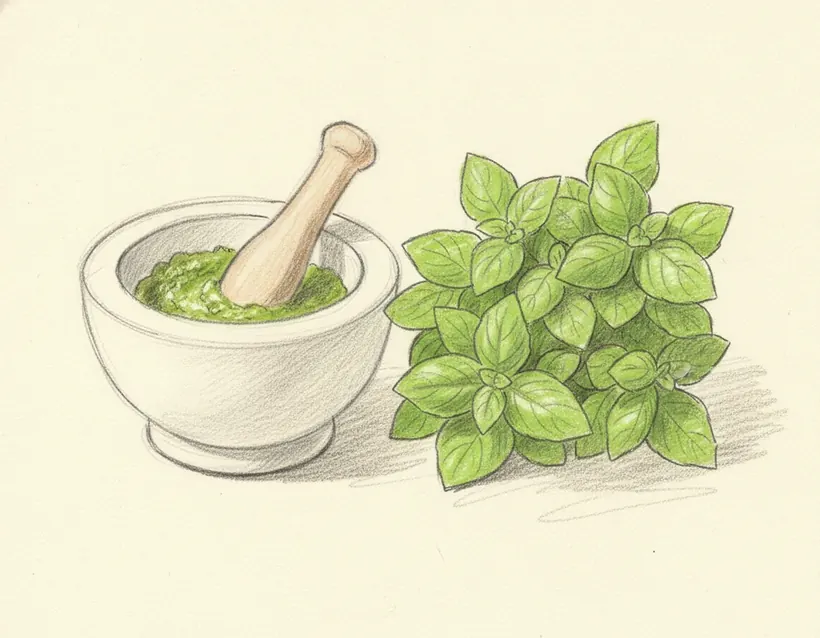
The small, tender, sweet-scented basil of the Ligurian coast, the only basil with protected status and the soul of true pesto genovese.
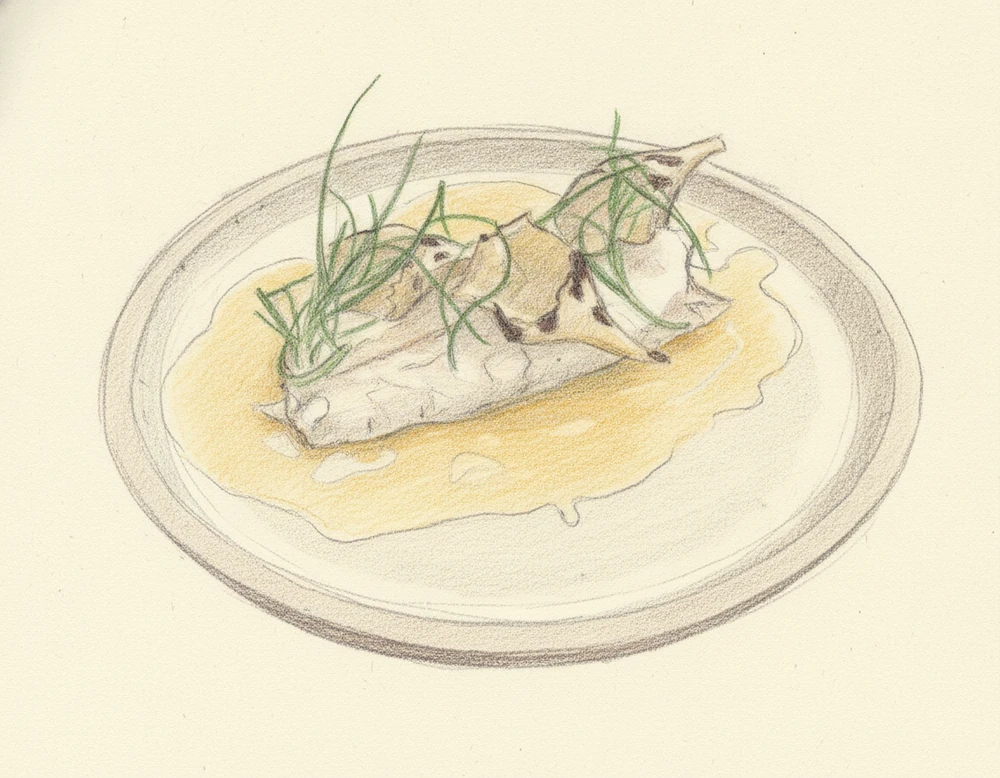
Perinaldo is a small town in the Crosia valley in the far west of Liguria, and its artichoke came over from Provence more than two centuries ago; the story has Napoleon bringing the French violet with him in the campaign of 1796. It is tender, with no spines and no choke, and goes into little omelettes, roasted with parmesan and mushrooms, or fried simply with garlic and parsley.
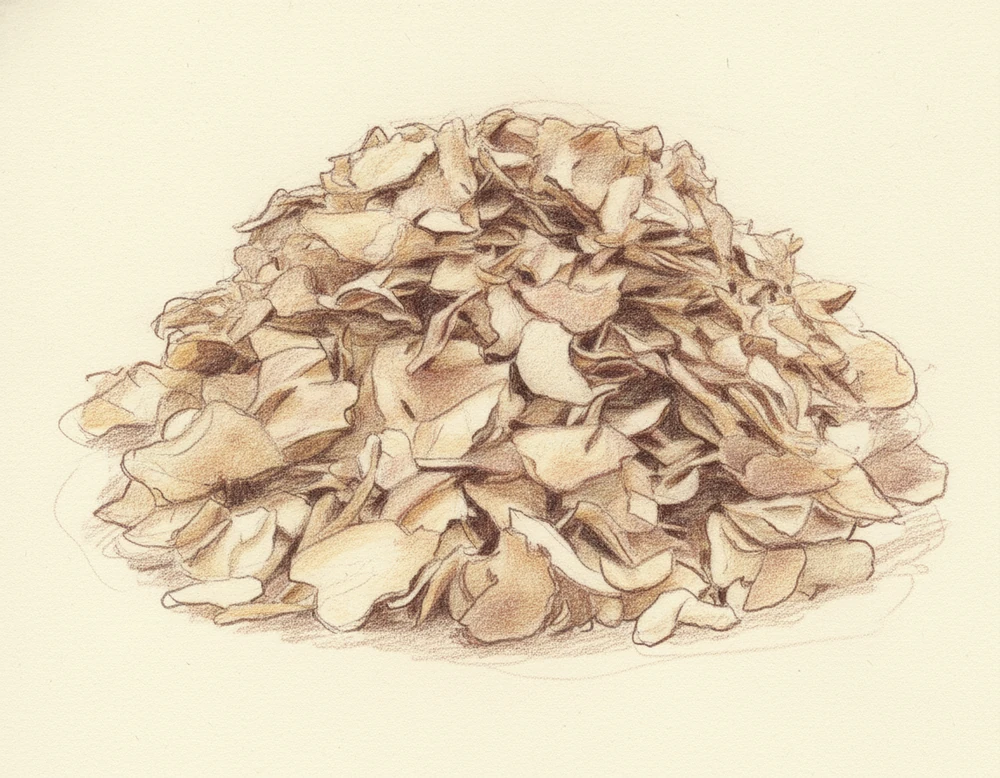
A drying method once general through the Ligurian Apennines and the Piedmontese valleys, still alive in the Bormida. The chestnuts dry in tecci, one-room stone huts under a shingle roof, over a low fire that never goes out, spread on a wooden rack, the graia, hung two or three metres above it, so they smoke as they dry. Working tecci are still there among the huge old trees of the upper valley.
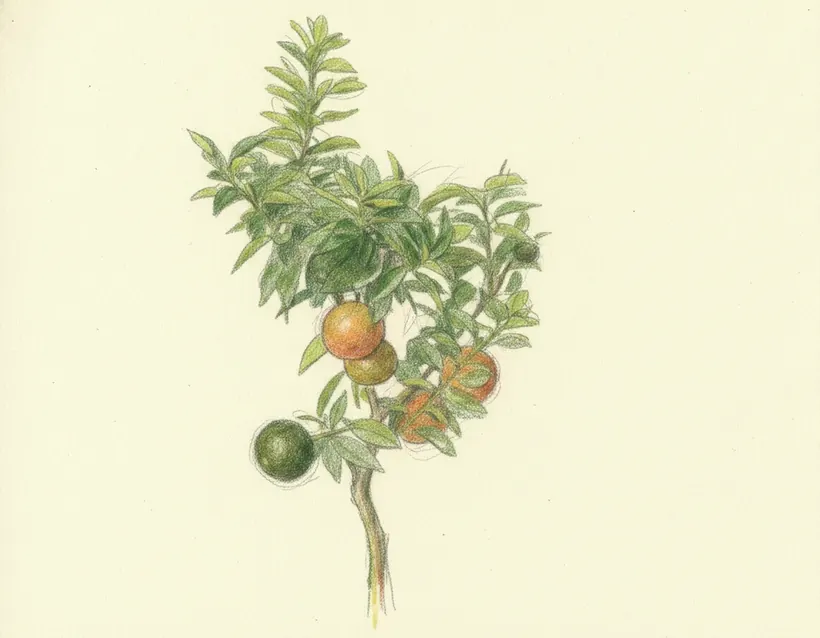
A tiny, intensely bitter dwarf-orange of the Savona coast, candied whole or turned into the dark chinotto drink.
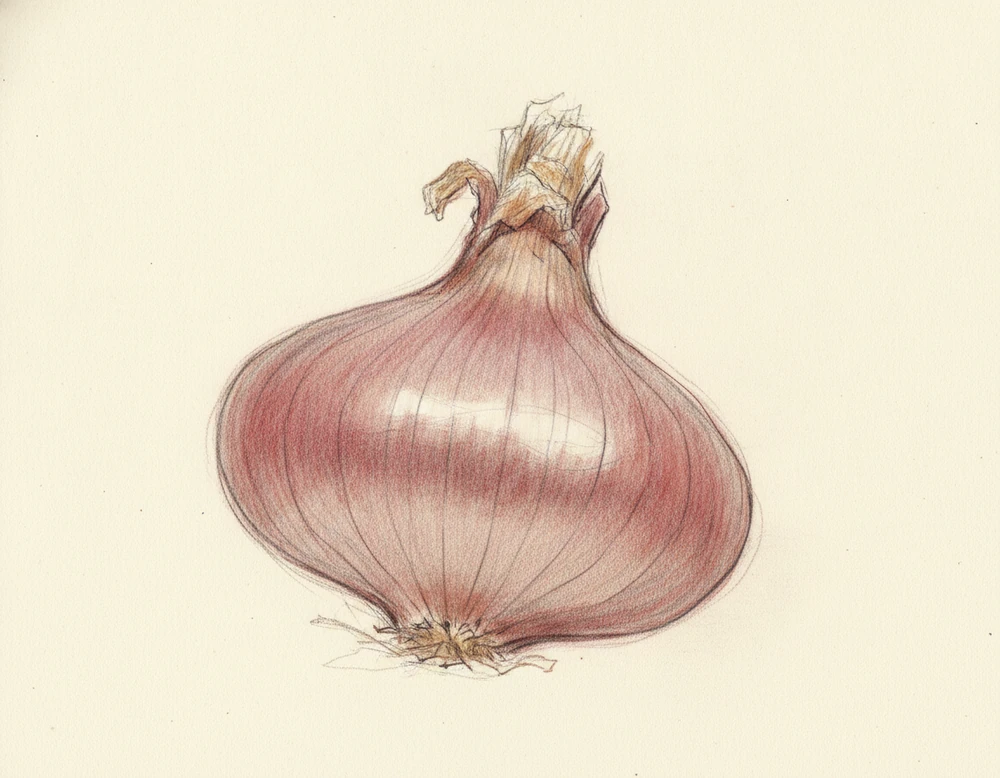
A very large sweet red onion shaped like a flask, up to a kilo. The climate and the alluvial soil of the Merula suit it exactly. Where it came from is not really known; the story in Andora is that it came off the sea early in the 19th century with Settimio Denegri, a young sailor turned farmer from a Turinese family that held a lot of land there. It went into every plot in the district and then declined from the 1960s, partly as building took the fields. It survived through one grower, Trentino Bellenda, born 1926 and known as Trentin, who kept growing it, saved seed and handed it round.
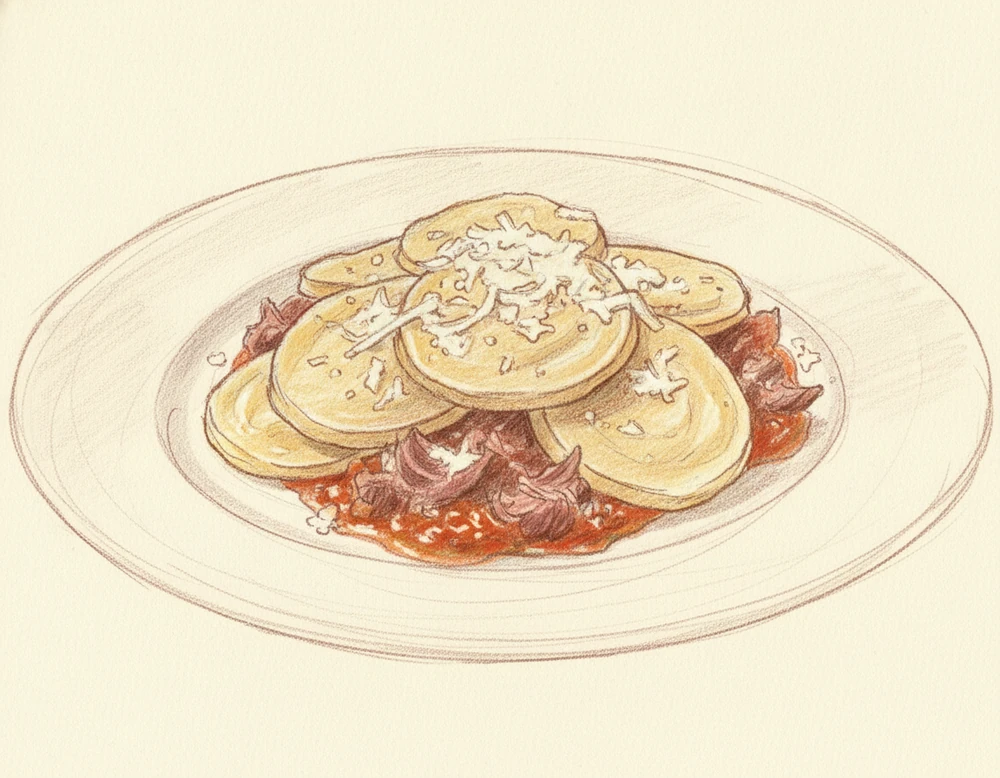
Crosetti, corzetti, curzetti, cruxetti: the names run on, because the thing comes from both sides of a border. Provence has crosets; the far east of Liguria, Chiavari, Lavagna, Sestri Levante and Varese Ligure, where the practice is best kept, has croxetti or corzetti. Commercial versions are everywhere and are not made the traditional way. It was a pasta for occasions: the custom was for the groom's father to present his future daughter-in-law with a tray of croxetti and the family's wooden stamp.
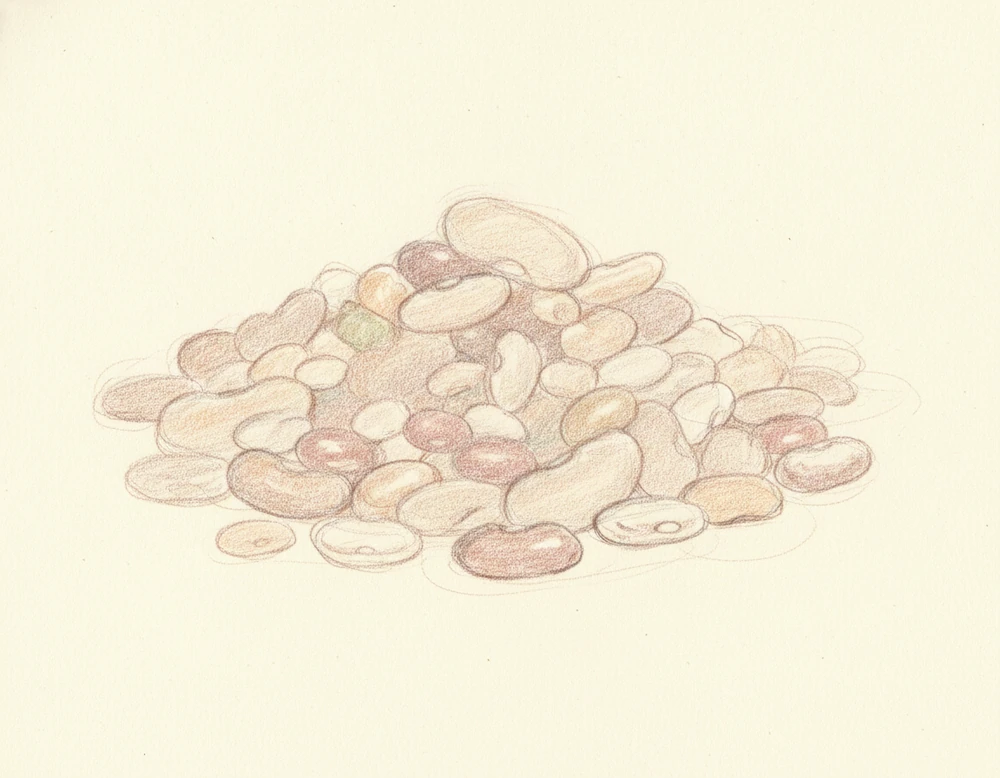
The ancestors of these beans came from Spain in the 17th century and found the Nervia, Oneglia and Argentina valleys to their liking, grown on the dry-stone terraces. Natural selection split them into three, each around its own small town: Conio's are large and kidney-shaped, the other two oval and a little smaller, the Pigna smallest of all.
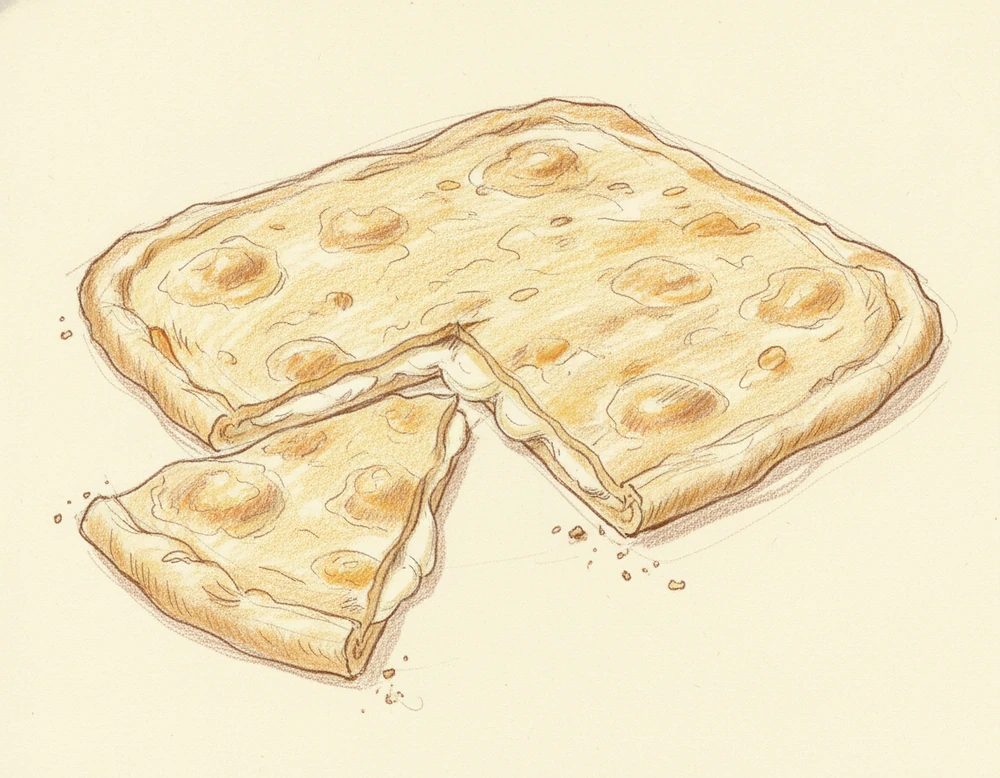
Two paper-thin sheets of dough of soft-wheat flour, extra-virgin olive oil, water and salt, filled with fresh soft cheese made from pasteurised cow's milk and baked fiercely so the top blisters.
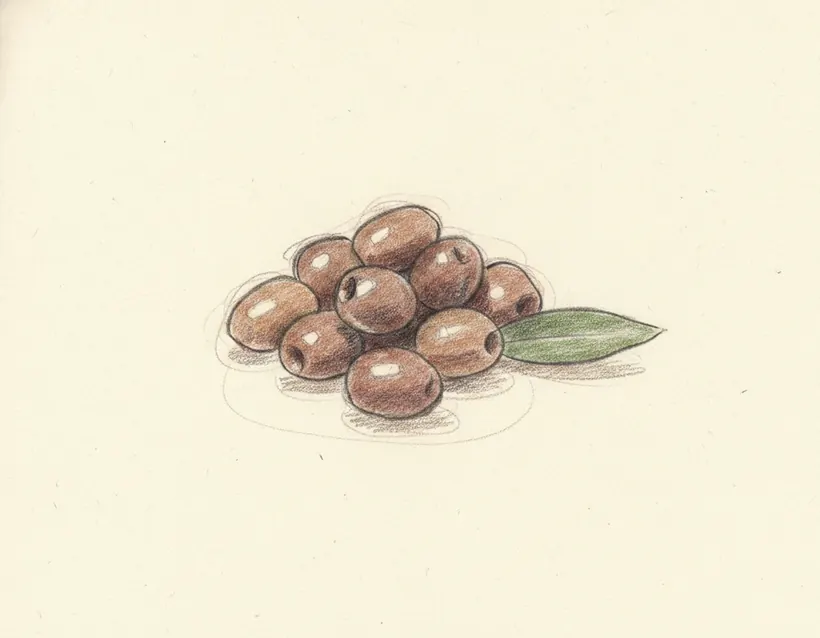
The small, sweet, brown-purple olive of the western Riviera, eaten in brine or pressed for the region's finest oil.
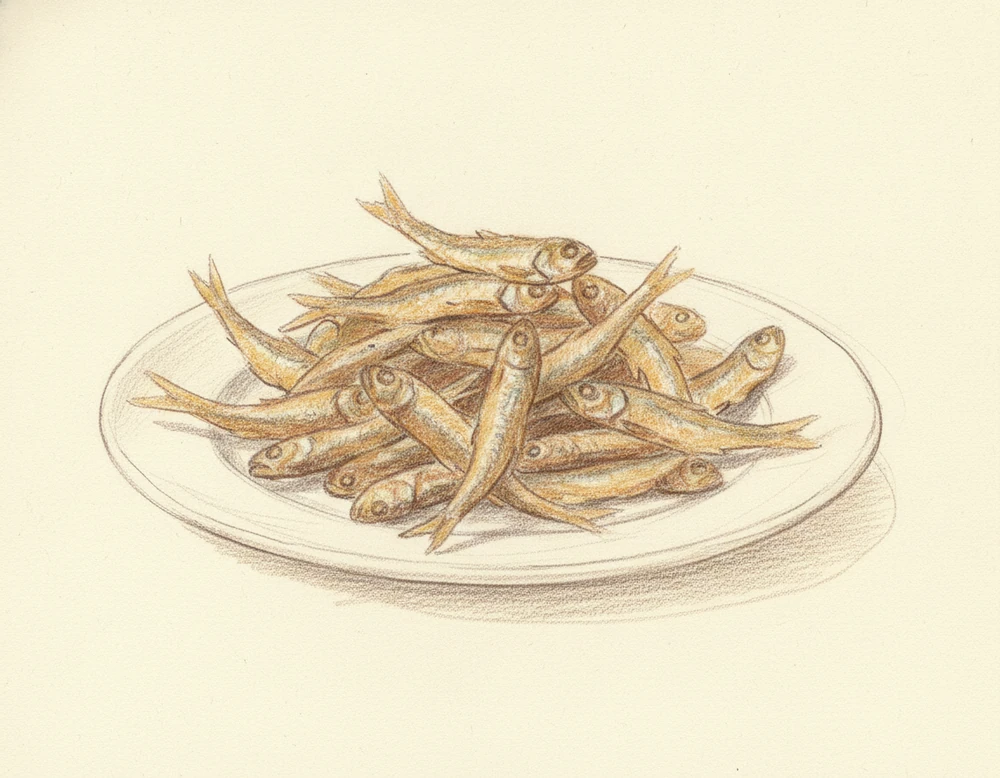
Deep water, and a coast the mountain winds come down on. Noli has fished for eight centuries, and as late as the 1960s most of the women of the town worked in the fry shops, six of them, one to a quarter, frying bughe, zerri and ciciarelli from six in the morning; dried on cloths and packed into round tins, the fish left at four in the afternoon by train for Turin and Mondovì. The Presidium's fishermen belong to a cooperative founded early in the 20th century as a mutual aid society, and still sell their catch in the morning on the seafront.
A Genoese native named for the Cabanne plain in the comune of Rezzoaglio, where enough purebred animals survived to bring the breed back from near extinction. Small and hardy, dark chestnut to pale brown with a cream line along the spine, the riga mulina, fading to red. The rumen is large for its size, so it eats well, and its short strong legs suit mountain grazing. It gives little milk, about 26 quintals a lactation, but of a quality made for cheese and full of what it has been eating.
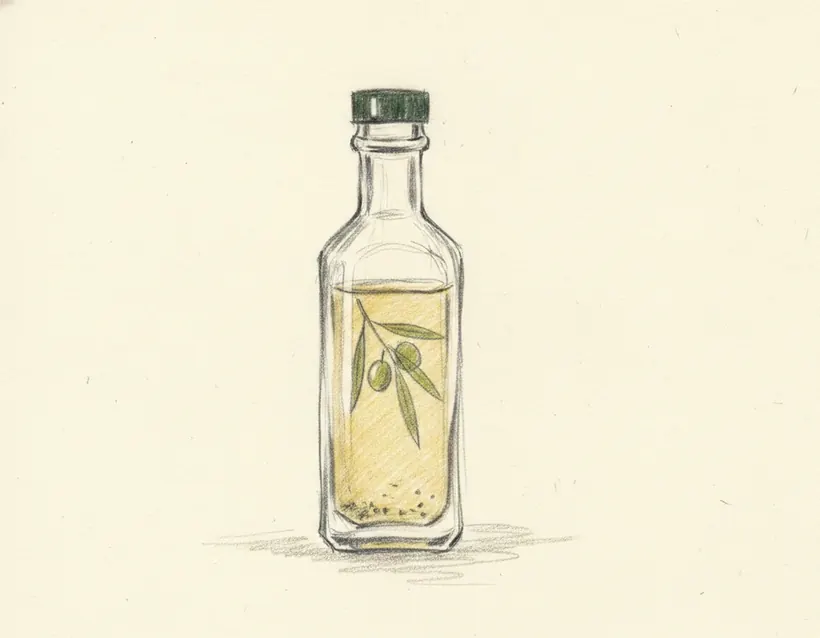
A delicate, sweet, pale-gold extra-virgin olive oil pressed mostly from Taggiasca olives of the two Rivieras.
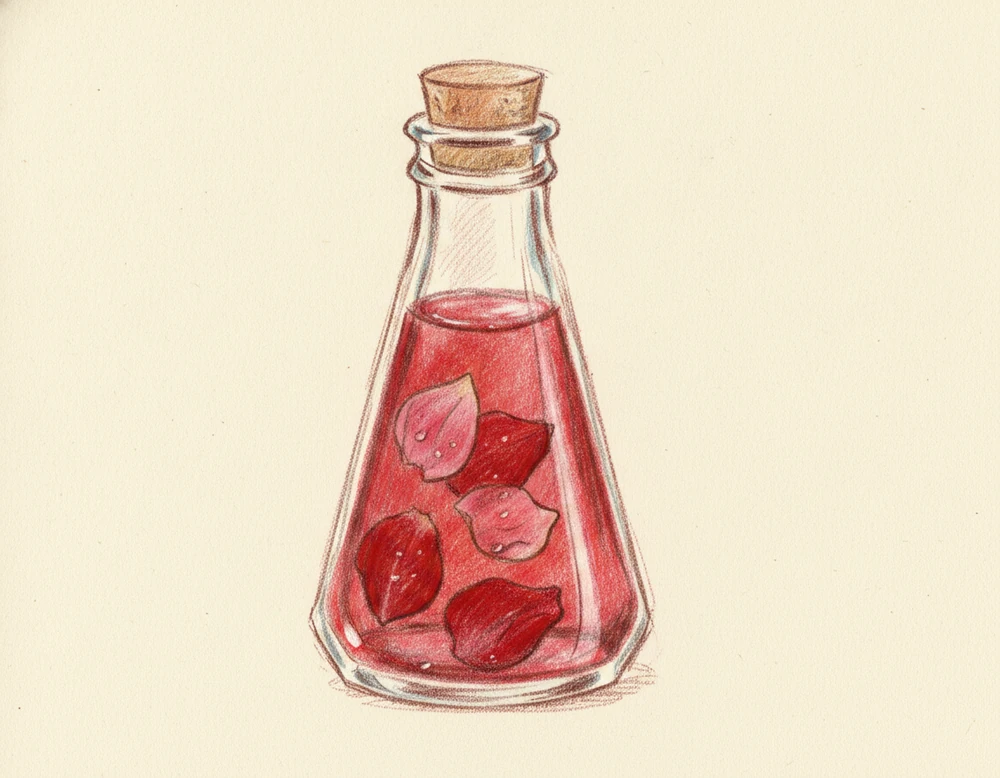
Roses stood on Genoese balconies and in Genoese gardens along with the fig and the lemon verbena. The petals were picked and steeped into a syrup and offered to guests in crystal glasses barely bigger than a thimble. People without a rose bush picked them inland in the Scrivia valley or bought them loose from the grocer or the florist, and a few Genoa shops still sell them to the few who still make it; in May you can see baskets of red and pink petals next to the crates of artichokes and the asparagus.
The name is La Brigue, the village in the Val Roya that was for centuries the sheep-farming centre of the country where Liguria, Piedmont and Provence meet. La Brigue has been French, then Italian, then French again, and the people have gone on speaking Brigasc, an Occitan descendant understood on both sides. The sheep is probably of the same stock as the Frabosana, sharing the convex profile and the backward-spiralling horns of the rams, if a little lighter in the body; it is hardy, well muscled, with hard dark hooves for rough ground.
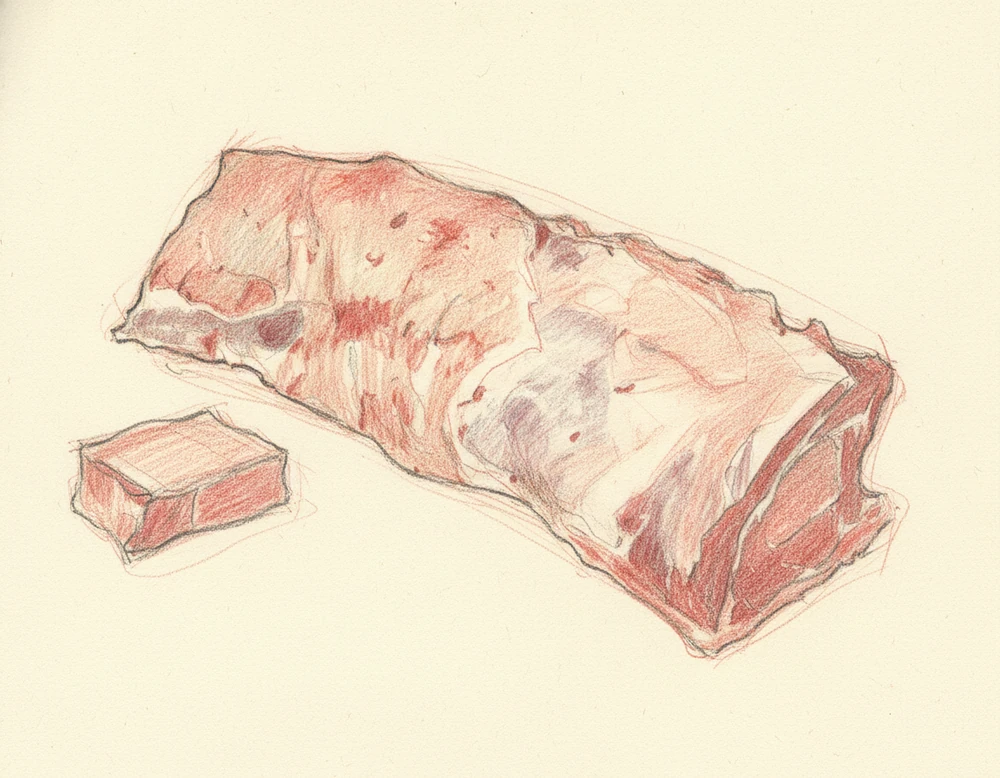
Beef from Piedmontese-breed cattle of either sex registered in the herd book, or with both parents registered, slaughtered over 12 months of age and raised and finished from weaning within the zone. The breed's double-muscled hindquarter is what the name refers to.